Cyprus Independence Day on October 1 commemorates the island’s liberation from British colonial rule in 1960, marking the birth of the Republic of Cyprus as a sovereign nation. Although independence officially occurred on August 16, 1960, celebrations were moved to October 1 to avoid the summer heat and accommodate the tourist season.
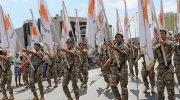
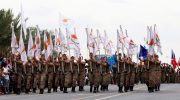
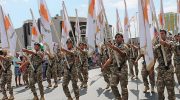
The day honors the four-year struggle by EOKA fighters between 1955 and 1959 who fought for freedom and unification with Greece (Enosis) through guerrilla warfare against British forces. The national holiday features military parades in Nicosia showcasing units from the National Guard, Greek forces stationed in Cyprus, police, and fire services.
The President lays wreaths at the statue of Archbishop Makarios III, Cyprus’s first president, and delivers speeches reflecting on independence achievements and ongoing national challenges. Despite 65 years of sovereignty, the celebrations carry complex emotions given the island’s division and Turkish occupation of the north since 1974.
The Path to Independence and British Rule
Britain acquired Cyprus in 1878 when the Ottoman Empire leased the island following the Russo-Turkish War. The strategic Mediterranean location made Cyprus valuable for protecting British interests in the region and securing routes to India. When World War I began in 1914, Britain formally annexed Cyprus, transforming the lease arrangement into direct colonial possession. The British ruled for 82 years, establishing administrative systems, building infrastructure, and exploiting the island’s resources while denying Cypriots meaningful participation in governance.
Unlike other British colonies that gradually developed self-governance structures, Cyprus received minimal autonomy. The colonial administration maintained tight control over political, economic, and social life, frustrating the predominantly Greek Cypriot population who sought union with Greece. This concept, known as Enosis, became the driving force behind nationalist movements throughout British rule. The idea resonated particularly strongly given Cyprus’s cultural, linguistic, and religious connections to Greece dating back millennia.
The Turkish Cypriot minority, comprising about 18 percent of the population, opposed enosis fearing they would become an even smaller minority under Greek rule. This fundamental disagreement between the two communities about Cyprus’s political future created tensions that British authorities sometimes exploited to maintain control. The divide-and-rule tactics exacerbated intercommunal suspicions that would later contribute to the island’s tragic division.
The London and Zurich Agreements
In 1959, Britain, Greece, and Turkey negotiated the Zurich and London Agreements that established Cyprus as an independent republic rather than allowing union with Greece. The agreements created a complex power-sharing constitution designed to balance Greek and Turkish Cypriot interests while protecting British strategic concerns. Cyprus would have a Greek Cypriot president and Turkish Cypriot vice president, each with veto powers. The legislature would have proportional representation with 70 percent Greek Cypriots and 30 percent Turkish Cypriots.
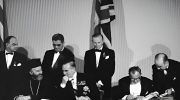
Critically, the agreements designated Britain, Greece, and Turkey as guarantor powers with the right to intervene militarily to preserve Cyprus’s constitutional order. Britain retained sovereignty over two military bases, Akrotiri and Dhekelia, comprising 3 percent of the island’s territory. These provisions meant Cyprus’s independence was qualified rather than absolute, with outside powers maintaining legal authority to interfere in the new nation’s affairs.
Neither Greek nor Turkish Cypriots had significant input in drafting these agreements, which were presented as a take-it-or-leave-it package. Many Greek Cypriots viewed the constitution as excessively complicated and the guarantees as violations of true sovereignty. Turkish Cypriots accepted the arrangements as protection against domination by the Greek Cypriot majority. The flawed foundations would contribute to constitutional crisis and intercommunal violence within three years.
The Declaration and First Years
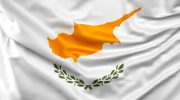
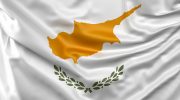
At midnight on August 16, 1960, the British governor Sir Hugh Foot formally declared Cyprus independent. Archbishop Makarios III became president and Dr. Fazil Kucuk became vice president, leading a government meant to bridge communal divisions. The new flag featured a copper-colored outline of Cyprus with two olive branches symbolizing peace between the communities. Cyprus joined the United Nations in September 1960 and pursued a non-aligned foreign policy that sometimes concerned Western powers during Cold War tensions.
The early years showed promise with both communities participating in government and building new national institutions. However, the constitution’s complexity created practical difficulties. The requirement for separate Greek and Turkish municipalities, proportional representation in civil service, and dual veto powers made governance cumbersome. President Makarios proposed 13 constitutional amendments in 1963 to streamline government operations, but Turkish Cypriots viewed these changes as attempts to reduce their protections and rejected them entirely.
The constitutional dispute triggered intercommunal violence in December 1963 that shattered the brief period of shared governance. Fighting between Greek and Turkish Cypriots left hundreds dead and displaced thousands from mixed villages. Turkish Cypriots withdrew from government institutions and established enclaves in Turkish-majority areas. United Nations peacekeepers arrived in 1964 to prevent escalation, but the island’s fragile independence had already been severely damaged.
The Move to October 1 Celebrations
Cyprus did not immediately celebrate independence as a national holiday. The initial years focused on building state institutions rather than commemorative events. On July 11, 1963, the Council of Ministers officially designated October 1 as Independence Day, moving celebrations from the actual August 16 date. The practical reasons included avoiding the peak summer heat when outdoor parades would be uncomfortable and when many Cypriots vacation abroad or at beach resorts.
The October 1 date allows fuller participation from citizens and provides better weather conditions for military displays. It also separates independence celebrations from the tourist high season when hotels and beaches are packed with foreign visitors. Cyprus declared Independence Day a national holiday in 1979, 19 years after gaining sovereignty, formalizing the October 1 observance with official recognition and guaranteed closure of government offices and most businesses.
The Modern Celebration and Military Parade
Contemporary Independence Day centers on the military parade in Nicosia that begins at 9:00 or 11:00 AM depending on the President’s schedule. Infantry and mechanized units from the National Guard march in formation displaying weapons and equipment. Greek forces permanently stationed in Cyprus under the 1960 agreements participate alongside Cypriot units, demonstrating the continued Greek military presence. Police and fire service units join the parade, showing the range of public service organizations.
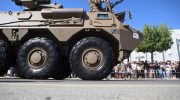
Tanks, armored personnel carriers, artillery pieces, and other military hardware roll through designated routes as thousands of spectators line the streets. Military aircraft sometimes perform flyovers, though budgetary constraints have reduced these displays in recent years. The parade demonstrates military readiness and national pride while serving as public relations for the armed forces. Some Cypriots view the military emphasis as necessary given ongoing Turkish occupation of the north, while others question the expense of maintaining substantial forces.
After the parade, the President delivers a speech addressing national achievements, current challenges, and future aspirations. Recent presidential addresses have emphasized economic recovery, the Cyprus problem’s ongoing impact, and hopes for reunification. The President typically lays a wreath at the statue of Archbishop Makarios III, honoring the first president who led Cyprus to independence and served until his death in 1977.
Public Observance and National Symbols
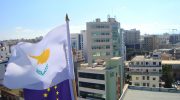
Government buildings, schools, and many private businesses display the Cypriot flag on Independence Day. The white banner with copper-colored island outline and olive branches flies from flagpoles, balconies, and car antennas across the free areas under Republic control. Municipal buildings illuminate facades with blue and white lights representing the Greek heritage many Greek Cypriots cherish.
Schools organize Independence Day programs in the days leading to October 1, with students learning about the EOKA struggle, British colonial period, and the path to sovereignty. Children perform plays depicting historical events, sing patriotic songs, and recite poetry about freedom and national identity. These educational activities transmit historical memory to younger generations and instill appreciation for independence even as the 1960 events fade from living memory.
Most shops and businesses close for the national holiday, though tourist areas maintain limited operations. Restaurants and tavernas serve traditional Cypriot foods as families gather for celebratory meals. The day combines solemn remembrance of those who died in the independence struggle with festive celebration of sovereignty and cultural identity.
The Complex Legacy of Independence
The 1960 independence remains controversial among historians and political analysts. Some view the London and Zurich Agreements as flawed compromises that set Cyprus on the path to division by failing to resolve fundamental questions about national identity and governance. The guarantor power provisions enabled Turkey’s 1974 invasion, which Ankara justified as protecting Turkish Cypriots under the 1960 treaties. Critics argue Britain manipulated the process to maintain strategic bases while avoiding responsibility for creating a workable constitution.
Turkish Cypriots do not celebrate October 1, viewing the 1960 arrangements as having failed to protect their community. Instead, they mark November 15, when the so-called Turkish Republic of Northern Cyprus declared independence in 1983, though only Turkey recognizes this entity. This parallel observance reflects how differently the two communities remember and interpret shared history.
Greek Cypriots have mixed feelings about Independence Day given the island’s ongoing division. While celebrating freedom from colonialism, the partition prevents full sovereignty over the entire island. The presence of 30,000 Turkish troops in the north and displacement of 200,000 refugees since 1974 overshadow independence achievements. For many, October 1 serves as reminder of what was achieved in 1960 and what remains lost since 1974.