A tekke is a building designed specifically for gatherings of a Sufi brotherhood, or tariqa, and functions as a place of spiritual retreat and character reformation. During Ottoman rule in Cyprus from 1571 to 1878, several tekkes were established across the island to serve the mystical branches of Islam that emphasized direct personal experience of the divine through meditation, prayer, music, and dance.
These sacred spaces became centers not only for spiritual practice but also for community welfare, providing food for the poor and accommodation for travelers. Today, the most significant surviving tekkes in Cyprus are the Mevlevi Tekke in Nicosia and Hala Sultan Tekke in Larnaca, each representing different aspects of Sufi tradition on the island.
Historical Background
Sufism, or Islamic mysticism, arrived in Cyprus with the Ottoman conquest of 1570. During each war waged by the Ottomans, quite a few Sufis provided spiritual guidance for soldiers and participated in battles alongside them. Many Sufis died as martyrs while trying to seize fortresses during the conquest of Cyprus, particularly of Nicosia, and their graves mark the places where they fell.
The relationship between Ottoman authorities and Sufi orders was complex. While the state’s official religion followed orthodox Sunni Islam, Sufi organizations established official relationships with various levels of society. The Janissaries, an elite corps of soldier-slaves, and the guilds were all affiliated with certain orders.
Many powerful figures from the ruling circles were members of some orders, especially the Mevlevi order. These relationships not only provided people with opportunities for social mobility but similarly served as channels through which the state could increase its influence and power over society.
The Mevlevi Tekke and Whirling Dervishes
The Mevlevi Sufi order originated in Konya in modern-day Turkey, founded by followers of the 13th-century Persian poet, Sufi mystic, and Islamic theologian known as Celaleddin Rumi or more commonly Mevlana. The mystical philosophy that he expressed in his poetry spread east from Konya as far as India and then throughout the entire Islamic world. Rumi stressed music and dance as an expression of mutual love and yearning between the soul and the divine, which led his followers to become commonly known as the whirling dervishes due to their famous practice of continuously revolving as a form of remembrance of God.
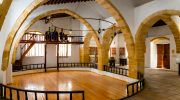
The Mevlevi Tekke in Nicosia was built in the early 17th century on a piece of land donated by a landlady called Emine Hatun. The building is traditionally held to be an enlarged continuation of previously established tekkes known as the Arab Ahmed Pasha and Ferhad Pasha Tekkes. This tekke was ruined by 1607 and Ferhad Pasha built a mevlevi tekke on its foundations and named it after him in 1607.
Hala Sultan Tekke by the Salt Lake
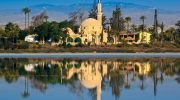
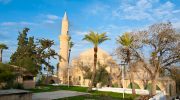
Hala Sultan Tekke is both a mosque and a tekke complex located on the west bank of Larnaca Salt Lake. The term tekke at this location may have referred to an earlier feature used by Sufi brotherhoods. The present-day complex is composed of a mosque, mausoleum, cemetery, and living quarters for men and women.
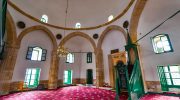
The monument was erected over different phases, commencing from 1760 and completed in 1817. It is an important Islamic monument, one of the most revered sites in the Muslim world, and it is used to this day for religious purposes. Some sources describe Hala Sultan Tekke as the third holiest place for Muslims in the world, while others describe it as fourth most important in the Islamic world, after Mecca, Medina, and Jerusalem.
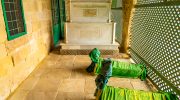
The mosque was built over the grave of Umm Haram or Ummü Haram, who was believed to be the sister of Prophet Muhammad’s foster mother or a follower from Medina who traveled to Cyprus. Most accounts establish a connection between the site and the death of Umm Haram during the first Arab conquest of Cyprus under the Caliph Muawiyah between 647 and 649. According to these accounts, Umm Haram, being of very old age, had fallen from her mule and died during a siege of Larnaca. She was later buried where she died.
In the second building phase, the mosque itself was erected. Its plan was laid out in 1816 and it was done in the classical Ottoman architectural style. The mosque was founded by Es-Seyyid Mehmet Emin Efendi, the then-governor of Cyprus, and its construction was finished in 1817. The third building phase followed soon after and saw the creation of the convent and the elaborate drinking fountain, built in 1830.
Important Facts About Sufi Sites
During the Ottoman administration of Cyprus, Ottoman-flagged ships would hang their flags at half mast when off the shores of Larnaca and salute Hala Sultan with cannon shots. This practice demonstrated the importance of the site to Ottoman naval forces and the Islamic world.
As part of Turkish Cypriot heritage, a ceremony of the whirling dervishes is performed at the Mevlevi Tekke Museum around December 17 each year. Visitors to the Turkish-occupied part of Cyprus during Christmas time might witness this mesmerizing dance in which dervishes continuously spin as a form of meditation and remembrance of God. This annual performance keeps the Mevlevi tradition alive even though the tekke no longer functions as an active religious institution.
Archaeological investigations conducted by the Department of Antiquities under the women’s quarter of Hala Sultan Tekke have revealed building remains dated to the late Archaic, Classical, and Hellenistic periods from the sixth to first century BC. Several finds indicate that the site might have been used as a sanctuary, but the limited scale of investigations precludes definite conclusions about its use. This suggests the location held sacred significance long before Islamic times.
In 1978, an excavation at Hala Sultan Tekke discovered a treasure trove containing 23 pieces of pure gold. This find added to the site’s archaeological importance beyond its religious significance.
The Naqshbandi order is the only Sufi sect that can trace its origins back to the first century of Prophet Muhammad, making it the oldest tariqa. Today it still has followers in the millions around the world. As a sect, it and the Halvetis were particularly popular among theologians and government officials in Ottoman Cyprus.
Visiting the Tekke Sites Today
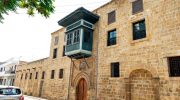
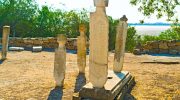
The Mevlevi Tekke Museum is located just inside the Kyrenia Gate in the Ibrahim Pasha quarter of Nicosia. Visitors enter through an arched doorway on the left side of the building. The museum is open to the public with a small entrance fee. The courtyard displays Ottoman tombstones, while the semahane contains exhibits about Rumi’s poetry, dervish costumes, and the ritual objects used in Sufi ceremonies. One remaining dervish cell displays cooking utensils, a table, and other objects used by the dervishes.
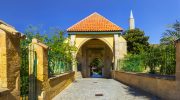
Hala Sultan Tekke is located three kilometers west of Larnaca on the main Salt Lake of Cyprus. The monument is accessible from the main road and welcomes visitors of all religious backgrounds. The mosque continues to be used for religious purposes, so visitors should dress modestly and respect prayer times. The site offers beautiful views across the salt lake, particularly during sunrise and sunset. In winter, thousands of flamingos gather at the lake, adding natural beauty to the sacred atmosphere.
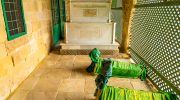
Stepping through the main entrance of Hala Sultan Tekke, visitors find themselves in a lovely open courtyard surrounded on all sides by the complex. The mausoleum contains the tomb of Umm Haram in a two-chambered structure. Four other tombs are present, including two former sheikhs and a notable marble sarcophagus dated July 12, 1929, belonging to Adile Hüseyin Ali, the Turkish wife of Hussein bin Ali, Sharif of Mecca. At the eastern corner of the mosque and tekke, there is a cemetery which was closed to burials around 1899. Opposite the mosque stands an octagonal fountain built around 1796 to 1797.
The Legacy of Mystical Islam in Cyprus
The tekkes of Cyprus represent more than architectural monuments. They embody a spiritual tradition that sought union with the divine through practices that differed from orthodox religious observance. The Sufi emphasis on love, music, poetry, and direct experience of God created a form of Islam that appealed to diverse populations and facilitated the spread of the faith across cultures.

The survival of these sites through political changes and religious conflicts demonstrates their importance to the communities that created and maintained them. Although the active Sufi orders have largely disappeared from Cyprus, the buildings and annual ceremonies preserve their memory and allow contemporary visitors to encounter this mystical tradition.
For Cyprus, the tekkes form part of the island’s complex religious landscape where multiple faiths coexisted and left their marks. The sites remind both residents and visitors that Cypriot identity includes Ottoman and Islamic elements alongside Greek and Christian traditions. Understanding and preserving these sites contributes to a more complete picture of the island’s history and cultural heritage.