The island of Cyprus owes more than just its prosperity to copper. The very name of this Mediterranean nation comes from the ancient Greek word Kúpros, which scholars believe connects to the metal that defined its economy for over 4,000 years. The English word “copper” itself derives from the Latin phrase aes cyprium, meaning “metal of Cyprus.”
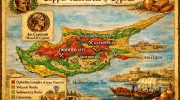
This linguistic connection reveals a fundamental truth: Cyprus and copper are so deeply intertwined that ancient civilizations could not think of one without the other. From the fourth millennium BC to the Roman Empire and beyond, copper mining transformed Cyprus from a small island into a major economic power in the ancient world.
- The Ancient Discovery That Changed Everything
- The Famous Oxhide Ingots and Mediterranean Trade
- The Economic Engine of City-Kingdoms
- Environmental Impact and Resource Management
- Religious and Cultural Significance
- Cyprus Copper in Modern Times
- Visiting Cyprus's Copper Heritage
- A Legacy Written in Metal
The Ancient Discovery That Changed Everything
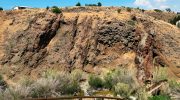
Copper production on Cyprus began around 4000 BC, when early inhabitants discovered deposits of pure copper on the surface. These first copper workers fashioned simple tools without needing to mine underground. By 2500 BC, Cypriots had learned to smelt copper ore, initially creating an alloy with arsenic before switching to tin around 1900 BC to produce true bronze. The richest deposits lay in the Troodos Mountains, particularly in the pillow lava formations along the northern slopes. These copper-bearing ores formed 90 million years ago through volcanic activity on the ancient ocean floor, when hydrothermal vents ejected mineral-rich water that concentrated into valuable seams.
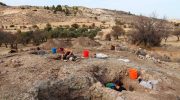
As surface deposits disappeared, Cypriots developed sophisticated underground mining techniques. Archaeological evidence shows that by the ninth century BC, miners were excavating deep galleries with wooden supports, ladders, and rope systems. The scale of this operation was immense. Historians estimate that ancient workings extracted approximately 200,000 tonnes of copper ingots from the Troodos deposits. Major mining sites included Skouriotissa, Tamassos, Mavrovouni, and Ambelikou, which became centers of industrial activity that supported thousands of workers.
The Famous Oxhide Ingots and Mediterranean Trade
Cyprus developed a distinctive method of casting copper for export. The iconic oxhide ingots, weighing between 20 and 30 kilograms each, became the trademark of Cypriot copper throughout the Mediterranean. These flat metal slabs featured four protruding handles at each corner, resembling the stretched hide of an ox. While scholars once thought each ingot represented the value of one ox, researchers now believe the handles simply made transportation easier for workers carrying them on their shoulders or loading them onto pack animals.

By 1400 BC, Cyprus dominated the Mediterranean copper trade. Oxhide ingots have been discovered across an enormous geographical range, from coastal France to the Levant, and from southern Germany to Egypt. The Uluburun shipwreck, which sank off the coast of Turkey in the fourteenth century BC, carried over ten tons of Cypriot copper ingots, providing dramatic evidence of the scale of this trade. Egyptian tomb paintings from the fifteenth to twelfth centuries BC depict foreign dignitaries bringing these distinctive ingots as tribute to pharaohs. One relief at Karnak even shows Pharaoh Amenhotep II demonstrating his strength by shooting arrows through a copper ingot.
The Economic Engine of City-Kingdoms
Control of copper resources directly shaped the political landscape of ancient Cyprus. The island’s distinctive city-kingdoms, which emerged during the Iron Age, positioned themselves strategically near major mining districts. Soloi possessed the richest deposits, with the Skouriotissa mines eventually producing 85 percent of modern Cyprus copper production. Tamassos built its capital close to major mines like Mavrovouni and Kokkinopezoula. These copper-rich kingdoms wielded disproportionate power and wealth compared to their size.

Conflicts between kingdoms often centered on gaining access to mining areas. When Kition conquered territory from Salamis, it cut off the former alliance between Salamis and Tamassos, giving Kition direct control over valuable copper mines for the first time. Archaeological evidence shows that copper production actually intensified during the eighth to fourth centuries BC rather than declining. Massive stratified slag heaps at sites like Skouriotissa, Kalavasos, and Mitsero demonstrate the growing industrial scale of operations as the kingdoms competed for dominance.
Environmental Impact and Resource Management
The copper industry demanded enormous quantities of fuel. Smelting operations required charcoal to reach the high temperatures needed for extracting metal from ore. Researchers estimate that producing the exported copper ingots consumed charcoal equivalent to 16 times the entire forested area of ancient Cyprus. The island was known as the “green isle” for its abundant forests of pine, cypress, cedar, and oak. Only the remarkable fertility of Cypriot soil and regular rainfall allowed these forests to regenerate over thousands of years despite intensive harvesting.

Ancient Cypriots developed efficient production systems to maximize their resources. Evidence from coastal settlements like Enkomi shows that rough copper products were initially smelted near the mines, then transported to coastal workshops for final refinement. Archaeological excavations at Enkomi uncovered a foundry hoard containing workers’ tools, a 36-kilogram oxhide ingot, recycled bronze pieces, and finished products like bronze wheels. This division of labor minimized transportation of waste material and concentrated skilled craftwork in urban centers.
Religious and Cultural Significance
Copper held sacred importance in Cypriot culture beyond its economic value. Bronze stands from the Late Bronze Age frequently depicted men carrying oxhide ingots on their shoulders, elevating this labor to symbolic status. The famous Ingot God statuette, discovered at Enkomi in 1963, shows a deity standing on a copper ingot base while holding a spear and shield. This 35-centimeter bronze figure demonstrates how completely copper production had integrated into religious life. A female deity statuette from the twelfth century BC, identified as the goddess of fertility of the copper mines, suggests that Cypriots sought divine protection for this vital industry.

Cypriot bronze smiths achieved remarkable technical sophistication, producing some of the finest metalwork in the eastern Mediterranean. They mastered elaborate techniques including sheet metal vessels, two-part molds, lost-wax casting, and hard soldering to assemble complex structures. Their tripods and four-sided stands became prized possessions throughout the ancient world, exported to Crete, Sardinia, and beyond.
Cyprus Copper in Modern Times
The mining industry that once made Cyprus wealthy has declined dramatically over the past century. After more than a millennium of abandonment, American geologist Charles Godfrey Gunther rediscovered the potential of Cypriot copper in the early twentieth century. His research into ancient history led to the founding of Cyprus Mines Corporation in 1914. At its peak, the company employed approximately 2,000 workers and provided more than 25 percent of the island’s annual revenue.
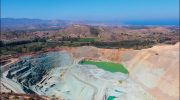
Today, the Skouriotissa copper mine remains the only operational mine on the island, run by Hellenic Copper Mines Ltd. Modern operations focus largely on reprocessing waste material from ancient and more recent mining, using advanced techniques to extract copper from low-grade deposits that earlier miners left behind. In 2010, the mine exported approximately $13.1 million worth of copper. While this represents a fraction of the industry’s ancient importance, it maintains an unbroken connection to Cyprus’s copper heritage spanning four millennia.
Visiting Cyprus’s Copper Heritage
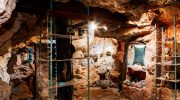
The Museum of Mining Heritage in Katydata village preserves the story of Cypriot copper mining. Housed in an old courthouse near the church of St John, the museum displays mineral samples, ancient mining tools, copper ingots, and artifacts spanning 5,000 years of metallurgical history. Visitors must book appointments at least one day in advance. The Cyprus Copper Route offers a self-drive tour through mining heritage sites across the island, passing ancient spoil heaps and opencast mines that still mark the landscape.
The most accessible evidence of ancient mining appears in major museums. The British Museum holds a clay tablet from around 1375 BC, a letter from the King of Alashiya to the King of Egypt apologizing for sending only a small copper shipment because the “hand of Nergal” had killed all the copper workers. This correspondence reveals both the scale of copper diplomacy and the human cost of maintaining production.
A Legacy Written in Metal
Cyprus demonstrates how natural resources can fundamentally shape national identity over millennia. The copper deposits in the Troodos Mountains provided more than economic opportunity. They determined political boundaries, drove technological innovation, influenced religious practice, connected the island to distant civilizations, and ultimately gave Cyprus its name. The ancient Mediterranean world recognized Cyprus primarily as the source of the metal that enabled the Bronze Age. This singular association proves that geography and geology together can define how a nation sees itself and how others perceive it for thousands of years.