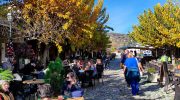
Terracotta roof tiles and enclosed courtyards define the visual character of traditional Cyprus villages, creating architectural patterns that have endured for centuries. The distinctive orange-brown curved clay tiles, fired in local kilns and arranged in overlapping rows, crown limestone buildings throughout mountain villages from Kakopetria to Fikardou.

These tiles provide practical weatherproofing while establishing the Mediterranean aesthetic now protected under UNESCO cultural heritage guidelines. The courtyard system, enclosed by high stone walls with heavy wooden gates, served as the functional heart of village life where families conducted agricultural work, food processing, textile production, and social gatherings away from public view.
The combination of terracotta roofs and walled courtyards reflects adaptation to Cyprus’s climate, available materials, social customs, and economic activities spanning centuries of continuous habitation.
Historical Background
Clay roof tiles were invented in Greece during the 7th century BC, revolutionizing building technology across the Mediterranean. Before this innovation, structures used thatch, brush, or wooden shingles that deteriorated quickly and posed fire hazards. Interlocking terracotta tiles provided waterproof, fireproof roofing that dramatically extended building lifespans. The Greek Laconian style, featuring curved pan tiles and flat cover tiles, spread throughout the ancient world and survives essentially unchanged in what modern builders call Spanish or Mediterranean roofing.

Archaeological evidence confirms terracotta roof tiles reached Cyprus during the Archaic period around 600 BC. The technology arrived through Greek colonization and trade networks connecting the island to mainland Greece, Asia Minor, and the broader Eastern Mediterranean. Roman conquest in 58 BC accelerated adoption as imperial builders standardized construction techniques across their territories. Byzantine rule from 330 to 1191 AD continued the tradition, with tile production becoming a refined craft industry supplying churches, monasteries, and wealthy residences.
The tiles require specific clay qualities for successful production. Cypriot clay deposits, particularly those near Limassol and in the Troodos foothills, contain iron oxide that produces the characteristic reddish-orange color when fired at temperatures between 900 and 1100 degrees Celsius. Local potters developed expertise in clay selection, tile molding, kiln design, and firing techniques passed through family workshops across generations. This accumulated knowledge created regional variations in tile shape, thickness, and color based on local clay composition and firing traditions.
Traditional Manufacturing and Installation Methods
Traditional tile production began with clay extraction from deposits near villages or pottery centers. Workers dug clay, removed rocks and impurities, and mixed it with water to achieve workable consistency. The prepared clay was pressed into wooden molds that shaped individual tiles, typically measuring 40 to 50 centimeters long and 20 to 25 centimeters wide. Pan tiles featured curved profiles to channel water, while cover tiles were narrower and more deeply curved to cap the joints between pan tiles.

After molding, tiles dried in the sun for several days to remove moisture gradually and prevent cracking during firing. Dried tiles were stacked in kilns, traditional wood-fired structures built from stone or brick. The firing process required constant temperature monitoring over 24 to 48 hours, with experienced craftsmen adjusting fuel input to achieve proper heat distribution. Successful firing transformed soft clay into durable ceramic that could withstand decades of exposure to rain, sun, and temperature extremes.
Installation involved layering pan tiles across wooden roof beams with their concave sides facing up to create parallel channels. Cover tiles were then placed over the gaps between pan tiles, creating a interlocking system that shed rainwater while allowing air circulation. The tiles were secured with small amounts of lime mortar at connection points, though their weight and interlocking design provided primary stability. Skilled roofers ensured proper overlap and alignment to prevent leaks while creating the distinctive wave pattern visible from below.
The Courtyard System and Family Privacy
High stone walls surrounding traditional houses created avli courtyards that functioned as secure private spaces where family life unfolded away from public observation. These walls, typically 2 to 3 meters high and built from the same limestone as houses, established clear boundaries between domestic and communal realms. Heavy wooden doors with metal hardware controlled access, often featuring decorative carvings or painted designs that announced family status and craftsmanship.

The courtyard layout reflected practical needs and social customs that prioritized privacy and security. In Ottoman and British colonial periods when political stability was uncertain, walled compounds protected families from thieves, wandering animals, and unwanted intrusions. The enclosed space allowed women to work outdoors without male supervision while maintaining modesty standards required by traditional Greek Cypriot culture. Children played safely under adult supervision without risk of wandering into streets or agricultural areas with dangerous equipment.
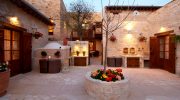
Courtyard surfaces were typically unpaved earth or stone cobbles that allowed rainwater drainage while providing work areas. One section often contained a well or cistern for water storage, essential in Cyprus’s dry climate where rainfall concentrates in winter months. Families planted productive vegetation including grape vines trained over wooden frameworks to create shade, fig trees offering fruit and filtered sunlight, and herbs used for cooking and traditional medicine. This combination of functional planting and carefully planned spaces created microclimates several degrees cooler than exposed streets during summer.
The Iliakos Covered Porch Space
Traditional houses featured an iliakos, a semi-open covered porch created by extending the roof 2 to 3 meters forward supported by wooden beams or stone arches. This shaded transition space between enclosed rooms and open courtyard functioned as the social heart of the home where families received guests, conducted conversations, and performed tasks requiring shelter from sun and rain. The iliakos allowed outdoor living essential in Cyprus’s climate where interior rooms became uncomfortably hot during summer months.

One end of the iliakos typically contained the mairko, a dedicated area for cooking and washing dishes that kept smoke and food odors away from sleeping quarters. The open-air kitchen configuration provided ventilation that prevented smoke accumulation while isolating fire hazards from the main structure. Women prepared meals using charcoal braziers or small wood-burning stoves, with the iliakos protecting them from direct sun while allowing heat dissipation.
Social customs dictated iliakos use for entertaining visitors who could not be invited into private family spaces. When guests arrived, hosts offered coffee and traditional sweets served in the iliakos while conversing about village affairs, family news, and economic concerns. This semi-public space allowed hospitality without violating privacy norms that kept domestic interiors concealed from outsiders. The iliakos thus mediated between public street life and private family activities occurring deeper within the compound.
Modern Preservation and Tourism Value
Beginning in the 1980s, Cyprus’s government recognized traditional architecture as cultural heritage requiring protection and promotion. Certain villages received designation as protected areas with strict regulations governing renovations and new construction. These rules require maintaining traditional building materials, architectural elements including terracotta roofs and stone walls, and overall village character. Property owners receive financial incentives through restoration grants covering significant portions of renovation costs if they follow approved techniques and materials.

Many restored traditional houses now operate as agrotourism accommodations offering visitors authentic village experiences. These conversions retain original courtyards, terracotta roofs, and stone construction while adding modern bathrooms, kitchens, and climate control systems invisible from exterior views. The accommodations attract tourists seeking alternatives to beach resorts, generating income for rural communities threatened by depopulation as younger generations migrate to cities for employment.

Villages including Kakopetria, Fikardou, and Pano Panagia have become significant tourist destinations specifically for their preserved traditional architecture. Visitors photograph distinctive terracotta roofs cascading down hillsides, peek through wooden gates to glimpse courtyard gardens, and tour restored houses converted to museums demonstrating traditional living arrangements. This cultural tourism creates economic incentives for preservation while educating international audiences about Cypriot architectural heritage.
Contemporary Use and Adaptation
Modern Cypriots increasingly appreciate traditional architecture their parents’ generation abandoned for concrete apartment buildings. The recognition of qualities lost in standardized development has sparked revival of courtyard houses and terracotta roofing in new construction that interprets traditional forms using contemporary materials and techniques. Architects design villas incorporating central courtyards for outdoor living, covered porches referencing the iliakos concept, and terracotta or terracotta-style tiles that echo historical aesthetics.

The environmental advantages of traditional design attract attention as sustainability concerns grow. Natural ventilation through courtyards reduces air conditioning needs, thick stone walls provide superior insulation compared to thin concrete, and terracotta tiles offer longevity exceeding most modern roofing materials. These passive design strategies align with green building principles that minimize energy consumption through thoughtful orientation, material selection, and spatial planning.
Challenges remain in adapting traditional layouts to contemporary lifestyles expecting multiple bathrooms, large kitchens with modern appliances, and garage parking. Courtyard houses occupy more land than apartment buildings, making them impractical for urban density. The craftsmanship required for proper stone masonry and terracotta tile installation has declined as construction industrialized. Despite obstacles, the enduring appeal of courtyard living and terracotta roofs ensures these elements will continue shaping Cyprus’s built environment.