Explore Cyprus with Our Interactive Map

Explore our top stories and discover ideas worth your time.

Cyprus Honey

Cyprus Honey

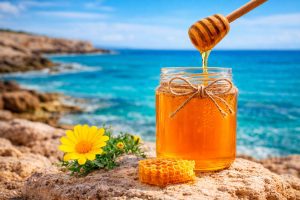
Honey in Cyprus is not simply a food product. It reflects landscape, climate, and survival shaped over centuries. Produced mainly in mountain and rural areas, Cypriot honey carries the character of wild thyme, pine forests, citrus groves, and seasonal movement across the island. Long before sugar became common, honey served as the primary sweetener, a form of medicine, and a symbol of hospitality. Its role has never disappeared. Instead, it has evolved alongside changing lifestyles and technologies. thegreekvibe-com An Island That Shapes Its Honey Cyprus’s geography plays a decisive role in how honey is produced. Two mountain ranges, varied elevations, and sharply contrasting microclimates allow flowering to unfold in stages rather than all at once. Coastal plains warm early in the year, while foothills and high mountain slopes bloom later, extending the foraging season for bees. This vertical landscape makes beekeeping in Cyprus inherently mobile. Apiaries are often moved throughout the year, following blossoms from lowland citrus groves to the thyme-covered slopes of the Troodos Mountains. Honey here is shaped as much by movement as by place, with each harvest reflecting a specific altitude, season, and environment. The Native Bee and Local Resilience At the heart of Cypriot honey production is a native honeybee adapted to the island's demanding conditions. This bee has developed endurance in heat, wind, and drought…

Read more

Cyprus Kleftiko Dish

Cyprus Kleftiko Dish

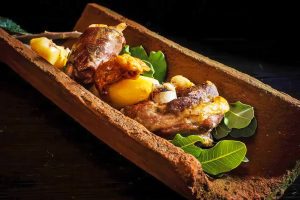
Kleftiko is one of the most recognisable dishes in Cyprus, yet its importance has little to do with flavour alone. This slow-cooked lamb, sealed away from air and fire, tells a story of survival, patience, and rural ingenuity. themediterraneandish-com More than a recipe, Kleftiko reflects how Cypriots adapted to hardship and turned necessity into tradition. Understanding it means understanding why time, restraint, and shared meals still matter deeply on the island. A Dish Built on Secrecy and Time At its core, Kleftiko is lamb or goat cooked slowly in a sealed environment. The defining feature is not the meat itself, but the method. By trapping steam and heat, the meat softens gradually, breaking down until it can be pulled apart with little effort. This approach was developed for practical reasons. Cooking openly created smoke and scent that could travel far. Sealing the meat allowed it to cook invisibly, protected from wind, flame, and unwanted attention. Over hours, sometimes an entire day, the process transformed tough cuts into something rich and deeply aromatic. Kleftiko’s slowness is not incidental. It is the point. Time is the primary ingredient, and patience is the main technique. Why It Is Called Kleftiko The name Kleftiko comes from the Greek word kleftis, meaning “thief.” During periods of Ottoman rule, groups of mountain fighters and shepherds relied…

Read more
Choirokoitia Settlement

Choirokoitia Settlement

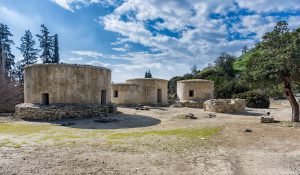
Choirokoitia Settlement is a remarkable Neolithic village on Cyprus's southern coast, dating back to around 7000 BC, where early humans first built permanent homes and formed communities. Recognized as the most important site of its kind in the eastern Mediterranean, it reveals how people shifted from wandering hunters to settled farmers, laying foundations for civilization. This ancient spot whispers stories of innovation and survival, sparking interest in humanity's shared journey toward organized life. turbinatravels-com A Window into Early Human Life Choirokoitia stands as one of the earliest and best-preserved examples of a settled Neolithic community in the region, offering a detailed look at the transition from nomadic existence to village life. Located in the Larnaca District on a hillside overlooking the Maroni River Valley, the site's strategic position provided natural defenses, access to water, and fertile soil for early agriculture. Spanning about 3 hectares, it housed up to 300 people in circular dwellings, marking a pivotal shift in human history known as the Neolithic Revolution. This change involved domesticating plants like emmer wheat, barley, lentils, and animals such as sheep, goats, and pigs, which were introduced to the island by the first settlers from the Levantine mainland around 8500 BC. topwar-ru The settlement's layout reflects emerging social organization, with houses clustered in a semi-circular pattern around a central open space,…

Read more