The white dove carrying an olive branch appears as the centerpiece of Cyprus’s national emblem, adopted in 1960 when the island gained independence from British rule. The dove, symbolizing peace, and the olive branch, symbolizing peace-making, are important elements that emphasize Cyprus’s aspiration for peace and stability after many years of conflict.
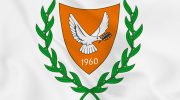
These universal symbols of harmony are fundamental to the aspirations of the Republic of Cyprus, deliberately chosen to unite ethnic and cultural groups on the island without favoring Greek Orthodox crosses or Turkish crescents.
Biblical Origins of the Peace Dove
The dove as a peace symbol traces its roots to the biblical story of Noah’s Ark. After the great flood, Noah sent out a dove to determine if waters had receded. The dove returned with an olive branch, signaling that land had emerged and God’s wrath had ended. This story established the dove and olive branch as symbols of hope, new beginnings, and divine peace across Christian, Jewish, and Islamic traditions.

The olive tree itself held sacred significance throughout Mediterranean civilization. In ancient Greece, the olive represented wisdom and was sacred to Athena. Victors at the Olympic Games received crowns woven from olive branches. The tree’s long life, sometimes exceeding 800 years, made it a symbol of endurance and continuity. Its fruit and oil provided food, light, and medicine, making it essential to survival.
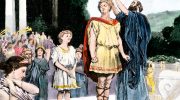
The combination of dove and olive branch created one of history’s most powerful peace symbols, recognized across cultures and religions. By the mid-20th century, this imagery had become synonymous with peace movements worldwide, most famously in Pablo Picasso’s 1949 lithograph that became an international emblem for peace activists.
Why Cyprus Chose These Symbols in 1960
The selection of neutral symbols for independent Cyprus reflected the Zurich and London Agreements that ended colonial rule. These agreements required state symbols chosen jointly by the Greek Cypriot president and Turkish Cypriot vice president that would not favor either community. The dove and olive branch satisfied this requirement perfectly as universally recognized peace symbols without ethnic or religious specificity.

Designed by Turkish Cypriot artist İsmet Güney, the emblem intentionally avoided contentious imagery. No crosses, no crescents, no flags, no partisan colors that might suggest dominance by either Greek or Turkish communities. Instead, the white dove conveyed shared aspirations for peaceful coexistence after decades of increasing tension between the two communities.
The two olive branches encircling the shield represent hope for peace and cooperation between the Greek and Turkish communities residing on the island. Each branch represents one of the two main ethnic groups, symbolizing their equal importance to the republic and the aspiration that they would live harmoniously together.

The year 1960 inscribed below the dove marks Cyprus’s independence on August 16, memorializing this pivotal moment when the island achieved sovereignty after centuries of foreign occupation including Byzantine, Crusader, Venetian, Ottoman, and British rule.
The Copper Shield Beneath the Dove
The copper-yellow background on which the dove stands connects the peace symbol to Cyprus’s ancient identity. The island has been a copper producer since the Bronze Age more than 4,000 years ago. Cyprus is famous for its copper deposits which gave copper its very name through the Latin word cuprum, meaning metal from Cyprus.

The yellow color of the shield represents the large deposits of copper ore on Cyprus, chiefly in the form of chalcopyrite which is yellow in color. This chromatic choice grounds the emblem in empirical economic history rather than abstract symbolism. Copper defined Cyprus’s role in ancient Mediterranean trade and remains part of the island’s identity.
The specifications for the emblem were standardized in 2006, using Pantone 1385 C for the copper color and Pantone 574 C for the olive-green color, ensuring uniformity across all official uses.
How the Peace Symbol Failed Its Promise
The Constitution of Cyprus, Article 4, adopted on August 16, 1960, refers to the national flag as follows: “The Republic shall have its flag of neutral design and color, chosen jointly by the President and the Vice-President of the Republic.” This requirement reflected hopes that power-sharing and neutral symbols would prevent ethnic conflict.

The Republic was not united for long under this flag. After the invasion of the Turkish army in 1964 and escalating violence between communities, the peaceful coexistence the dove symbolized proved impossible to achieve. The Turkish Cypriots withdrew from government institutions, and intercommunal violence erupted. In 1974, a coup attempt by Greek junta prompted Turkey to invade, occupying the northern third of the island.
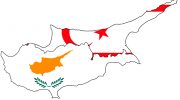
The so-called Turkish Republic of Northern Cyprus, declared in 1983 and recognized only by Turkey, adopted a modified emblem. The 1960 was removed from the shield underneath the dove, replaced with the year 1983 atop the shield, in reference to the Declaration of Independence. The Turkish star and crescent emblem was added above the shield. These minimal modifications signal differentiation while maintaining heraldic continuity with the original republic’s symbols.
The Enduring Power of the Dove
Despite the division, the dove and olive branch remain official symbols of the Republic of Cyprus, appearing on letterheads and government documents, official seals, passports, and state buildings throughout the island. The emblem represents the nation in international forums and serves as visual shorthand for Cypriot identity and sovereignty.

In the context of this division, the symbols of the Republic of Cyprus continue to symbolize hope for the restoration of territorial integrity and peaceful coexistence of different ethnic groups. The dove that failed to prevent conflict in the 1960s now represents aspirations for reunification and reconciliation. UN-mediated negotiations periodically attempt to resolve the Cyprus problem, with the peace dove serving as reminder of what might still be achieved.
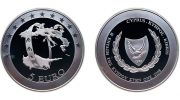
The Cypriot coat of arms was selected as the main motif of a high value collectors’ coin in 2008, the Cyprus introduction to the Eurozone commemorative coin. The obverse depicts the coat of arms of Cyprus while the reverse depicts Cyprus connected with a ring to Europe, celebrating the nation’s entry into the European monetary system.
For many Cypriots, the dove carries bittersweet associations. It represents the idealism of 1960 when independence seemed to promise a new era of prosperity and harmony. It also reminds them of that promise’s failure and the ongoing division that has defined the island for over half a century. Yet it continues serving as the official symbol because alternatives would either favor one community or abandon hope for eventual reunification.
The dove’s endurance as Cyprus’s symbol demonstrates how even failed aspirations can retain power. The peace it represents has not been achieved, but the desire for peace persists. As long as the dove flies on Cyprus’s emblem, the possibility of reconciliation remains alive in the national imagination.