Wheat and barley have shaped Cyprus more deeply than many of its monuments or political eras. Grown across central plains and foothills, these cereals supported village life, defined everyday food traditions, and helped communities endure drought, famine, and political change. This article explores how cereal farming developed on the island, why it mattered socially and culturally, and how grain continues to influence Cypriot life today.

- An Island Fed by Grain, Not Spectacle
- Where Grain Grows and Why It Grows There
- Farming with the Climate, Not Against It
- Wheat and Barley: Similar Roles, Different Meanings
- Grain at the Centre of Village Life
- Communal Bread and Shared Ovens
- Trahanas: Grain Transformed for Survival
- Grain Under Empire and Administration
- Modern Challenges and Changing Priorities
- Why Grain Still Matters in Cyprus
An Island Fed by Grain, Not Spectacle
Cyprus is often described through coastlines, ruins, and mythology, yet for most of its history, the island was sustained by something far more modest. Wheat and barley were not symbols of wealth or power. They were tools of survival.
For thousands of years, grain farming shaped daily routines rather than grand narratives. Sowing followed the first autumn rains, harvest arrived before the summer heat became destructive, and storage was as important as production itself. In this sense, cereals formed the island’s quiet infrastructure, supporting life without drawing attention to themselves.
Where Grain Grows and Why It Grows There
Cereal cultivation in Cyprus has always been closely tied to geography. The broad central lowland known as the Mesaoria Plain lies between the Troodos Mountains and the Kyrenia range. Its relatively flat terrain and workable soils made it the island’s most reliable grain-producing region.
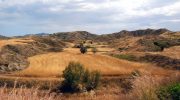
Smaller cereal fields also developed in eastern lowlands and on plateaus in areas such as Paphos, where farming was shaped by necessity rather than abundance. These regions relied almost entirely on rainfall, making grain cultivation a calculated risk rather than a guaranteed return.
This dependence on winter rain explains many features of Cypriot agriculture. Crops were chosen for resilience rather than yield, timing was precise, and failure was always possible. Over generations, this uncertainty encouraged careful planning, storage, and cooperation among households.
Farming with the Climate, Not Against It
Wheat and barley in Cyprus are traditionally rain-fed crops, dependent on seasonal rainfall that arrives between late autumn and early spring. Sowing usually begins after the first substantial rains soften the soil, growth continues through the mild winter months, and harvest takes place in late spring or early summer.
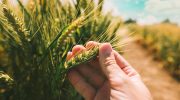
Barley is typically harvested first, reducing the risk of total crop loss if heat or drought arrives early. This system produces modest yields by European standards, but it favours consistency over intensity. Cypriot farmers learned that survival depended less on abundance than on predictability, and grain farming became an exercise in restraint, patience, and adaptation.
Wheat and Barley: Similar Roles, Different Meanings
Although often mentioned together, wheat and barley served distinct purposes in Cypriot life, reflecting different priorities within household and agricultural systems.
Wheat as Everyday Sustenance
Durum wheat has traditionally been the preferred grain for human consumption. Its strength and protein content made it suitable for village bread, pasta, and cracked wheat dishes, forming the basis of daily meals.
Bread was not simply food. It represented stability, hospitality, and continuity. Offering bread to a guest signalled welcome and respect, while a household’s grain stores reflected its ability to endure difficult seasons.
Barley as Resilience Insurance
Barley played a different role. It grows faster, tolerates poorer soils, and matures earlier than wheat. In years when wheat failed, barley often survived, preventing hunger from becoming famine.
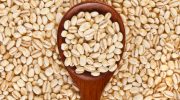
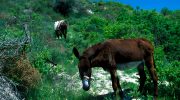
Historically, barley was consumed by people as well as animals, often ground into coarser flour or cooked as groats. In modern Cyprus, it is used mainly as animal feed, supporting dairy and meat production. Even so, its agricultural importance remains unchanged. Barley continues to represent resilience rather than refinement.
Grain at the Centre of Village Life
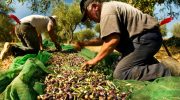
Until the mid-twentieth century, most Cypriot villages operated within a largely self-sufficient food system, and grain farming shaped social organisation as much as diet. Harvest time required coordinated labour, with roles divided among those who cut the stalks, gathered bundles, threshed grain, and winnowed chaff.
Processing grain extended beyond the field. Watermills built along rivers and streams converted grain into flour and became economic and social hubs where farmers exchanged news, settled accounts, and measured harvest outcomes. Milling was as much about connection as production.
Communal Bread and Shared Ovens
Bread-making was rarely a solitary activity. In many villages, large wood-fired ovens served entire communities. Families prepared dough at home, often using natural sourdough starters, and carried it to the shared oven for baking.
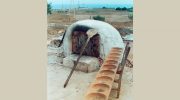
Loaves were marked with simple symbols or cuts so families could identify their bread, creating informal traditions and quiet rivalries. The oven itself became a gathering point for conversation and exchange, reinforcing a shared rhythm of production and consumption that regulated household resources long before modern sustainability concepts emerged.
Trahanas: Grain Transformed for Survival
Among all grain-based foods in Cyprus, trahanas stands out for its ingenuity. Made from cracked wheat and fermented milk, it was designed to preserve nutrition across seasons.

Preparation usually took place at the end of summer, when milk was abundant. The mixture was cooked, shaped into small pieces, and dried in the sun until it became shelf-stable. Stored properly, trahanas could last for years.
In winter, it was cooked into a thick soup, often enriched with halloumi cheese. The result was filling, warming, and nutritionally dense. More importantly, it represented foresight, ensuring food would be available when fresh produce was scarce.
Grain Under Empire and Administration
Cereal farming was deeply affected by political control. Under Ottoman rule, grain production was taxed through a tithe system that claimed a portion of each harvest, tying food security directly to governance and creating tension during poor seasons.
Grain shortages triggered unrest, reminding authorities that control over food was inseparable from social stability. During British administration, trade expanded and infrastructure improved, but cereal farming remained largely traditional well into the twentieth century. Despite external control, village-level practices changed slowly, reflecting the persistent risks of Mediterranean agriculture.
Modern Challenges and Changing Priorities
Today, Cyprus imports a significant share of its grain. Climate variability, rising costs, and global competition have made small-scale cereal farming increasingly difficult. Hotter temperatures and erratic rainfall reduce yields, while modern diets rely less on traditional grain foods.
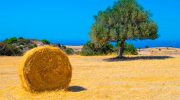
Barley remains important for livestock, but wheat production no longer defines national food security as it once did. At the same time, interest in traditional foods is returning. Artisanal bakeries, village festivals, and local food movements highlight bread, trahanas, and whole grains as cultural assets rather than outdated habits.
Why Grain Still Matters in Cyprus
Grain matters because it reveals how Cypriot society learned to live within limits. Wheat and barley taught restraint, planning, and cooperation, encouraging systems that valued storage over excess and community over individual gain.
Even today, these lessons remain visible. A loaf of village bread, a bowl of trahanas soup, or a barley-fed dairy product carries more than nutritional value. Each reflects an inherited understanding of land, climate, and collective effort.
Cyprus’s grain culture is not a relic. It is a reminder that endurance, not abundance, has always been the island’s greatest strength.