The coat of arms of the Republic of Cyprus depicts a dove carrying an olive branch, symbolizing peace, over 1960, the year of Cypriot independence from British rule. The background is a copper-yellow color, representing the large deposits of copper ore on Cyprus, chiefly in the form of chalcopyrite which is yellow in color.
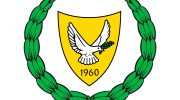
The two-part olive wreath surrounding the shield represents the two ethnic groups of Cyprus, Greeks and Turks. Adopted in 1960 following the Zurich and London Agreements that ended colonial administration, the emblem embodies aspirations for reconciliation between the Greek and Turkish Cypriot populations.
The Designer Behind the Symbol
Designed by Turkish Cypriot artist İsmet Güney, the emblem parallels the neutral motifs of the national flag to promote unity. The intentional incorporation of neutral motifs, a dove with an olive branch over the date of independence, symbolized peace without favoring Greek Orthodox crosses or Turkish crescents, aligning with the Zurich and London Agreements’ stipulation for neutral state symbols chosen jointly by the Greek Cypriot president and Turkish Cypriot vice president.

Copper-infused elements, such as the yellowish shield tint evoking chalcopyrite ore, recur as a material nod to Cyprus’s ancient metallurgical prominence, linking modern republican heraldry to the island’s etymological roots in Latin aes Cyprium meaning “metal of Cyprus,” derived from prehistoric bronze-age exports that named the resource itself. This chromatic choice grounds emblems in empirical economic history rather than abstract symbolism.
What the Symbols Represent
The white dove bearing an olive branch in its beak symbolizes peace, the most fundamental aspiration for a newly independent nation emerging from colonial rule and ethnic tension. The dove and branch constitute indelible symbols of peace that appeared throughout Mediterranean civilization and Greek mythology, making them culturally appropriate for Cyprus while remaining neutral enough to avoid favoring one ethnic community.

The year 1960 inscribed underneath the dove marks Cyprus’s independence from British rule on August 16, 1960, memorializing this pivotal moment in national history. The date serves as permanent reminder of sovereignty gained after centuries of foreign occupation including Byzantine, Crusader, Venetian, Ottoman, and British rule.

The copper-yellow shield color represents the large deposits of copper ore on Cyprus. The island is famous for its copper deposits which gave copper its very name through the Latin word cuprum, meaning metal from Cyprus. Cyprus has been a copper producer since the Bronze Age more than 4,000 years ago, with ancient mines still visible at sites like Skouriotissa in the Troodos Mountains.

The two olive branches encircling the shield represent hope for peace and cooperation between the Greek and Turkish communities residing on the island. Each branch represents one of the two main ethnic groups, symbolizing their equal importance to the republic and the aspiration that they would live harmoniously together.
Updates and Standardization
In 2006, the emblem underwent a stylistic update, sharpening the dove’s volant pose facing left, refining the olive branches’ contours, and enhancing the copper field’s outline for improved visual precision, without altering symbolic content. The decision to change the emblem was prompted by Communication Minister Harris Thrassou who wanted the emblem’s colors coded. Up until then the yellow and green on the flag or emblem was not coded, simply having to be more or less yellow or green.
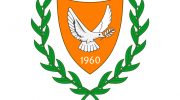
During discussion to color-code the Republic’s seals, it was suggested that the actual images of both the emblem and flag be standardized as well. The new shield depicts a clearer image of the dove holding an olive branch in its mouth. The olive branches underneath were also reduced and made clearer. The specifications now use Pantone 1385 C for the copper color and Pantone 574 C for the olive-green color.
The Northern Cyprus Version
The Turkish Republic of Northern Cyprus adopted an emblem in 1983 that paralleled the Republic’s in core elements but adapted it. The 1960 was removed from the shield underneath the dove, replaced with the year 1983 atop the shield, in reference to the Declaration of Independence of the so called Turkish Republic of Northern Cyprus after the Turkish invasion of Cyprus. The Turkish star and crescent emblem was added above the shield.
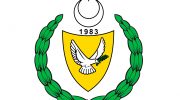
In March 2007, a slight change to the layout of the arms was made with the dove shown in a different attitude. These minimal modifications, rather than a full redesign, underscore practical constraints faced by the unrecognized administration in maintaining heraldic continuity while signaling differentiation. The emblem appears on official seals, documents, and state buildings in the so called TRNC-administered area, which remains under Turkish military presence and is recognized solely by Turkey.
The Power Behind These Symbols
The coat of arms was chosen to unite the various ethnic and cultural groups on the island, Greek Cypriots and Turkish Cypriots, symbolizing their common future in a new independent state. The symbolism of Cyprus was primarily aimed at creating a common national identity while remaining influenced by foreign policy and international relations, such as the island’s status within agreements with Greece and Turkey.
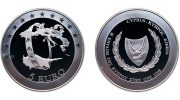
The Cypriot coat of arms was selected as the main motif of a high value collectors’ coin in 2008, the Cyprus introduction to the Eurozone commemorative coin. The obverse depicts the coat of arms of Cyprus while the reverse depicts Cyprus connected with a ring to Europe on a transfigured map, celebrating the nation’s entry into the European monetary system.
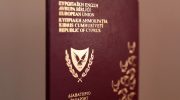
The emblem appears on letterheads and government documents, official seals, passports, and state buildings throughout the Republic of Cyprus. It represents the nation in international forums and serves as visual shorthand for Cypriot identity and sovereignty.