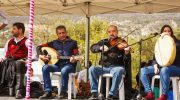
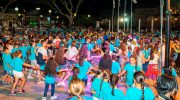
Long before recorded music or concert halls, Cyprus learned to speak through breath and reed. Across mountains, fields, and village squares, flutes and reed pipes carried news, marked rituals, guided dances, and filled long hours of solitude with sound. These instruments were never background decoration. They were tools of daily life, shaping how people worked, celebrated, and understood their place in the world.
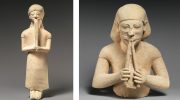
This article explores the traditional flutes and reed pipes of Cyprus, focusing on how they were made, who played them, and why their sound still carries meaning today across both Greek Cypriot and Turkish Cypriot communities.
- Sound Born From the Land
- The Pithkiavli: Cyprus’s Shepherd Voice
- How a Simple Reed Became an Instrument
- The Zurna: Music That Commands Attention
- When Music Became Collective
- The Ney and the Kaval: Breath and Reflection
- Music at Life’s Turning Points
- Dance, Breath, and Movement
- From Everyday Tool to Cultural Heritage
- Why These Instruments Still Matter
Sound Born From the Land
Cyprus did not invent its wind instruments in workshops. It grew them.

Most traditional flutes were made from Arundo donax, the wild reed that thrives along rivers and fields. Shepherds, farmers, and village musicians shaped instruments directly from what the landscape offered. The result was a sound tied not to perfection, but to place.
These instruments belonged outdoors. They were played in open fields, on hillsides, in courtyards, and during long walks between villages. Their design reflects that purpose: simple, durable, and responsive to breath rather than mechanical precision.
The Pithkiavli: Cyprus’s Shepherd Voice
The pithkia is the most ancient Cypriot wind instrument, with archaeological evidence from the Sanctuary of Aphrodite in Paphos dating back to 2500 B.C. It is a small fipple flute made from a single piece of reed, shaped carefully so air passes through an internal channel before striking the edge.

What makes the pithkiavli distinctive is not complexity, but intimacy. Its sound is soft, clear, and personal. This was an instrument meant for one person, often alone, playing for time rather than for an audience.
Historically, shepherds carried the pithkiavli during tzimistron, the practice of staying overnight in fields with their flocks during the summer months. Music filled the silence, calmed animals, and marked the slow rhythm of rural life. Certain melodies even functioned as signals, communicating routine actions without words.
How a Simple Reed Became an Instrument
Making a pithkiavli followed tradition rather than measurement.
Reeds were typically harvested in winter, dried slowly, and cut to length between natural nodes. Finger holes were burned rather than drilled, using heated metal to prevent splitting. Each instrument was slightly different, shaped by the reed’s diameter and the maker’s hand.
No two pithkiavlia sounded exactly the same. That variation was not a flaw. It was expected. The instrument reflected the maker, the season, and the material available at that moment.
The Zurna: Music That Commands Attention
If the pithkiavli speaks quietly, the zurna announces itself.
The zurna is a powerful double-reed instrument designed for outdoor performance. Its piercing tone carries over crowds, making it ideal for weddings, festivals, and public ceremonies. Traditionally paired with the davul drum, the zurna led processions, called communities together, and set the pace for energetic dances.
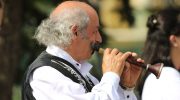
Unlike the pithkiavli, the zurna requires stamina and technical skill. Players often use circular breathing to maintain continuous sound, turning performance into a physical act as much as a musical one.
When Music Became Collective
The zurna changed not only how music sounded, but how it functioned socially.
Its presence marked moments when private life spilt into public space. A wedding was no longer confined to a courtyard once the zurna sounded. The village street became part of the celebration. Sound travelled faster than messengers, announcing that something meaningful was unfolding.
Although today the zurna is more commonly associated with Turkish Cypriot musical traditions, its historical role crossed communal boundaries. What mattered was not identity, but reach. When a sound needed to be heard by everyone, the zurna answered that need.
The Ney and the Kaval: Breath and Reflection
Not all Cypriot wind instruments were designed to command attention.
The ney, an end-blown flute deeply connected to Sufi musical traditions, carried a quieter purpose. Its breathy tone, fragile and unresolved, encouraged inward listening. In Cyprus, the ney found its place in spiritual and contemplative settings, where music was meant to slow thought rather than energise the body.

The kaval occupied a space between solitude and community. Often played by shepherds, it echoed across hillsides, blending with wind and distance. Yet it also appeared in gatherings, carrying melodies that felt shaped by landscape rather than enclosure. Its sound suggests travel, waiting, and reflection rather than arrival.
Music at Life’s Turning Points
Across village life, flutes and reed pipes accompanied moments when time felt altered.
At weddings, their melodies guided each transition, from preparation to procession, from anticipation to celebration. During festivals such as Kataklysmos, music became public and competitive, with players responding to one another through variation and endurance. In agricultural settings, sound coordinated labour establishes a rhythm where speech would fail.
These instruments were not decorative additions to ritual. They structured it. They told people when to gather, when to move, and when attention was required.
Dance, Breath, and Movement
Traditional Cypriot dances remain inseparable from wind instruments because breath determines motion.
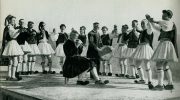
Circular dances such as Syrtos rely on melodic continuity, allowing the circle to expand and contract with the phrasing of the music. Face-to-face dances like Karsilamas demand rhythmic clarity, where each step responds directly to the musician’s breath and emphasis.
Recorded music cannot replicate this relationship. Live wind instruments adjust instantly, responding to dancers as much as leading them. The exchange between movement and sound explains why flutes and pipes remained central long after other forms of music could be mechanically reproduced.
From Everyday Tool to Cultural Heritage
As Cyprus urbanised in the twentieth century, these instruments gradually retreated from daily use. Formal music education, amplified sound, and changing social patterns altered how music was learned and performed.
Yet disappearance was followed by revival.

Village festivals, cultural associations, and musicians committed to preservation began reintroducing traditional flutes to public life. Today, these instruments appear not only in folk settings but also in contemporary and experimental contexts, proving that adaptability does not require erasure of identity.
Why These Instruments Still Matter
Cypriot flutes and reed pipes matter because they reveal a time when culture was not compartmentalised.
Music was not separate from work, belief, or rest. It moved through all of them, carried by breath and shaped by necessity. The sounds produced were not meant to impress. They were meant to function, to accompany life as it unfolded.
Listening to these instruments today is not an exercise in nostalgia. It is an act of recognition. They remind us that culture begins wherever people shape meaning from what is already in their hands.