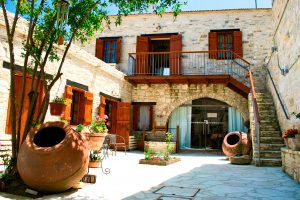
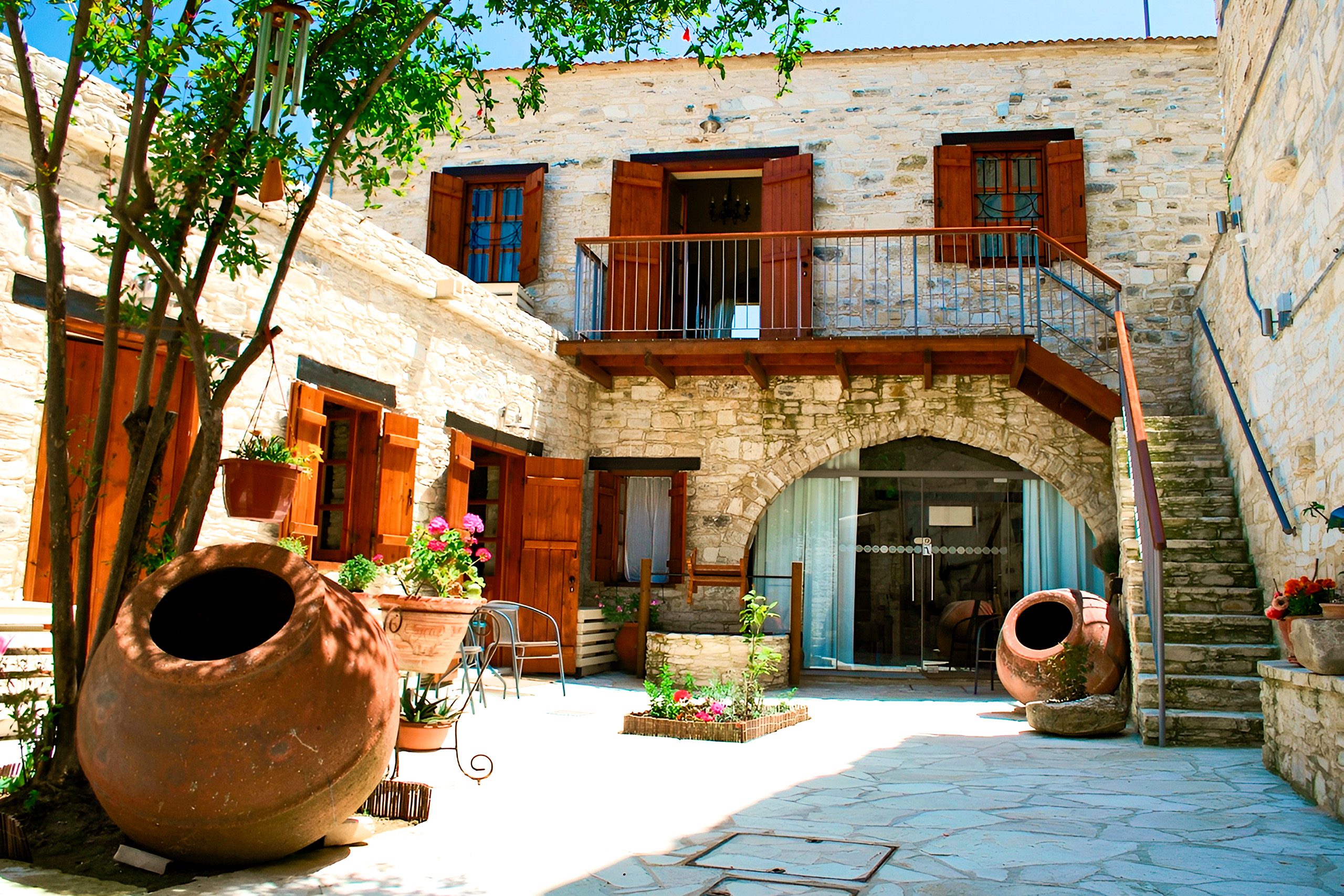
Traditional Cyprus village homes centered on extended family units living together across multiple generations within shared compounds. These stone-built structures featured the dikhoro or double room arrangement as the main living space, surrounded by courtyards where families conducted agricultural work, food processing, and daily domestic tasks.
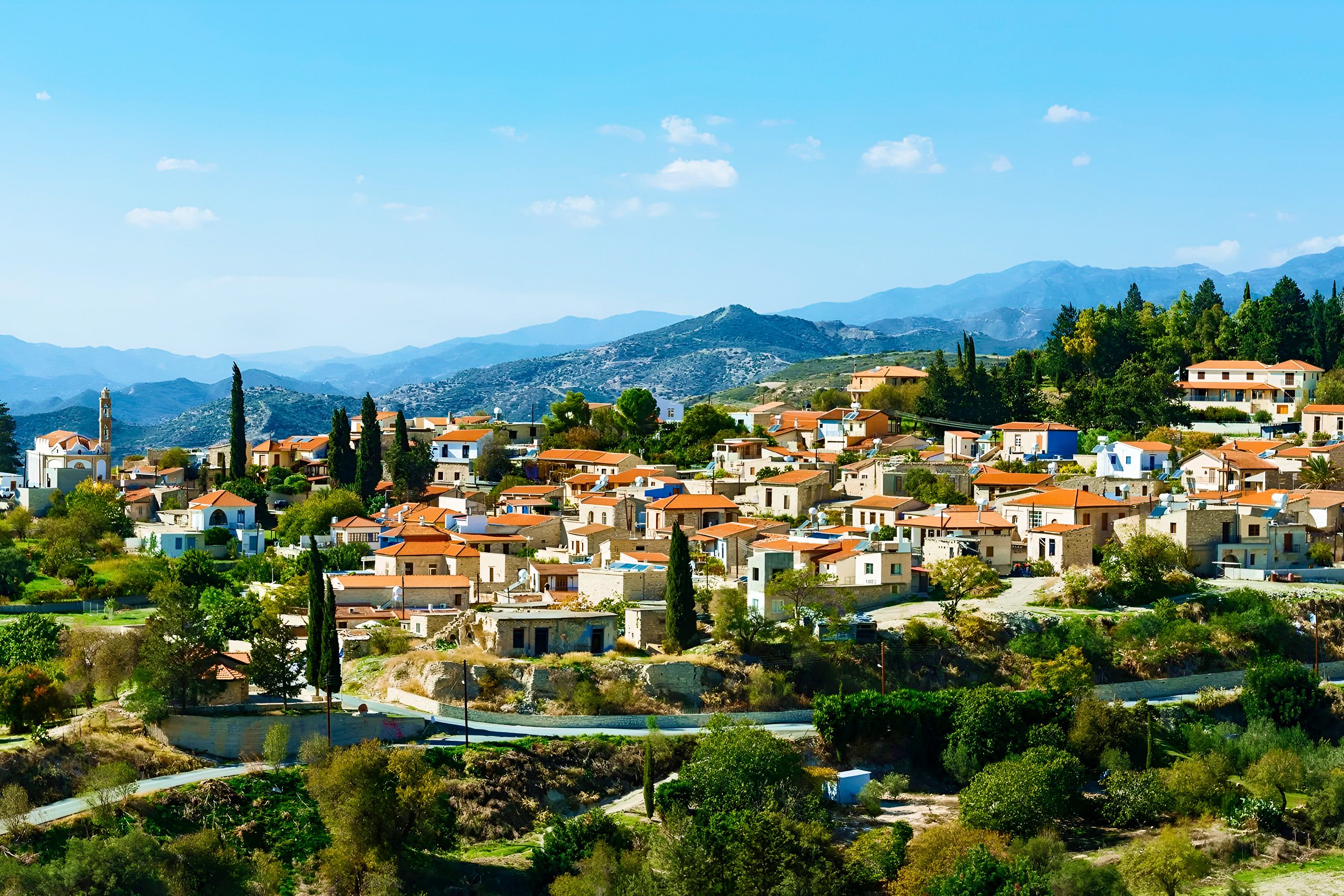
The architecture reflected social organization where newly married couples built homes adjacent to parents’ property, creating family clusters that expanded outward from original settlement cores. Children grew up surrounded by grandparents, aunts, uncles, and cousins who shared courtyard spaces and participated in collective economic activities including olive pressing, wine making, and textile production.
The extended family functioned as an economic unit that pooled labor and resources while providing social security through mutual support. This traditional living arrangement persisted until the mid-20th century when urbanization, employment opportunities outside agriculture, and changing social values prompted nuclear family households to become dominant.
The Dikhoro as the Heart of Domestic Life
The dikhoro, meaning two areas, consisted of two parallel rooms separated by a graceful stone arch or arcade that allowed visual and physical connection while maintaining functional divisions. This arrangement provided the main living quarters where family members gathered for meals, conversation, sleeping, and household tasks. One room typically served as sleeping space for parents and young children, while the second room accommodated daytime activities including food preparation, textile work, and entertaining guests.
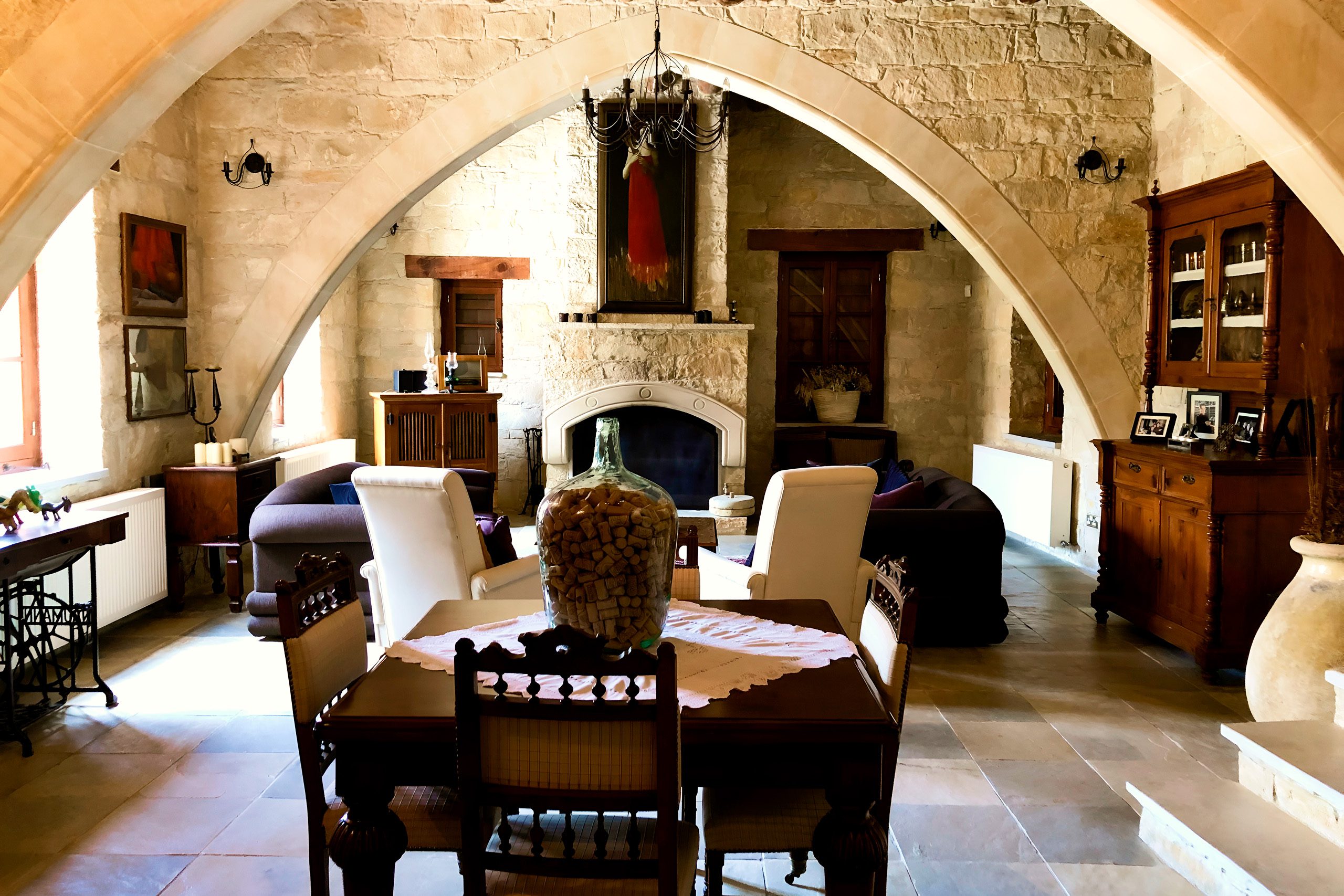
The dikhoro’s furnishings reflected family wealth and status. Wealthier households displayed carved wooden cabinets called armarola decorated with characteristic eagle motifs, metal beds with gilded bedknobs considered signs of prosperity, and the souvantza, decorative wall shelves displaying pottery, jugs, and precious items. Beds featured canopies to protect from insects during warm months when windows remained open for ventilation. Orthodox icons and metal or clay censers for burning incense occupied prominent positions, establishing the religious character of domestic space.
Less prosperous families made do with simpler furnishings including handmade wooden chairs from Fini village, woven reed mats for sleeping, and basic cooking implements. Regardless of wealth, homes maintained consistent organizational patterns that reflected cultural priorities around family cohesion, religious devotion, and hospitality. The decoration used items of everyday use transformed into aesthetic objects, demonstrating how traditional societies integrated function and beauty without separating utilitarian and decorative purposes.
Extended Family Living Patterns
The traditional Cyprus family operated as a patriarchal extended household where three or four generations lived in adjacent structures sharing courtyard spaces and economic activities. When sons married, they typically built new houses immediately next to their father’s property, creating family compounds where brothers raised children in close proximity. Daughters married into other family compounds, maintaining connections with their birth families through visits and support networks.
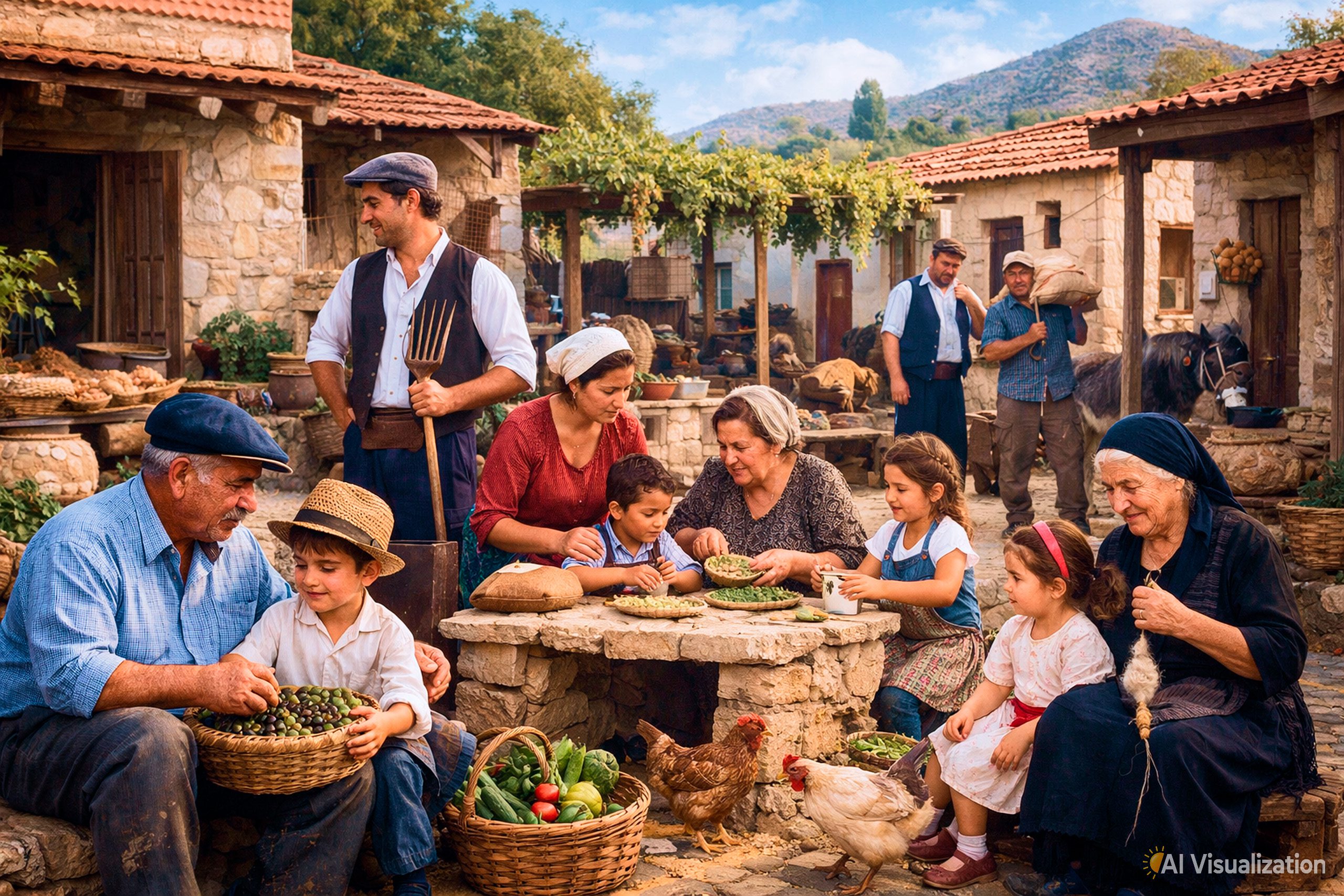
This residential pattern created neighborhoods organized by kinship rather than random association. Walking through villages, one encountered clusters of relatives living within meters of each other, sharing water sources, agricultural tools, and labor during peak work periods. The proximity allowed grandparents to supervise grandchildren while parents worked in fields, elderly family members to receive care from younger relatives, and families to mobilize quickly for emergencies or celebrations.
The extended family functioned as an economic corporation where members contributed labor according to age and ability while receiving support according to need. Young men provided physical labor for plowing, harvesting, and construction. Women managed households, produced textiles, processed food, and supervised children. Elderly members contributed accumulated knowledge about weather patterns, plant varieties, animal behavior, and traditional remedies that guided family economic decisions.
The Courtyard as Shared Work Space
High stone walls enclosed family compounds, creating avli courtyards that served as primary workspace for agricultural processing and craft production. Women dried fruits and vegetables on flat rooftops accessible from courtyards, creating preserved foods that sustained families through winter. Olives were crushed in small stone presses to extract oil used for cooking, lighting lamps, and religious purposes. Grapes were crushed to produce wine and boiled down to create palouzes pudding and soutzoukos candied walnuts.
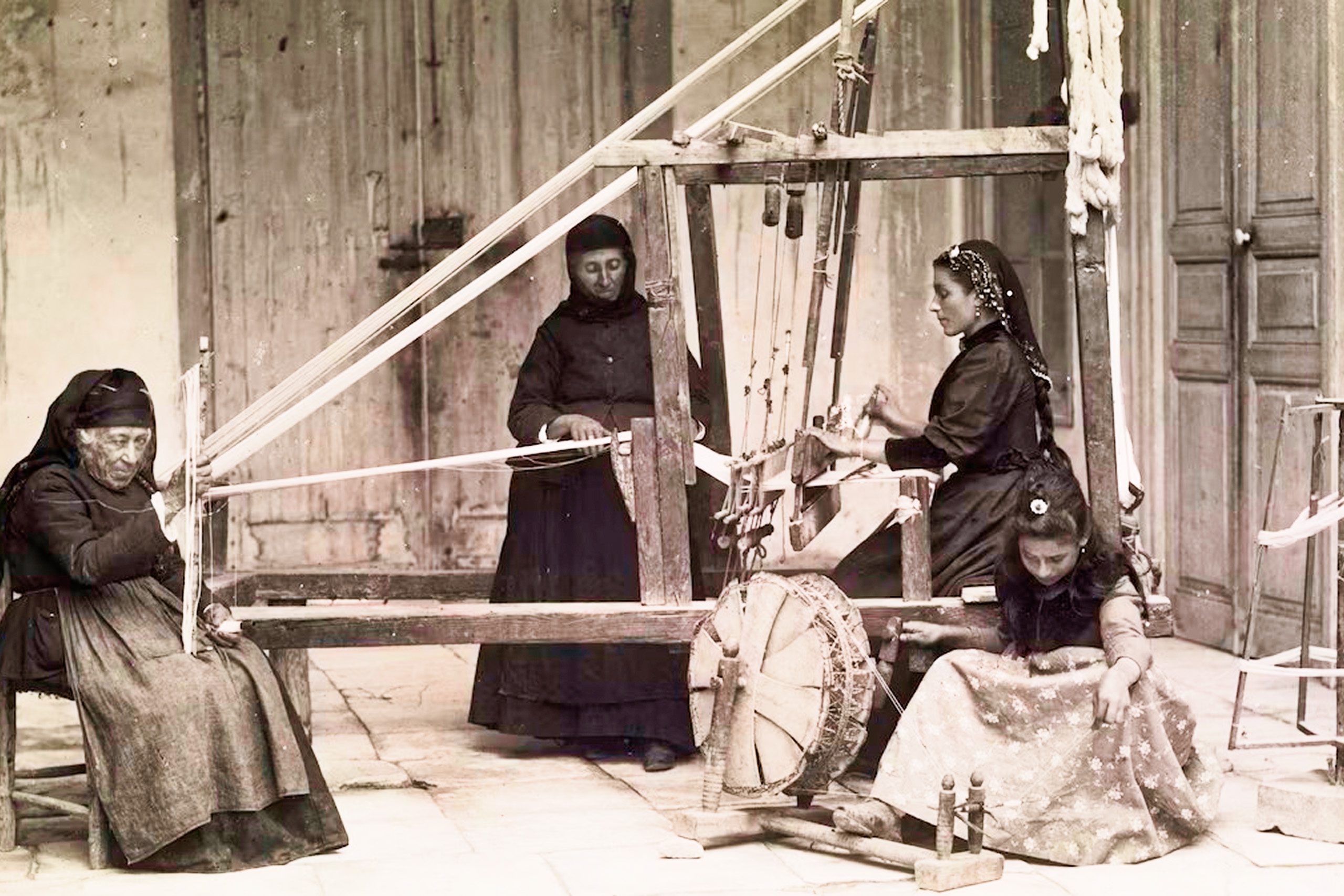
Textile production occurred primarily in courtyards where natural light aided detailed handwork. Women spun wool from family sheep flocks into thread using drop spindles, then wove fabric on outdoor looms. This labor-intensive process required years to produce sufficient textiles for family needs. Silk production became popular in Cyprus, Omodos Village, making silk clothing accessible to peasant families rather than exclusively elite populations. The availability of locally produced silk meant Cypriot villagers dressed in silk shirts and dresses, an unusual sight in Mediterranean agricultural communities.
Men performed maintenance tasks in courtyards including repairing agricultural tools, constructing wooden furniture, and maintaining donkeys or mules used for transportation. The integration of production and domestic space eliminated need for separate workshop structures while providing ventilation and natural light. This spatial organization reflected preindustrial economies where home and workplace remained undifferentiated, with family members moving fluidly between domestic tasks and economic production.
Gender Roles and Spatial Division
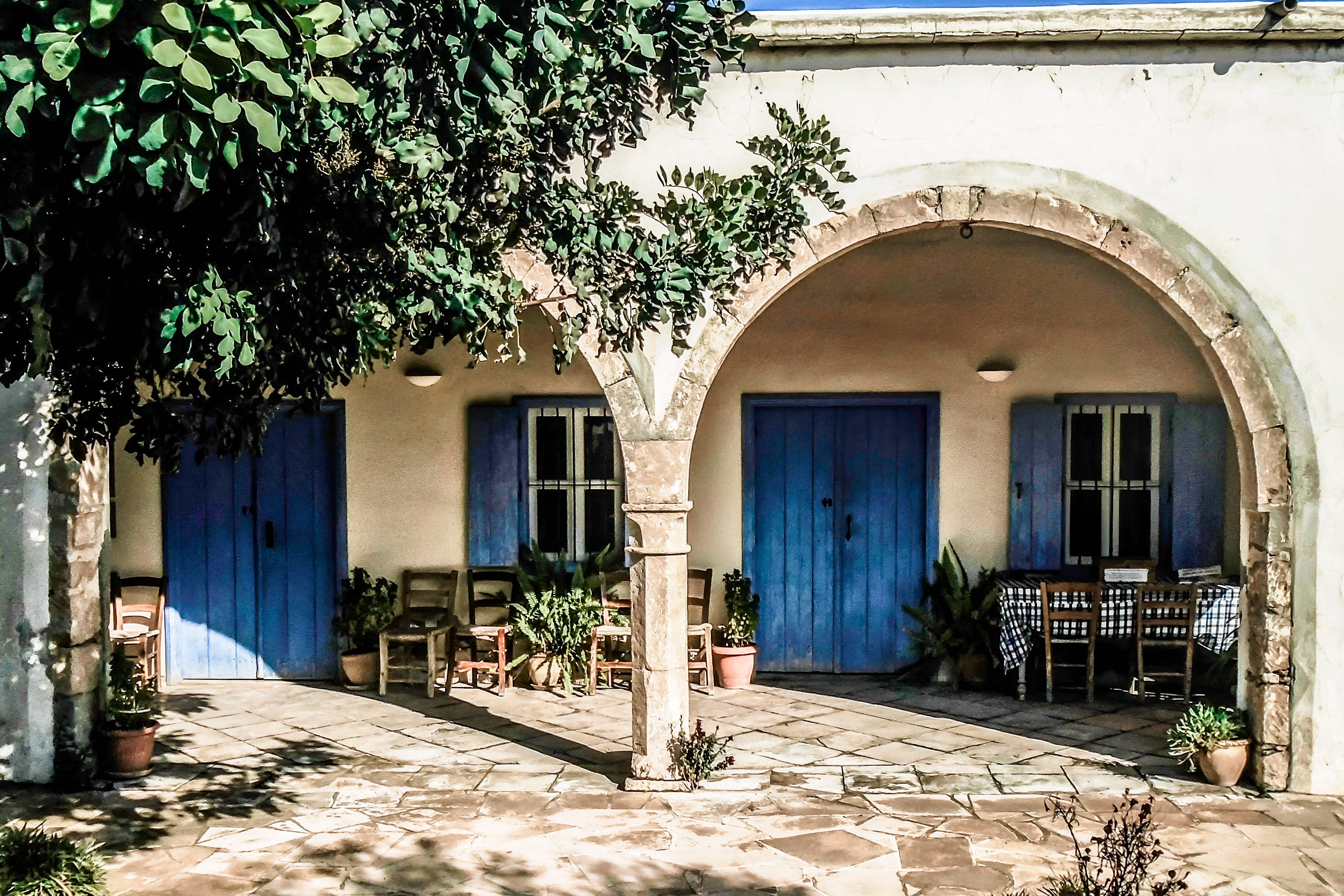
Traditional homes enforced strict gender separation through spatial organization. The iliakos, a semi-open covered porch, served as the primary space for receiving male guests who could not enter private family areas. Women prepared coffee and traditional sweets to serve in the iliakos while men conversed about village affairs, business dealings, and political developments. This arrangement allowed hospitality without violating norms that kept domestic interiors concealed from male outsiders.
Women’s social interactions occurred primarily in courtyards and during communal tasks like drawing water from village fountains, washing clothes, and spinning wool. These activities created opportunities for information exchange, marriage arrangement discussions, and mutual support networks that operated parallel to male social structures centered in coffee shops. The separation reflected broader Mediterranean patterns where public space belonged primarily to men while women dominated domestic and family-related spheres.
Children occupied liminal positions, moving between male and female spaces until boys reached adolescence and began participating in adult male activities while girls entered female work domains. The extended family structure meant children had constant supervision from relatives while parents worked, creating collective childcare arrangements that distributed responsibility across multiple adults.
Modern Preservation and Agrotourism Adaptation
Beginning in the 1990s, abandoned traditional houses received attention as cultural heritage worth preserving. The government offered restoration grants for properties maintaining authentic architectural character while permitting interior modernization. Many restored houses now operate as agrotourism accommodations that showcase traditional living arrangements to visitors seeking authentic rural experiences.
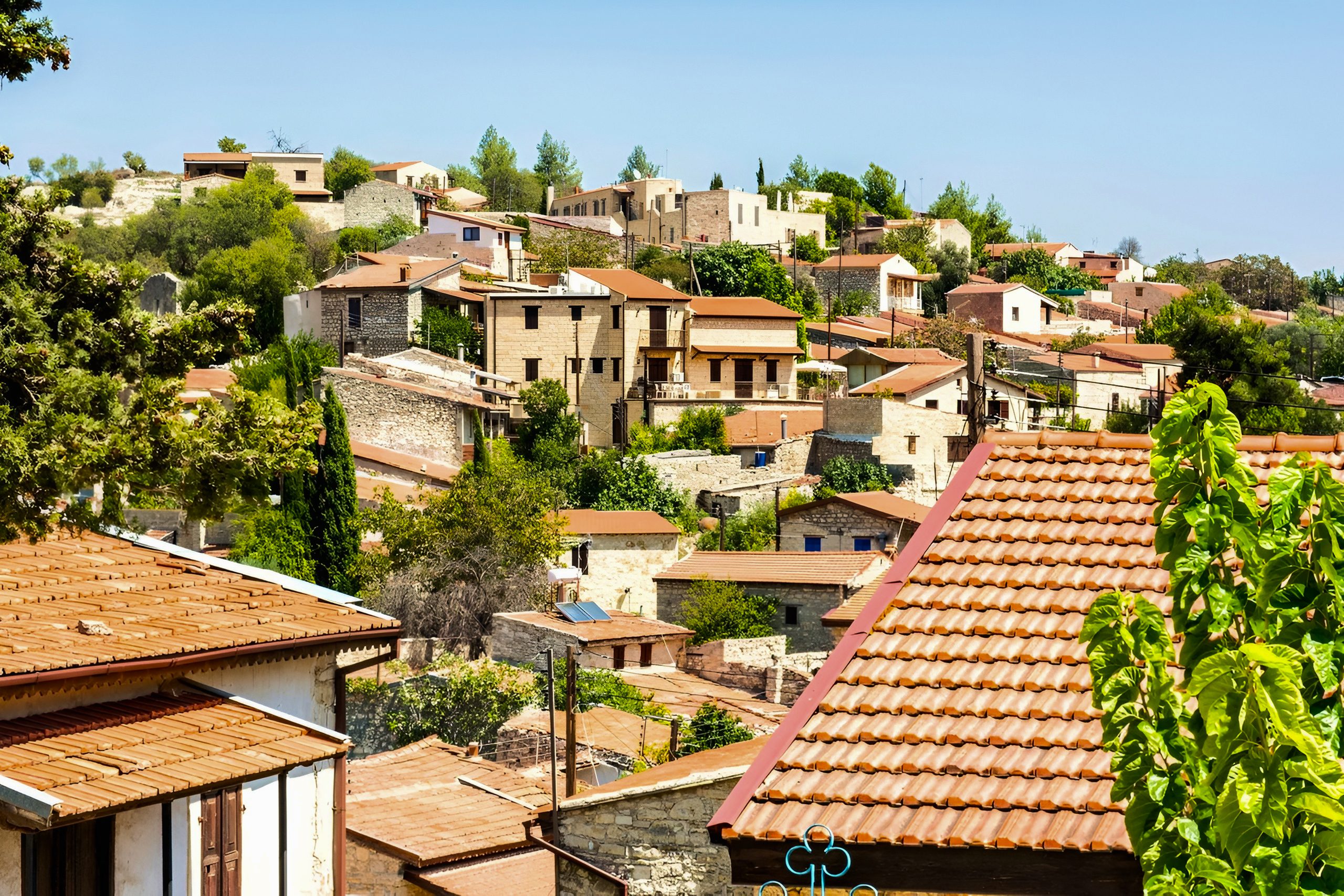
These adaptations typically retain original stone walls, arches, courtyards, and decorative elements while adding bathrooms, modern kitchens, air conditioning, WiFi, and televisions. The combination allows tourists to experience village architecture while enjoying contemporary comforts. Properties like the Melissothea Stone Suites and Casale Panayiotis complex demonstrate how traditional structures can accommodate modern expectations without destroying historic character.
The agrotourism movement provides economic incentives for village preservation by generating income that supports rural communities threatened by depopulation. Young Cypriots increasingly recognize value in architectural heritage their parents’ generation abandoned for concrete apartments, creating markets for restoration skills and traditional crafts. This cultural revival remains fragile, depending on tourism revenues that fluctuate with economic conditions and international travel patterns.