Explore Cyprus with Our Interactive Map

Explore our top stories and discover ideas worth your time.

Traffic Flow and Driving Culture in Cyprus

Traffic Flow and Driving Culture in Cyprus

Cyprus follows left-hand traffic, a direct inheritance from British colonial rule that ended in 1960. This means vehicles drive on the left side with steering wheels positioned on the right. The system remains unchanged despite the island's location in a region where most countries drive on the right. The cost of transitioning the entire transportation infrastructure would exceed €2 billion according to government estimates, making any change economically unfeasible. For British, Irish, and Australian visitors, this familiar setup offers immediate comfort. However, drivers from right-hand traffic countries face a genuine adjustment period. Research shows that drivers require 3-5 days to fully adapt their spatial processing when switching traffic sides. The challenge extends beyond steering to include automatic behaviors like mirror checking and turn judgment. Speed Limits and Road Infrastructure The speed limit structure in Cyprus is straightforward. Urban areas have a 50 km/h limit, while 80 km/h applies to major roads outside cities. Motorways allow a maximum of 100 km/h with a minimum requirement of 65 km/h. Villages typically enforce a 30 km/h limit with traffic calming measures. Road quality varies significantly across the island. Motorways and major urban routes receive excellent maintenance with clear signage in both Greek and English. However, rural and mountain roads present challenges, including potholes, narrow passages, and deteriorated surfaces in remote areas. The Cyprus…

Read more
Cape Greco Sea Cliffs And Caves

Cape Greco Sea Cliffs And Caves

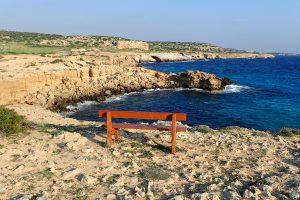
Cape Greco rises from the Mediterranean Sea at Cyprus's southeastern tip, where limestone cliffs drop sharply into turquoise waters, and erosion has carved spectacular sea caves that extend up to 80 metres into solid rock. Cape Greco, also known as Capo Greco or Kavo Greko, forms a rocky peninsula jutting into the Mediterranean between the resort towns of Ayia Napa and Protaras. The headland marks the easternmost point of both the Republic of Cyprus and the European Union, excluding outlying territories. The area covers 385 hectares protected as National Forest Park under the Cyprus Forestry Department since 1993, with additional recognition as part of the Natura 2000 network for its European ecological significance. Historical Background The limestone cliffs at Cape Greco formed from sediments deposited when shallow seas covered the region millions of years ago. Marine organisms including mollusks, corals, and microscopic creatures contributed calcium carbonate that accumulated on the seabed and eventually compressed into rock layers. Tectonic activity lifted these sediments above sea level, creating the elevated plateau that characterizes the cape today. Wave erosion shaped the detailed features that make Cape Greco distinctive. Constant pounding by Mediterranean storms exploits weaknesses in the limestone, gradually hollowing out caves, cutting through narrow points to form arches, and creating vertical channels where waves compress and release with explosive force. This process…

Read more

Ancient Wine Pressing Techniques Cyprus Wineries

Ancient Wine Pressing Techniques Cyprus Wineries

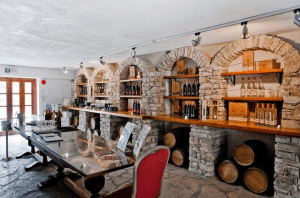
Cyprus holds one of the longest unbroken wine traditions in the world, with archaeological evidence placing winemaking on the island at approximately 5,500 years ago. Pottery fragments discovered at Erimi village and analyzed in 2005 by Italian archaeologist Maria-Rosaria Belgiorno showed traces of tartaric acid, proving that these Chalcolithic period vessels dated between 3500 BC and 3000 BC were used for wine storage. What makes Cyprus unique is not just the antiquity of its wine culture, but the remarkable continuity of production methods that survived for millennia. Historical Background The earliest winemaking in Cyprus relied on simple but effective techniques. Grapes were placed in stone or clay basins where workers trod them with bare feet to extract the juice. A ceramic jug from Pyrgos dating to 2000 BC depicts a woman with her feet in a pressing vessel with juice flowing into a basin below, representing one of the earliest known visual records of grape treading anywhere in the Mediterranean. Medieval wine presses evolved into more sophisticated equipment, with the Omodos Wine Press representing a stunning example that is between 700 and 800 years old. This press features an enormous double wooden beam spanning the room, with a giant wooden screw attached to one end and weighted by a large stone that could be raised and lowered by pulley. Workers…

Read more