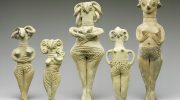
Eastern Western Symbolism Cyprus
Fusion of Eastern and Western Symbolic Systems in Cypriot art stands out in the ancient world for its masterful blending of Near Eastern grandeur, Aegean elegance, and broader Mediterranean motifs, resulting in a uniquely hybrid visual language. Rather than direct imitation, Cypriot artisans integrated these influences to create fresh expressions that reflected trade, migration, and cultural intersections. This approach produced artworks that appear both familiar and original, providing insight into how an island positioned at the fringes of empires became a hub for creative synthesis. A Canvas of Cultural Crossroads Cypriot art embodies the island's role as a bridge between continents, where symbols from diverse traditions merged into cohesive forms. Pottery adorned with mythical beasts and sculptures combining human and animal elements illustrate narratives of sailors, traders, and settlers exchanging ideas across seas. This synthesis arose from Cyprus's involvement in extensive trade networks, where motifs representing power, fertility, and divinity were reinterpreted to form a distinctly local style. The result is a visual dialogue between worlds, characterized by vitality and innovation. Tracing the Threads of Influence The fusion began in the Bronze Age around 3000 BC, as early Cypriot artists incorporated elements from neighboring regions. The island's copper mines attracted interactions with Anatolia, the Levant, and the Aegean, leading to prehistoric figurines that combined Near Eastern curves with local abstraction.…
Read more