Explore Cyprus with Our Interactive Map

Explore our top stories and discover ideas worth your time.

Traditional Folk Dance of Cyprus

Traditional Folk Dance of Cyprus

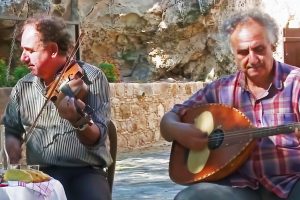
Cypriot folk dance and song are not museum traditions but a living social system that still organises how people gather, celebrate, and remember. Shaped by weddings, saint-day festivals, and village life, performance in Cyprus blends improvisation, audience participation, and distinctive instruments to create belonging in real time. This article explains the main dance forms, vocal traditions like tsiattista, the instruments and costumes that carry regional identity, and why shared rhythms persist across communities despite modern change. Culture You Join, Not Watch Traditional Cypriot dance developed as a social language rather than a formal spectacle. It emerged from weddings, religious festivals, seasonal fairs, and informal gatherings, where music and movement flowed naturally from shared experience. Unlike many European folk traditions that later became rigidly choreographed, Cypriot dance retained space for improvisation and personal expression. Dancers are not expected to disappear into uniformity. Individual temperament matters. Subtle variations in timing, posture, and intensity are encouraged, especially from experienced performers. The dance becomes a conversation between the lead dancer, the musicians, and the watching crowd. Steps Learned in Real Life Many Cypriot dances are built around face-to-face interaction. The antikristos, often linked with the karsilamas tradition, is performed by pairs who mirror and respond to each other's movements. The emphasis is not on competition, but on mutual recognition and balance. Other dances expand…

Read more
Cypro Minoan Script

Cypro Minoan Script

Cypro-Minoan is Cyprus’s Late Bronze Age writing system, preserved on about 250 short inscriptions but still undeciphered because no bilingual “key” exists and the underlying language remains unknown. Found mainly at major production and trading centres, and occasionally beyond Cyprus, it shows that writing was used as a practical tool for control and exchange rather than as palace display. This article explains where the script appears, what objects carry it, why scholars cannot yet read it, and how it likely connects to the later Cypriot Syllabary. Alashiya at a Trade Crossroads During the Late Bronze Age, Cyprus sat at a strategic intersection between the Aegean, the Near East, and Egypt. Known in contemporary texts as Alashiya, the island was a major exporter of copper, a resource essential for tools, weapons, and trade. This constant movement of goods also carried ideas, technologies, and administrative practices. It was within this environment that the Cypro-Minoan script emerged. The writing system shows clear visual connections to the Linear A script of Minoan Crete, but it was not simply imported. It was adapted, reshaped, and used in ways that reflected Cyprus's own economic and social needs rather than those of a centralised palace culture. A Script Without a Rosetta Stone The most striking feature of Cypro-Minoan is not how it looks, but what it lacks.…

Read more
Sakura in Cyprus

Sakura in Cyprus

Cherry blossoms, known in Japanese as sakura, are among the most recognized natural spectacles in the world. Every spring, these trees produce large pink and white flowers that last only a few weeks before falling. In Japan, the bloom season draws millions of visitors each year and holds deep cultural significance. Cyprus may seem like an unlikely place to find sakura, but a small mountain village in the Nicosia district has changed that. Today, Cyprus has its own dedicated Sakura Park, where both Japanese and local cherry trees bloom side by side each spring, offering visitors a genuinely rare experience on the island. How Sakura Came to Cyprus The village of Kambos, already well known for its cherry orchards, was selected as the most suitable location for the park. It sits in the northwestern part of the Marathasa valley in the Nicosia district, at an altitude of around 900 meters above sea level. The cooler temperatures at that elevation create conditions close enough to what Japanese cherry trees need to thrive. The Sakura Park in Kambos was inaugurated in 2022 as part of the celebrations marking 60 years of diplomatic relations between Cyprus and Japan. The park was established on the initiative of then Japanese Ambassador Iseki Izumi. It was a joint effort between the Japanese Embassy and Cyprus's Forestry…

Read more