Explore Cyprus with Our Interactive Map

Explore our top stories and discover ideas worth your time.

After Work Cafe Culture and Social Life

After Work Cafe Culture and Social Life

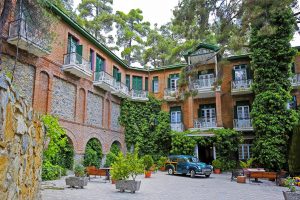
Cyprus café culture represents more than just drinking coffee. It functions as essential social infrastructure where friendships form, information spreads, and communities bond. The traditional kafeneio or coffee shop serves as the focal point of Cypriot life, particularly for men who spend hours daily in these establishments.  Unlike modern cafés designed for quick transactions, the traditional coffee shop encourages lingering through comfortable seating, warm hospitality, and unrushed service. Cypriots drink coffee in the morning, afternoon, and evening, treating each cup as an opportunity for connection rather than caffeine delivery. After long days at work or in the fields, the kafeneio becomes the natural refuge where locals gather to relax, debate, play games, and maintain social bonds that hold villages together. The three chair ritual and village hospitality The traditional Cypriot coffee shop operates according to customs passed down through generations. The famous three chair ritual requires one chair for sitting, a second placed opposite for stretching tired legs, and a third to support the coffee cup. Some villages take this further, with Ora village residents using seven chairs, earning them the nickname eftatsaerites. This elaborate seating arrangement reflects the cultural expectation that coffee drinking demands time, comfort, and proper attention.  The kafeneio atmosphere transports visitors back in time, particularly in rural areas where establishments consist of single large rooms with…

Read more
Agaves

Agaves

Stand on a rocky hillside in southern Cyprus at the end of a long, dry summer and you may suddenly notice a giant green starburst on the slope. Then, one day, a towering stalk shoots skyward like a living flagpole, topped with a candelabra of creamy-yellow flowers. This is the agave of Cyprus a dramatic New-World succulent that has quietly become one of the island’s most eye-catching landscape characters. Meet the Agaves Agaves belong to the asparagus family (Asparagaceae), in the subfamily Agavoideae. These are tough, rosette-forming succulents perfectly built for arid life. The genus Agave contains around 200 species, nearly all native to the deserts and dry hills of Mexico, the southern United States and Central America. In Cyprus the two most common are Agave americana (the century plant or American aloe) and Agave sisalana (sisal agave). Gardeners also grow several other attractive species, including the graceful, almost spineless Agave attenuata (foxtail agave) with its soft, arching leaves and the compact, fiercely spiny Agave stricta. Locally they are known as Αγαύη (Agávi), a direct borrowing of the scientific name, which comes from the ancient Greek agauós “admirable” or “noble” a perfect description for their striking, architectural form. Some older Cypriots in Greek-speaking areas still call the spikiest ones Αλάς (Alás), perhaps a folk name evoking the sharp, sword-like leaves.…

Read more
Mount Olympus Cyprus

Mount Olympus Cyprus

Mount Olympus, also called Chionistra in Greek, represents the highest point on an island better known for beaches than mountains. The peak sits within the Troodos range, a vast expanse of pine forests, rocky slopes, and endemic wildlife that covers roughly a third of Cyprus. Unlike its famous Greek namesake associated with Zeus and the ancient gods, Cyprus's Olympus tells a different story through geology, nature, and seasonal transformation. The mountain serves multiple purposes throughout the year. In winter, it becomes the only ski destination in Cyprus. During warmer months, hikers take to trails that wind through black pine forests and offer panoramic views across the entire island. The summit itself houses British and Cypriot radar stations, making the actual peak off limits to visitors, but numerous viewpoints just below provide spectacular perspectives of the surrounding landscape. Historical Background Mount Olympus formed approximately 92 million years ago as part of the Troodos Ophiolite Complex, an uplifted fragment of ancient oceanic crust from the prehistoric Tethys Ocean. The mountain's core consists of ultramafic rock, primarily serpentinized harzburgite, which represents exposed upper mantle from deep beneath an ancient seabed. Tectonic forces pushed this oceanic crust upward through a process called obduction, eventually lifting it above sea level to create the island's mountain spine. This geological origin makes Troodos globally significant among scientists…

Read more