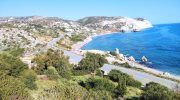
Explore Cyprus with Our Interactive Map

Explore our top stories and discover ideas worth your time.

Kataklysmos Festival

Kataklysmos Festival

Kataklysmos, the Festival of the Flood, represents one of Cyprus's most distinctive cultural celebrations combining ancient pagan rituals with Orthodox Christian observance. The festival occurs 50 days after Easter, coinciding with Pentecost, when Orthodox Christians commemorate the descent of the Holy Spirit upon the apostles. The name derives from the Greek word for flood, referencing both Noah's biblical deluge and ancient water ceremonies honoring Aphrodite and Apollo. Water plays the central role, with coastal towns hosting elaborate festivities where locals and visitors engage in water fights, attend cross-throwing ceremonies, and participate in swimming competitions. Larnaca holds the largest celebration, with events spanning six days along Foinikoudes promenade. The festival earned UNESCO recognition as part of Cyprus's Intangible Cultural Heritage, acknowledging its unique blend of religious significance, folk traditions, and community celebration that has continued for over a century. Historical Background The festival's roots extend to pre-Christian water ceremonies performed at coastal shrines dedicated to Aphrodite, the goddess of love who according to myth emerged from sea foam near Paphos. Ancient Cypriots held waterfront celebrations honoring Aphrodite and Apollo during late spring, practices that involved ritual bathing, offerings to the sea, and fertility rites connected to agricultural cycles. These pagan traditions emphasized water's life-giving properties and its role in purification and renewal. When Christianity spread across Cyprus in the first century…

Read more
Omodos Traditional Village & Monastery

Omodos Traditional Village & Monastery

Omodos is a historic mountain village in Cyprus’s Troodos range, known for its Byzantine monastery, traditional architecture, and wine-making heritage. Located 42 kilometers northwest of Limassol at an elevation of 800 meters, the village lies within the Krasochoria district, the traditional wine-producing region of Cyprus. Its location in this wine heartland has shaped the local economy and identity for centuries. The village centers around a large cobblestone square, possibly the largest in Cyprus at 3,000 square meters, dating back to 1910. Stone houses with red-tiled roofs, wooden balconies, and flower-filled courtyards line narrow streets that wind through the settlement. The architecture reflects a careful balance between preservation and modern use, with many traditional homes now serving as guesthouses, wine cellars, and small museums. Historical Foundation Local tradition states that the village grew around a discovery made by residents of the nearby settlements of Ano and Kato Koupetra. Historical narratives describe how a wooden cross was found within a small cave on the hillside. A chapel was eventually constructed over this site to house the artifact, providing a focal point for the community and serving as the architectural foundation for what would later become the Monastery of the Cross. The monastery is considered one of the oldest in Cyprus, with historical records suggesting it was established during the early Byzantine period.…

Read more
Ottoman Sebils Public Water Fountains

Ottoman Sebils Public Water Fountains

When the Ottoman Empire took control of Cyprus in 1571, the island experienced major changes in its architecture and daily life. Among the most practical contributions the Ottomans brought were sebils, public water fountains that became essential features of Cypriot cities. These structures served both religious and civic purposes, providing free drinking water to travelers and locals while allowing Muslims to perform ritual ablutions before prayer. The word sabil comes from the Arabic root meaning to make available or to provide a way. In Islamic tradition, building a sabil was considered an act of charity, a way to earn religious merit by serving the community. The Ottoman authorities valued these fountains so highly that they granted tax exemptions to anyone who built a public sabil, provided they kept water available for travelers at all times. Historical Background Ottoman sebils were not just simple fountains. They were carefully designed structures that combined function with beauty. The typical sabil featured a small kiosk where an attendant stood behind a grilled window, handing out cups of water to passersby. Some sebils were standalone buildings at busy street corners, while others were attached to mosques or caravanserais. The architectural style of Sebils varied across the empire. In Istanbul, elaborate sebils appeared during the Tulip Period in the early 18th century, decorated with intricate carvings,…

Read more