Explore Cyprus with Our Interactive Map

Explore our top stories and discover ideas worth your time.

Fikardou Rural Museum

Fikardou Rural Museum

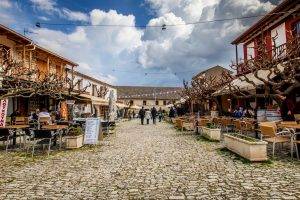
The Fikardou Rural Museum consists of two restored stone houses in the village of Fikardou, located 40 kilometers southwest of Nicosia in the Troodos Mountains. The museum preserves traditional Cypriot rural life through authentic buildings and exhibits from the 16th to 19th centuries. The entire village functions as a living museum, with narrow cobblestone streets and traditional stone houses that transport visitors to another era. The settlement was nearly abandoned during the 20th century when residents moved to urban areas for work and modern amenities. By the 1970s, only a handful of elderly people remained. Historical Background The village name likely derives from the Greek phrase "figa andron," which means "den of fugitives." According to tradition, two dominant clans controlled the region between 400 AD and 800 AD, and fugitives sought refuge in these remote mountains. The earliest written reference to Fikardou dates to 1825 during the Ottoman period. Historical connections exist to medieval Cyprus through the Ficardo family. The most notable member was Sir Thomas Ficardo, who served as Chancellor to King James II and Queen Catherine Cornaro in the 15th century. The village belonged to Machairas Monastery during the Byzantine Komnenos dynasty. Inhabitants focused on olive harvesting, grape cultivation, and subsistence farming. The village maintained traditional agricultural practices for centuries. The remote mountain location provided some security but…

Read more
Syrtos of Cyprus

Syrtos of Cyprus

Syrtos of Cyprus (Local Variants) is a restrained, grounded dance form that emphasizes communal movement and continuity, with subtle differences from mainland Greek versions shaped by the island's unique cultural blend. Performed in circles or lines, it features slow, deliberate steps that foster group harmony and emotional expression, often accompanied by laouto and violin. This dance reflects Cyprus's historical crossroads, preserving ancient rhythms while adapting to local traditions, making it a living symbol of the island's resilient spirit. A Timeless Dance Form Syrtos in Cyprus represents a core element of the island's folk dance heritage, a form where participants link hands in a circle or line, moving with measured, flowing steps that prioritize collective rhythm over individual flair. Unlike more energetic dances, Cypriot syrtos maintains a grounded, introspective quality, with feet close to the earth and bodies swaying in unison to evoke shared emotions like joy, sorrow, or nostalgia. This restraint stems from the island's agrarian past, where dances served as communal rituals tying people to the land's cycles. Regional variants add depth: the Paphos syrtos is slower and more solemn, while the Famagusta version incorporates lighter skips, reflecting local histories and influences from Greek, Ottoman, and Venetian eras. As a dance that bridges generations, it embodies Cyprus's cultural mosaic, where movement becomes a silent language of unity. Historical Origins…

Read more
Vertical Cyprus Rising Landscapes

Vertical Cyprus Rising Landscapes

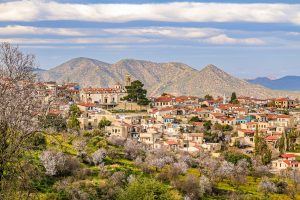
Most visitors meet Cyprus at sea level, through beaches and coastal towns. But the island's character is shaped just as much by what rises behind it. From volcanic peaks and forested ridges to monastery balconies and fire lookout stations, Cyprus's high ground offers a different kind of understanding. These elevated viewpoints are not simply scenic stops. They explain how the island was formed, how people survived, and how geography quietly directed history, belief, and daily life. This is Cyprus seen vertically, where altitude changes perspective. An island lifted from the sea Cyprus’s mountainous backbone exists because the island itself was pushed upward from the ancient Tethys Ocean. The Troodos Mountains are one of the world’s most complete examples of exposed oceanic crust, known as an ophiolite. What was once seabed now reaches nearly 2,000 metres above sea level, creating an interior landscape that feels unexpectedly vast for an island. This geological lift matters visually. Dark volcanic rock, steep valleys, and broad domed summits give the highlands a sense of scale that contrasts sharply with the coast. From many viewpoints, you can see both shores of Cyprus on a clear day, a reminder of how compact yet varied the island really is. The calm authority of the Troodos peaks At the centre of this vertical world stands Mount Olympus (Chionistra), the…

Read more