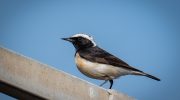
Cyprus Wheatear
On a warm spring morning anywhere on Cyprus, perched on a stone wall or a swaying pine branch, a small black-and-white bird fills the air with a strange buzzing rattle of a song. This is the Cyprus Wheatear – and this island is the only place in the world where it breeds. That alone makes it worth getting to know. What Kind of Bird Is It? The Cyprus Wheatear belongs to a group called wheatears, small, energetic birds found from the Arctic to the Sahara, almost always in open rocky landscapes. About thirty species exist worldwide, and they are all recognised by the same thing: a bright white flash on the rump as they fly. The scientific name of the whole group, Oenanthe, comes from the ancient Greek words for wine and flower, because these birds traditionally returned to the Mediterranean each spring at the same time the vines began to bloom. The English name 'wheatear' is far less romantic – it simply means 'white bottom' in old English. Same bird, very different poetry. From Subspecies to Star: A Bird Finds Its Identity For most of the twentieth century, nobody thought the Cyprus Wheatear deserved its own species status. Scientists classified it as just a local variety of the Pied Wheatear, a similar-looking bird from the Middle East. It was…
Read more