Explore Cyprus with Our Interactive Map

Explore our top stories and discover ideas worth your time.

Byzantine Frescoes & Iconography

Byzantine Frescoes & Iconography

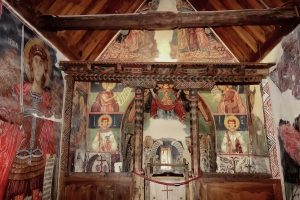
The Troodos Mountains of Cyprus contain one of the most significant collections of medieval mural painting in the Eastern Mediterranean. Ten churches and monastic buildings, all listed as UNESCO World Heritage Sites, preserve a continuous tradition of wall painting that spans from the 11th to the 16th centuries. These mountain structures are valued not only for their artistic content but also for their exceptional state of preservation. Their remote location helped protect them from destruction during periods of coastal instability and repeated invasions in earlier centuries. In addition, the characteristic steep-pitched wooden roofs—added to many structures over time—helped shield interior wall surfaces from heavy snowfall and seasonal rainfall. The result is a rare survival of complete interior decorative programs, where painted surfaces remain visible across domes, walls, and arches, offering insight into medieval visual culture in Cyprus. Historical Background Cyprus became integrated into the Byzantine administrative and cultural sphere in the early medieval period, adopting artistic traditions that combined Greco-Roman visual heritage with evolving regional styles. Over time, local workshops developed a distinct mural painting tradition that reflected both imperial influences and island-based interpretations. The earliest major phase of mural decoration in Cyprus dates broadly from the 4th to the 7th centuries. During this period, large basilica-style structures were constructed, often featuring painted or mosaic decoration in apsidal areas. One…

Read more
Vouni Palace in Cyprus

Vouni Palace in Cyprus

Perched on a rocky hilltop 250 meters above the Mediterranean Sea, the ruins of Vouni Palace stand as a remarkable architectural anomaly in ancient Cyprus. This site represents the only known example of Persian palace design not just on the island but throughout the entire eastern Mediterranean, built during one of history's most intense power struggles between two great civilizations. Historical Background Around 500 BC, Cyprus found itself caught in the crossfire of the great wars between the Persian Empire and the Greek city-states. The island's ten kingdoms split into opposing camps, with some supporting the Persians and others backing the Greeks. This division led to bitter conflicts across Cyprus, on both land and sea. The ancient city of Soli, located near modern Lefke on the northwest coast, firmly supported the Greek cause. This position threatened Marion, a nearby pro-Persian kingdom situated close to present-day Polis. King Doxandros of Marion, a ruler loyal to the Persian Empire, decided to take action against his pro-Greek neighbor. In 500 BC, Doxandros established a military settlement on a strategic hill overlooking Soli. The location was perfect for surveillance. From this elevated position, Persian forces could monitor all sea traffic along the coast and observe every activity in the city below. What began as a simple military outpost would transform into one of ancient…

Read more
Spiritual Strongholds in the Mountains

Spiritual Strongholds in the Mountains

Hidden in Cyprus's mountains and tucked into remote valleys are stone fortresses of faith that have survived earthquakes, invasions, and centuries of political upheaval. These monasteries aren't just beautiful religious buildings - they're living institutions that have functioned as schools, hospitals, libraries, agricultural estates, and refuges for over 1,500 years. Stepping inside their thick walls, breathing the incense-filled air, it’s easy to understand how these places became anchors of Cypriot identity, preserving language, faith, and culture through the island's most turbulent chapters. Where Prayer Meets Survival Cypriot monasteries are enclosed religious communities built around prayer, solitude, and service. Unlike ordinary churches that serve local congregations, monasteries house monks or nuns living according to strict spiritual disciplines - following daily rhythms of prayer, manual labor, study, and silence. But these institutions always did far more than facilitate worship. They educated children when schools didn't exist, treated the sick when hospitals were absent, preserved books when literacy was rare, and provided shelter when violence threatened. The island's mountains and remote valleys offered ideal conditions for spiritual withdrawal while still remaining connected enough to nearby villages to serve practical needs. Monasteries deliberately chose locations with springs for water, caves for solitude, cliffs for protection, and elevation that symbolically brought monks closer to heaven. These weren't accidental settlements but carefully planned communities designed to…

Read more