Explore Cyprus with Our Interactive Map

Explore our top stories and discover ideas worth your time.

St. Hilarion Castle

St. Hilarion Castle

St. Hilarion Castle stands 732 meters above sea level in the Kyrenia mountain range of Cyprus. This medieval fortress features stone walls and towers that appear to grow directly from the rocky peaks. Located just off the main Kyrenia to Nicosia highway, the castle commands the mountain pass between the coast and the central plain. The castle is the best preserved of three Byzantine strongholds built along the Kyrenia mountain range, the others being Kantara to the east and Buffavento further west. The fortress consists of three main sections built at different elevations on the mountainside. The lower ward contained stables and living quarters for soldiers. The middle ward housed royal apartments, kitchens, a church, and a large cistern for water storage. The upper ward, surrounded by 1.4-meter-thick Byzantine walls made of rough masonry, served as the royal residence and includes Prince John's Tower perched on a rocky cliff. Historical Background The castle takes its name from an obscure Christian hermit who fled to Cyprus after the Arab conquest of the Holy Land in the 7th century. This saint, known for living in a cave on the mountain, is not the same as the more famous St. Hilarion, who was active in Palestine and died near Paphos in 371 AD. Local tradition holds that the hermit spent his final years…

Read more
Sonic Evolution Cyprus Tradition Meets Fusion

Sonic Evolution Cyprus Tradition Meets Fusion

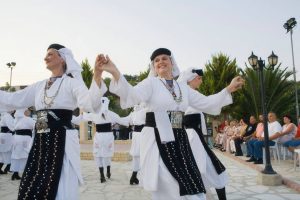
Music in Cyprus has never existed in isolation. It has always moved with people, landscapes, rituals, and political change. From shepherds playing flutes in mountain pastures to electrified bands performing in divided city streets, Cypriot music reflects the island’s role as a cultural meeting point in the Eastern Mediterranean. Today, that long tradition is not fading. It is transforming. Contemporary Cypriot musicians are reshaping ancient sounds into new forms, proving that heritage survives not by standing still, but by adapting. An Island Shaped by Crossing Sounds Cyprus sits at the intersection of Greek, Byzantine, Ottoman, and Western European worlds, and its music carries traces of each. Rather than following Western major and minor scales, traditional Cypriot music is built on modal systems influenced by Byzantine echoes and Ottoman makam. These modes allow for subtle microtonal shifts that give the music its emotional depth and distinctive colour. For centuries, these sounds were not concert material. They were woven into daily life: agricultural cycles, religious festivals, weddings, and communal gatherings. Music functioned as memory, communication, and identity, not entertainment alone. Voices Without Sheet Music At the heart of Cypriot folk tradition lies the concept of fones, literally meaning “voices.” These are not fixed songs, but melodic frameworks passed orally from generation to generation. Singers adapt poetic verses to these melodic shapes, allowing…

Read more
The Soli Basilica Frescoes

The Soli Basilica Frescoes

The Soli Episcopal Basilica preserves rare fragments of early Christian wall painting from a period when church imagery in Cyprus was still being invented rather than standardised. Painted above the site’s famous mosaics, the fresco remains show Roman decorative habits being adapted into a new visual language for worship, before later Byzantine rules became fixed. This article explains Soli’s rise as an ecclesiastical centre, what the surviving plaster fragments suggest about the original interior, and why the basilica’s destruction ended up preserving an important artistic transition. Trade, Farmland, Copper, Harbour Ancient Soli, also known as Soloi, occupied a strategic position near fertile farmland, copper-rich foothills, and a natural harbour. This combination sustained the city for centuries, from its legendary foundation in the Archaic period through its Roman peak and into the Christian era. By Late Antiquity, Soli was no longer just a trading hub. It had become an important ecclesiastical centre, serving the surrounding region as Christianity spread across Cyprus. The basilica that rose here in the 4th century was not a modest village church. It was one of the largest early Christian complexes on the island, reflecting both wealth and confidence during a period of profound cultural change. A Basilica Built on Confidence The Soli Episcopal Basilica went through multiple phases, mirroring the development of Christian worship itself. The…

Read more