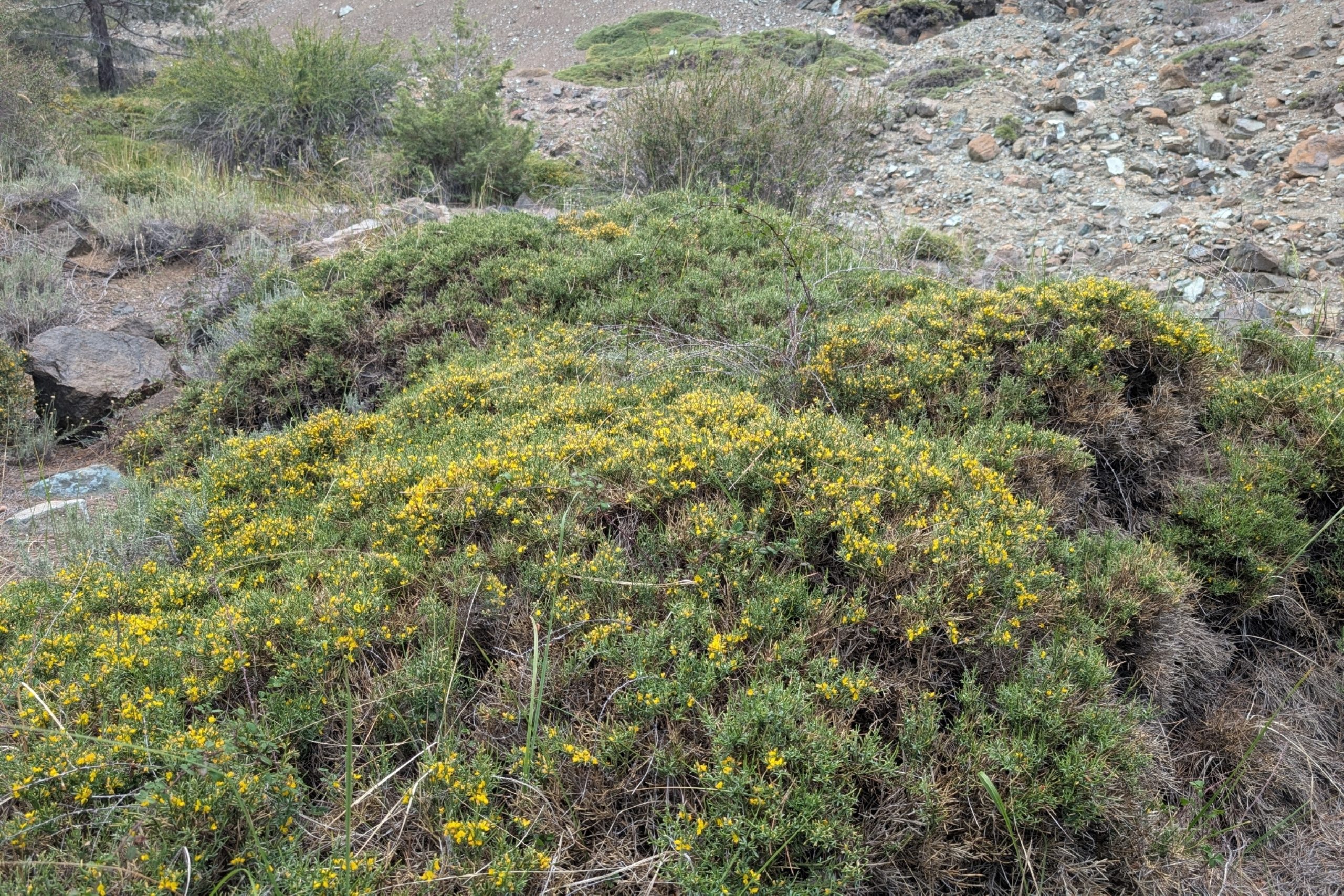
Imagine stepping onto a sun-drenched hillside in Cyprus as spring awakens the land. Suddenly, the dry, thorny scrub lights up with bright bursts of golden yellow, as though someone has scattered handfuls of sunshine across the rocks. These vivid displays come from the brooms of the Genisteae tribe – tough, spiny shrubs that turn the island’s classic maquis into a sea of gold.
Pea-Family Pioneers of the Mediterranean Scrub
The Genisteae belong to the great legume family Fabaceae, the same group that gives us peas, beans and clover. In Cyprus, two standout members bring the colour and character: Genista fasselata (Fassel’s broom) and Calycotome villosa (hairy thorny broom). Both are evergreen or semi-evergreen shrubs perfectly suited to the island’s rugged, sun-baked slopes from sea level to the cooler heights of the Troodos.
Born of Fire and Centuries of Change
These plants tell a story as old as the Mediterranean itself. Long before people arrived around 6000 BC, Cyprus wore a cloak of dense forest. Over millennia, human activities – clearing land, grazing goats and accidental fires – transformed much of that woodland into today’s maquis and garigue. In these open, rocky habitats the brooms found their perfect home. Early naturalists exploring the island in the 1860s, such as Unger and Kotschy, noted the aromatic, spiny scrub clothing the hills, while modern forest records show how these nitrogen-fixing legumes help heal and enrich the thin soils left behind by centuries of use.
Armoured Beauty in Yellow and Green
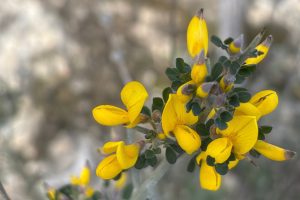
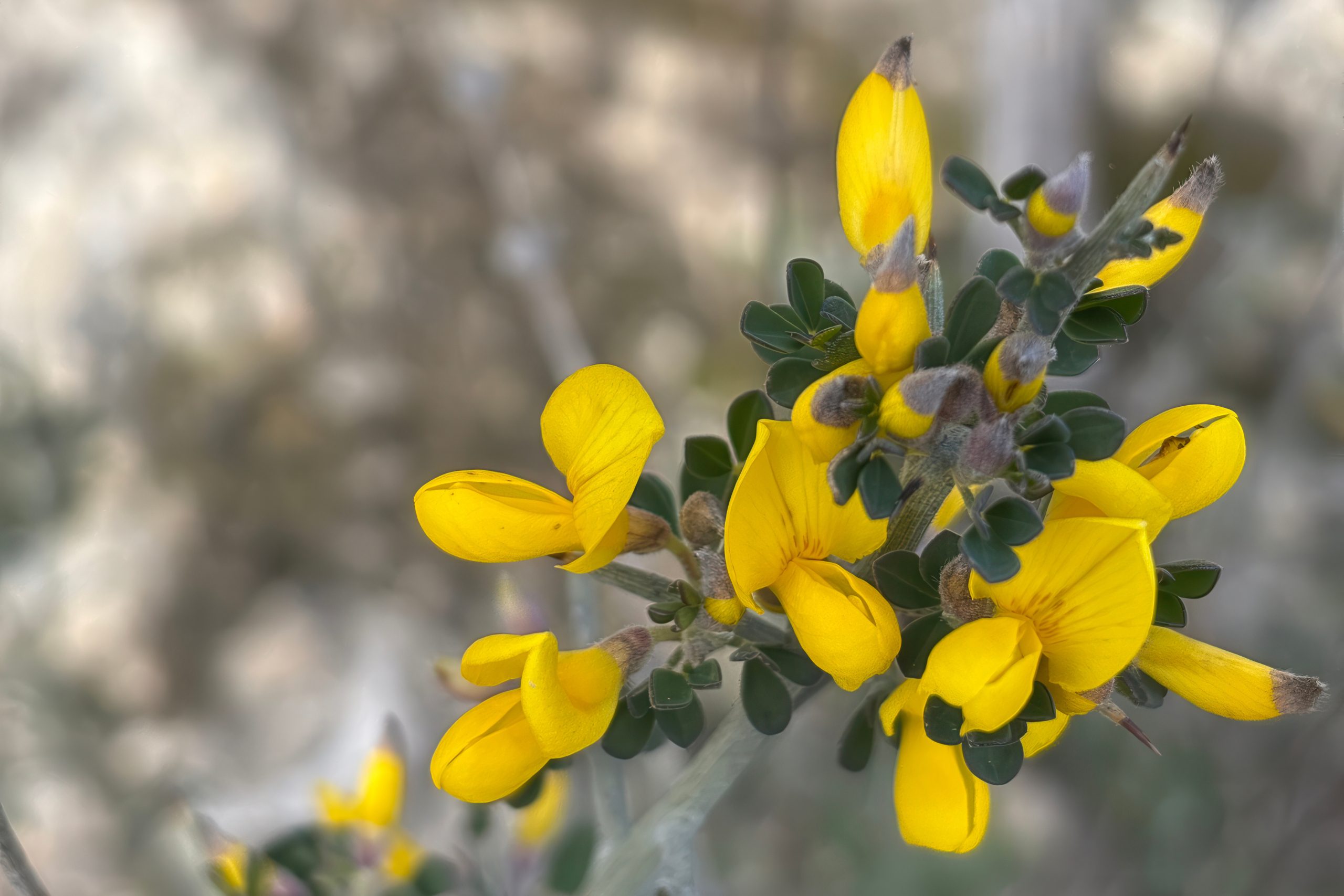
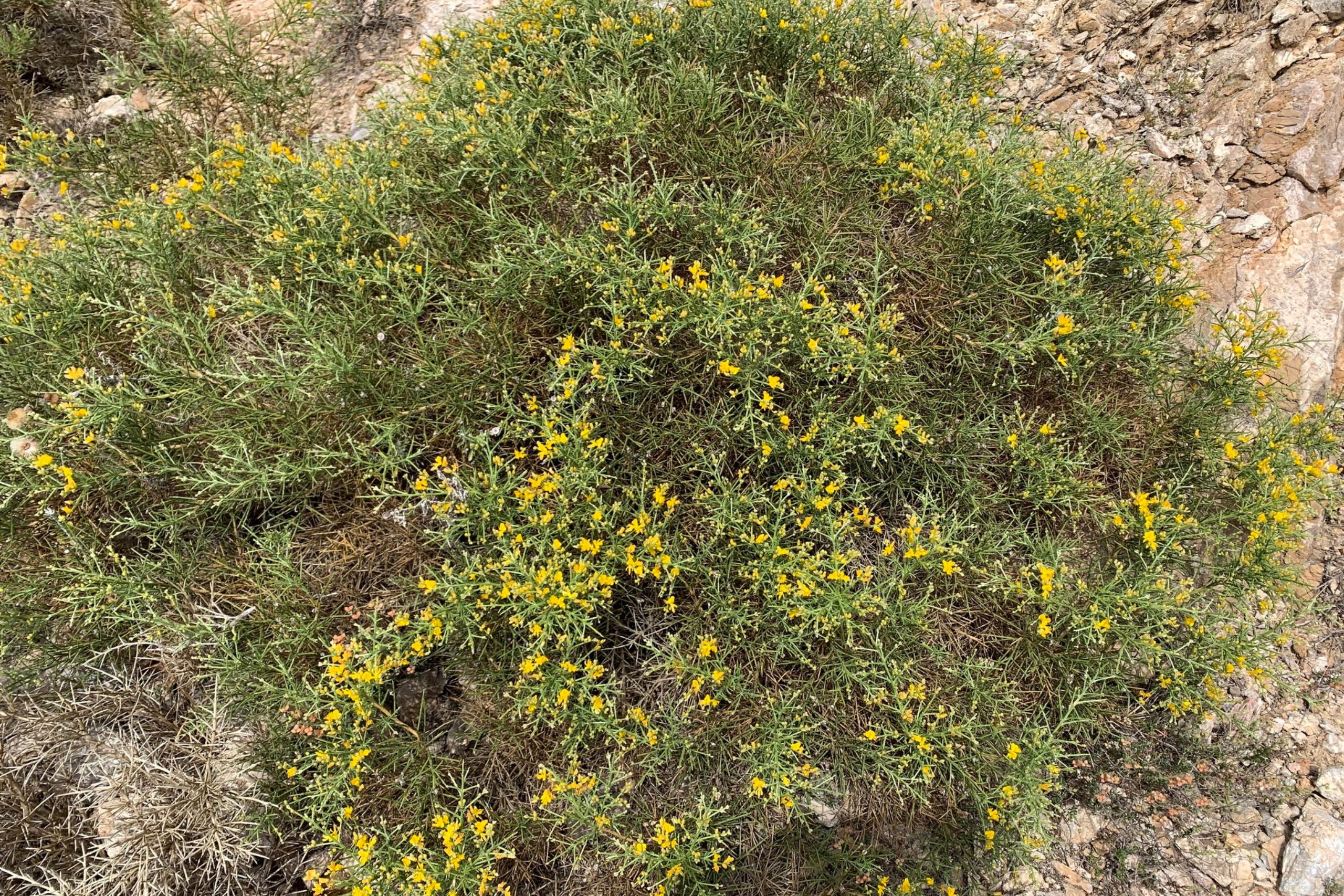
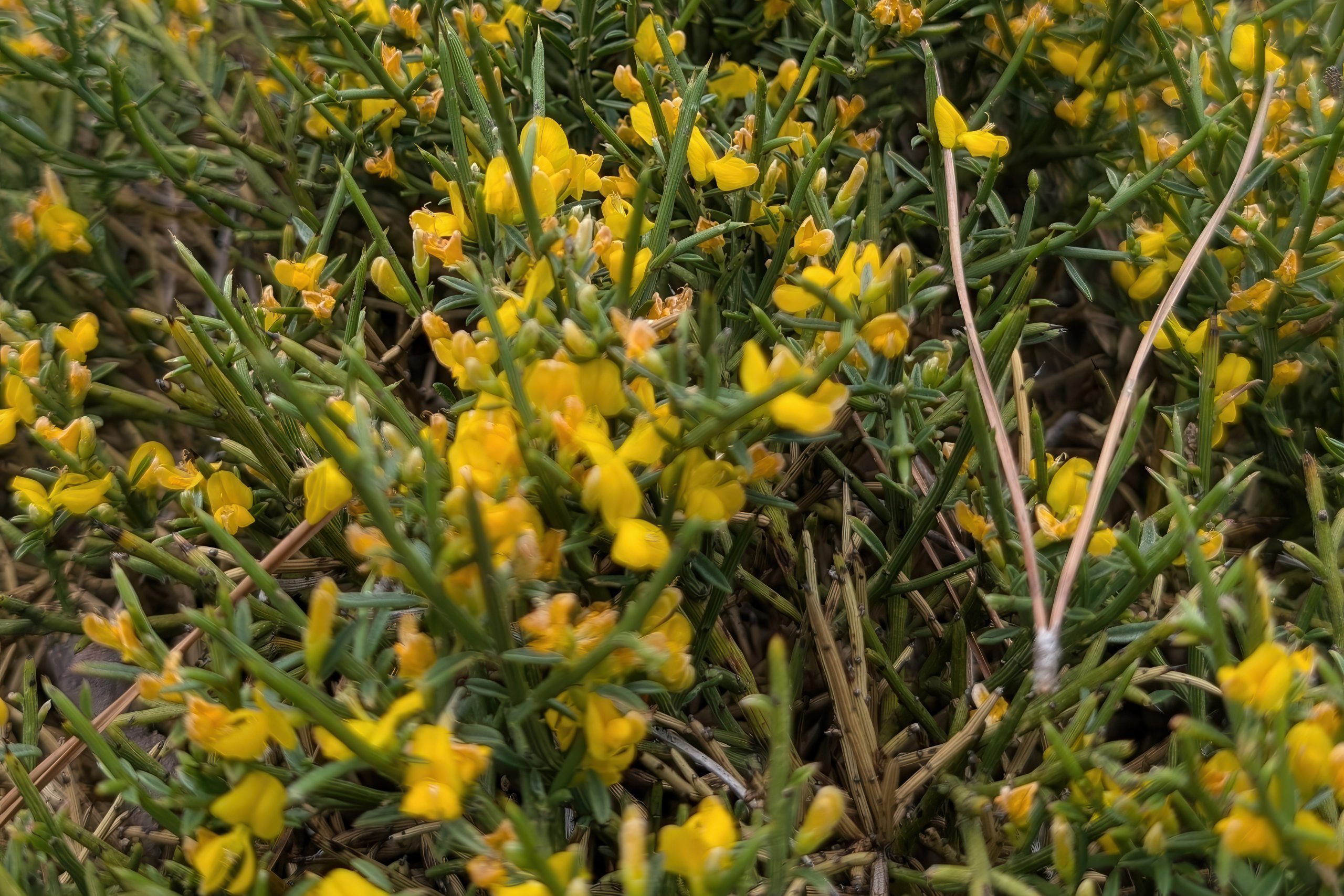
Both species are wonderfully adapted survivors. They bristle with sharp spines that deter hungry goats, yet their leaves and stems often carry soft hairs that catch morning dew. The flowers are classic “pea” shape – bright buttery yellow, arranged in showy clusters. Calycotome villosa flowers as early as December, its branches thick with sharp thorns and silky hairs (hence “villosa”). Genista fasselata blooms a little later, from March to July, and boasts an endemic dwarf variety, var. crudelis, found only on Cyprus’s higher, wind-swept ridges. Both enrich the soil by fixing nitrogen through special root nodules, quietly building fertility where other plants struggle.
Fun Facts to Brighten Any Walk
- In Cyprus they are affectionately called Σπαλαθκιά (Spalathkiá) or Ρασί (Rasi) – names that echo the ancient Greek “aspalathos”, the very word used by Theophrastus and Dioscorides for spiny broom plants.
- The English word “broom” itself comes directly from these plants. In Old English it was “brōm”, the name of the shrub whose tough, whip-like twigs were cut and tied into bundles to sweep floors – giving us the household broom we still use today.
- Remarkably, the royal House of Plantagenet, which ruled England for over 300 years, took its name from the Latin “planta genista” – “broom plant”. Geoffrey V, Count of Anjou (father of Henry II), wore a sprig of flowering broom in his hat as a personal emblem in the 12th century. Thus a humble Mediterranean shrub like those blooming on Cypriot hills gave its name to one of Europe’s most famous royal dynasties!
- Calycotome villosa is so thorny that local shepherds once used bundles of it to make natural fences.
- These brooms are the favourite food plant for the caterpillars of the beautiful endemic Paphos blue butterfly (Glaucopsyche paphos) – a perfect example of Cyprus nature working in harmony.
- A single plant can live for decades, its deep roots anchoring soil against erosion and its fallen leaves slowly turning into rich humus.
Deeper Roots in Cyprus Life
Botanically, the Genisteae sit comfortably within the broader Mediterranean shrublands alongside rockroses, pistachios and wild olives. Their ability to thrive on poor, rocky soils makes them ecological engineers. In the maquis that now covers roughly 40 % of the island, they help prevent further degradation and provide shelter for countless insects and birds. Historically they were part of the everyday landscape described in early forest reports, offering fodder (when spines allowed) and beauty that brightened even the harshest slopes.
Living Link to Today’s Cyprus
Today these golden brooms remain a proud symbol of the island’s wild heart. You will find them almost everywhere from coastal Akamas to the lower slopes of Troodos and the dry hills around Paphos. They remind us of Cyprus’s remarkable resilience – how life returns even after fire or grazing – and they support modern conservation by stabilising soils and feeding specialised wildlife. In a changing climate they continue to show how native plants can endure.
Experiencing the Brooms for Yourself
The easiest way to meet them is on foot during late winter to early summer. Head to the Akamas Peninsula trails, the buffer zone near Paphos Forest, or any rocky path around Limassol or Larnaca hills. In December – April look for the early, intensely spiny Calycotome; from March onward enjoy the taller, airier displays of Genista. Wear sturdy shoes – the paths can be prickly! – and pause to watch bees dancing among the flowers. No special permits are needed; the Cyprus Tourism Organisation and local nature groups often include broom stops on spring wildflower walks.
Why These Golden Guardians Matter
In a fast-changing world the brooms of Cyprus invite us to slow down and notice quiet strength. They link us to the island’s deep past – from ancient maquis formation to royal names across Europe – and they quietly protect the land for tomorrow. Whether you spot their golden spikes from a distance or brush against their fragrant leaves up close, these plants remind us that beauty and resilience grow even in the thorniest places. Next time you wander Cyprus’s wild hills, let the brooms greet you with a splash of sunshine and a story of endurance that belongs to every Cypriot heart.