Explore Cyprus with Our Interactive Map

Explore our top stories and discover ideas worth your time.

Traditional Cypriot Cuisine

Traditional Cypriot Cuisine

Cypriot cuisine developed at the crossroads of Greek, Turkish, Middle Eastern, and Levantine culinary traditions. The island's fertile red soil, Mediterranean climate, and proximity to three continents created a food culture that combines fresh local produce with flavors from distant trading partners. Cyprus has more than 300 days of sunshine annually, producing vegetables, fruits, and herbs that burst with intensity. kiprinform-com The cuisine prioritizes simple preparation methods, seasonal ingredients, and shared eating experiences over complex techniques. Olive oil, fresh herbs, charcoal grilling, and slow cooking define the core approach. What separates Cypriot food from neighboring Greek cuisine is the stronger Middle Eastern and Turkish accent, visible in dishes using tahini, bulgur, and caul fat that you rarely encounter on mainland Greek menus. akispetretzikis-com Halloumi earns protected status worldwide Halloumi stands as Cyprus's most recognizable culinary export and the island's unofficial symbol. The European Union granted halloumi Protected Designation of Origin status in 2021 under the names Halloumi and Hellim, legally confirming it can only be produced in Cyprus using traditional methods. Made from sheep's and goat's milk with small percentages of cow's milk now also permitted, halloumi is brined and set with rennet. Its unusually high melting point makes it ideal for grilling or frying until golden and crispy on the outside while remaining firm within. yahoo-com Fresh halloumi has…

Read more

Two Festivals, One Island

Two Festivals, One Island

Cyprus expresses its culture best when it gathers people together in public spaces, after sunset, with music in the air and tradition close at hand. Two annual festivals capture this instinct especially clearly: the Limassol Wine Festival and the Ayia Napa International Festival. Though different in tone and setting, they reveal how Cyprus balances heritage and openness, local pride and global exchange. Experiencing them side by side offers a clear insight into how celebration functions as a cultural language on the island. kiprinform-com Two Ways of Telling the Same Story At first glance, these festivals appear to represent different worlds. Limassol's event revolves around wine, harvest traditions, and large-scale public gatherings, while Ayia Napa's focuses on music, performance, and international cultural exchange. Yet both serve the same purpose: they turn shared space into shared identity. kanikahotels-com Limassol’s festival unfolds in a broad seaside garden, encouraging movement, conversation, and repetition. Ayia Napa’s festival concentrates activity in a historic square, drawing attention inward toward performance and spectacle. One spreads outward, the other gathers inward, but both rely on the same idea that culture becomes meaningful when it is experienced collectively. Why These Festivals Were Created in the First Place Neither festival began as a decorative addition to the calendar. Each emerged from a practical and cultural need. The first Limassol Wine Festival…

Read more
Folk Traditions Shaping New Cypriot Identity

Folk Traditions Shaping New Cypriot Identity

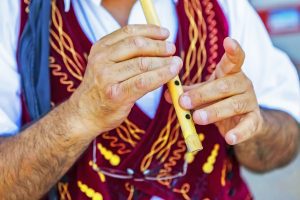
Cyprus's contemporary music scene is not driven by nostalgia, nor by imitation of global trends. Instead, it is shaped by a quiet but deliberate return to local sound. Over the past two decades, musicians across the island have begun reworking traditional Cypriot music into modern forms, blending ancient instruments, irregular rhythms, and modal melodies with rock, jazz, and electronic influences. The result is not a revival of folklore, but a living musical language that reflects modern Cypriot identity while remaining deeply rooted in place, memory, and shared experience. This evolving folk-fusion movement explains how Cyprus sounds today. It also reveals how music has become one of the island's most powerful tools for cultural continuity and dialogue. Not a Revival, but a Reconnection Unlike earlier attempts to modernize folk music, today's Cypriot fusion is not decorative. Traditional elements are not added for color. They shape the structure of the music itself. This shift became especially visible after Cyprus joined the European Union in 2004 and intensified following the financial crisis of 2013. As economic confidence declined, many artists began questioning imported cultural models and turned instead toward local traditions. Music became a way to explore identity without nostalgia, using inherited forms to speak about present realities. Importantly, this movement crosses political and cultural boundaries. Musicians from both sides of the island…

Read more