Explore Cyprus with Our Interactive Map

Explore our top stories and discover ideas worth your time.

Cyprus Material Symbolism Traditions

Cyprus Material Symbolism Traditions

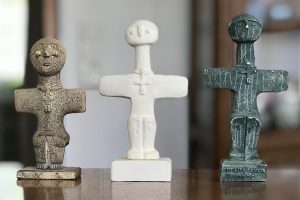
Material Symbolism (Stone, Bronze, Gold, Glass) in ancient Cypriot art reflected deliberate choices where each substance carried layers of spiritual, social, and economic significance. Stone embodied enduring strength drawn from the island's landscape, bronze represented transformation and resilience, gold signified divine favor and elite status, and glass evoked wonder through its luminous qualities. This intentional selection transformed artifacts into carriers of meaning, highlighting how materials conveyed broader cultural values in a society shaped by trade, ritual, and belief. estateofcyprus-com Materials as Carriers of Cultural Meaning Ancient Cypriot art utilized materials not merely for their practical properties but as elements infused with symbolism. Stone, bronze, gold, and glass each evoked specific associations, drawn from the island's natural resources and imported influences. Stone's durability suggested permanence and connection to the earth, bronze's forged nature symbolized human mastery over elements, gold's rarity and luster implied celestial or royal authority, and glass's translucence hinted at ethereal mystery. These choices formed a visual language that intertwined spiritual beliefs with social hierarchies and economic realities, evident across artifacts from domestic items to temple offerings. metmuseum-org Historical Development of Material Use The symbolic role of materials in Cypriot art emerged in prehistoric periods, around 8000 BC during the Neolithic era, when local stones and clays were shaped into basic figurines. By the Bronze Age, beginning approximately 2500…

Read more

Active Travel Routes for Walkers and Cyclists in Cyprus

Active Travel Routes for Walkers and Cyclists in Cyprus

Cyprus offers diverse terrain for walkers and cyclists, from coastal paths to mountain trails. The island covers 9,251 square kilometers and features everything from sea-level beaches to Mount Olympus at 1,952 meters. activatecyprus-com With approximately 90 walking trails and 45 designated cycling routes, Cyprus attracts outdoor enthusiasts year-round. The compact size means you can experience dramatic changes in scenery within short distances. Most trails are managed by the Department of Forests, while villages maintain additional local routes. The infrastructure includes marked paths, information boards, and benches at viewpoints, making exploration accessible to various fitness levels. The Historical Development of Active Routes Cyprus developed its trail network gradually over decades. The E4 European Long Distance Path section opened in 2005, connecting Larnaca and Paphos airports across 540 to 660 kilometers. This addition made Cyprus part of a 10,450-kilometer route stretching from Gibraltar to Cyprus through nine countries. Nature trails in areas like Troodos and Akamas existed before the E4, but the long-distance path created a unified system. The European Ramblers Association coordinates the E4 internationally, while the Cyprus Tourism Organisation manages the national cycling network. Many trails follow ancient routes, including old camel trails once used to transport copper from mines to ports. Medieval Venetian bridges from the 15th century mark some historic pathways. The network expansion continues, with new routes…

Read more
Saint Barnabas Gospels

Saint Barnabas Gospels

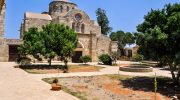
The “Saint Barnabas Gospels” refer to a tradition that helped secure the Church of Cyprus’s independence after a late fifth-century discovery near Salamis, where a Gospel of Matthew was said to rest on Saint Barnabas’s chest. Presented to Emperor Zeno, the manuscript functioned as proof of apostolic origin and was used to confirm Cyprus’s autocephaly in a jurisdictional dispute. This article explains the discovery story, why the original book matters even though it is lost, and how later Cypriot Gospel manuscripts carried the same claim through art, script, and ritual display. A Fifth-Century Power Dispute In the late fifth century, Cyprus stood at the centre of a quiet but serious dispute. Powerful church authorities on the mainland sought control over the island's Christian community, challenging its claim to independence. northcyprusinform-com According to tradition, Archbishop Anthemios was guided by a vision to the burial place of Saint Barnabas, near Salamis. When the tomb was opened, the saint’s remains were found holding a copy of the Gospel of Matthew. The discovery was not treated as symbolic. It was evidence.The manuscript was carried to Constantinople and presented to Emperor Zeno. By accepting it, the emperor confirmed that the Church of Cyprus had apostolic origins of its own and therefore did not answer to any external patriarch. From that moment on, Cyprus’s religious independence…

Read more