Explore Cyprus with Our Interactive Map

Explore our top stories and discover ideas worth your time.

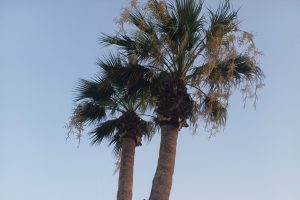
Washingtonia Palms

Washingtonia Palms

Wander along a bustling coastal promenade in Limassol or through a quiet park in Nicosia, and you might spot these towering fan-shaped trees swaying gently in the breeze. These are the Washingtonia palms of Cyprus – elegant imports from distant deserts that have become familiar landmarks across the island. But how did these American natives find a home in our Mediterranean paradise? www.inaturalist.org A Palm for Dry Lands Washingtonia belongs to the vast palm family, Arecaceae, which includes over 2,500 species worldwide, from the date palms we know so well to the coconut trees of tropical shores. In simple terms, it's a type of fan palm, known for its wide, spreading leaves that look like giant hands fanning the air. Here in Cyprus, we mainly see two varieties: the sturdy Washingtonia filifera and its slimmer cousin, Washingtonia robusta, along with their natural hybrid blends. From Desert Oases to Island Avenues These palms hail from the hot, dry deserts of southwestern America and northwestern Mexico, where they've thrived for thousands of years around precious water sources. Named in 1879 after George Washington, the first U.S. president, they caught the eye of European botanists in the 19th century and were soon shipped across the seas as ornamental wonders. In Cyprus, they likely arrived during the British colonial era around the early 1900s,…

Read more
Cyprus Traditional Stone Villages

Cyprus Traditional Stone Villages

While modern cities rise along Cyprus's coasts, hidden in the island's hills and mountains are stone villages that have barely changed in centuries. These aren't open-air museums or tourist recreations—they're living communities where narrow cobblestone streets still wind past churches older than nations, where women still make lace using techniques passed down through generations, and where the rhythm of life follows patterns shaped by water, terrain, and survival. To visit these villages is to step into a Cyprus that exists outside of time, where the past and present speak to each other in stone, wine, and thread. Where Old Cyprus Still Lives Traditional Cypriot villages are the island's cultural heartbeat, preserving customs, crafts, dialects, and ways of life that have largely disappeared from urban centers. These settlements grew organically over centuries, shaped by geography, climate, and the practical needs of survival rather than by modern planning or tourism. Most sit inland—tucked into hillsides, nestled in mountain valleys, or perched on slopes—rather than along the vulnerable coastline where pirates and invaders once threatened. commons-wikimedia-org These villages aren't relics frozen in amber but living communities that have adapted while maintaining their essential character. Stone houses still cluster around churches and monasteries, narrow streets still provide shade and defense against summer heat, and communal spaces still bring neighbors together. While many younger Cypriots…

Read more

Green Transportation Options in Cyprus

Green Transportation Options in Cyprus

Cyprus faces a unique transportation challenge. With 658 automobiles per 1,000 people, the island holds one of the highest car ownership rates globally. Only 3% of journeys in Greater Nicosia use public transport, while cycling accounts for just 2%.  i-ytimg-com This heavy reliance on private vehicles contributes to traffic congestion, air pollution, and carbon emissions. However, the island is actively developing sustainable alternatives through government initiatives, infrastructure improvements, and European Union support. Building a Greener Transport Network Cyprus has committed to ambitious environmental targets. The National Energy and Climate Plan aims to increase renewable energy sources to 23% of total consumption and 14% in the transport sector by 2030.  sb-cyprus The government launched Sustainable Urban Mobility Plans for Limassol and Larnaca, with a combined investment of over €100 million. These plans include 62 kilometers of improved transport corridors, dedicated bus lanes, cycling paths, three central bus stations, and four park-and-ride facilities. Larnaca began implementing its plan in late 2025, delivering new cycling lanes, redesigned bus corridors, improved pavements, and upgraded traffic systems through January 2027. dom-com-cy Cyprus Public Transport introduced the island's first electric buses in 2023. These Yutong buses measure 12 meters long, accommodate up to 80 passengers, and feature accessible seating with designated wheelchair areas. The company is developing an advanced energy management system that integrates solar photovoltaic…

Read more