Explore Cyprus with Our Interactive Map

Explore our top stories and discover ideas worth your time.

Cyprus Youth Music and Dance Initiatives

Cyprus Youth Music and Dance Initiatives

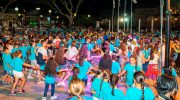
In Cyprus, music and dance often arrive in a young person’s life long before anyone calls them “heritage.” They appear in school assemblies, in family celebrations, and in the easy confidence of a village circle dance that seems to know its own steps. Youth initiatives across the island connect inherited traditions with contemporary expression, shaping identity and confidence while helping the next generation reinterpret culture in a society built at a crossroads. avia-discount A Cultural Education That Starts Early For many children, traditional rhythms and movements are first encountered casually, through school programs, local associations, or community gatherings, where participation matters more than perfection, and the goal is simply to join in. financialmirror-com Two learning paths tend to develop side by side. State-supported education introduces structure through music schools and organised dance instruction, prioritising technical skill and preservation of established forms. At the same time, community-based groups such as youth clubs, folklore associations, and informal workshops offer a more flexible approach that emphasises shared experience and learning by doing. Together, these routes allow young Cypriots to experience culture as both discipline and everyday practice, rather than choosing one and rejecting the other. Learning Beyond the Classroom Some of the strongest youth initiatives thrive outside formal education, because tradition in Cyprus is most alive when it sits inside social life instead…

Read more
Famagusta Salt Lake Formations & Flamingos

Famagusta Salt Lake Formations & Flamingos

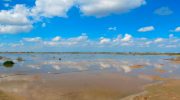
The Famagusta district hosts several seasonal salt lakes and wetlands that transform dramatically between summer and winter. Paralimni Lake, a natural seasonal wetland in the Famagusta district, is one of the few remaining wetlands of its kind in Cyprus. Facebook-comDimitris-Vetsikas This shallow water body covers approximately 350 hectares and represents the largest natural inland lake on the island. North of the city of Famagusta Glapsides Salt Lake, a smaller coastal salt lake favored by migrating birds. These wetlands share common geological origins and ecological functions despite their different locations within the district. Ancient Seas and Modern Salt Lakes The formation of Cyprus's salt lakes connects to both recent geological history and ancient Mediterranean events. Around 5.96 to 5.33 million years ago, the Mediterranean Sea underwent the Messinian Salinity Crisis when the Strait of Gibraltar closed, cutting off water from the Atlantic. The entire Mediterranean basin experienced extreme evaporation, depositing thick layers of salt and gypsum across the seafloor. When the strait reopened, seawater flooded back and covered these deposits. Cyprus's current salt lakes formed much more recently through different processes. Paralimni Lake is a slightly brackish, shallow temporary water body with an average depth of 15 centimeters during the wet period. The lake occupies a natural depression that collects rainwater runoff during winter months. In 1893 due to excess humidity…

Read more
Three Dishes Define Cypriot Food Culture

Three Dishes Define Cypriot Food Culture

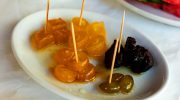
Cypriot cuisine is often described through individual recipes, yet its deeper identity emerges through patterns of use rather than isolated dishes. Makaronia tou Fournou, kolokasi, and traditional sweets occupy very different places on the table, but together they reveal how Cypriots eat across time, season, and social setting. One dish marks a celebration, one sustains daily life, and one formalises hospitality. Seen together, they form a practical map of how food functions in Cypriot culture. These foods do more than taste distinct. They organise social life. They reflect land, climate, economy, and ritual. To understand them is to understand how Cypriots structure eating itself. Makaronia tou Fournou and the Language of Celebration Makaronia tou Fournou is the dish most closely associated with gathering. Known informally as the Cypriot version of pastitsio, it appears at Easter, Christmas, Sunday lunches, and, most notably, weddings. Its importance lies less in the recipe itself and more in what it represents: abundance prepared to be shared. charloui-com The dish is built in layers. Tubular pasta forms a firm base, a lightly spiced meat sauce sits at its centre, and a thick béchamel enriched with eggs and local cheese seals the top. This structure is deliberate. When sliced, the layers hold their shape, allowing large trays to be portioned cleanly for many people. Long before it…

Read more