Explore Cyprus with Our Interactive Map

Explore our top stories and discover ideas worth your time.

Cyprus Traditional Stone Villages

Cyprus Traditional Stone Villages

While modern cities rise along Cyprus's coasts, hidden in the island's hills and mountains are stone villages that have barely changed in centuries. These aren't open-air museums or tourist recreations—they're living communities where narrow cobblestone streets still wind past churches older than nations, where women still make lace using techniques passed down through generations, and where the rhythm of life follows patterns shaped by water, terrain, and survival. To visit these villages is to step into a Cyprus that exists outside of time, where the past and present speak to each other in stone, wine, and thread. Where Old Cyprus Still Lives Traditional Cypriot villages are the island's cultural heartbeat, preserving customs, crafts, dialects, and ways of life that have largely disappeared from urban centers. These settlements grew organically over centuries, shaped by geography, climate, and the practical needs of survival rather than by modern planning or tourism. Most sit inland—tucked into hillsides, nestled in mountain valleys, or perched on slopes—rather than along the vulnerable coastline where pirates and invaders once threatened. commons-wikimedia-org These villages aren't relics frozen in amber but living communities that have adapted while maintaining their essential character. Stone houses still cluster around churches and monasteries, narrow streets still provide shade and defense against summer heat, and communal spaces still bring neighbors together. While many younger Cypriots…

Read more

Khirokitia Figurines: Stone Ancestors at Home

Khirokitia Figurines: Stone Ancestors at Home

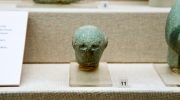
The stone figurines of Khirokitia are among Cyprus’s earliest human representations, carved over 9,000 years ago within one of the island’s first permanent farming settlements. Found in domestic and burial contexts, they were not decoration but durable objects that helped households maintain identity, lineage, and a living relationship with ancestors buried beneath the home. This article explains why the figures are intentionally abstract, why hard stone was chosen despite the labour, and what their placement reveals about memory and belonging at the dawn of settled life in Cyprus. Khirokitia Above the Maroni River The Neolithic settlement of Khirokitia lies on a steep hillside above the Maroni River in southern Cyprus. Occupied during the Aceramic Neolithic period, it represents the island’s first permanent agricultural society. Life here was organised around circular stone houses, shared courtyards, and a tightly knit social structure built on extended families. dtcox-com In this context, figurines were not decorative objects or isolated artworks. They were part of daily life, ritual practice, and memory. Their meaning comes not from how they look alone, but from where they were found and how they were used. Small Figures, Heavy Meaning More than two dozen anthropomorphic figurines have been recovered from Khirokitia, an unusually high number for a Neolithic site. Most are small, abstract, and deliberately simplified. Bodies are reduced to…

Read more
A Sea Raised Into The Sky

A Sea Raised Into The Sky

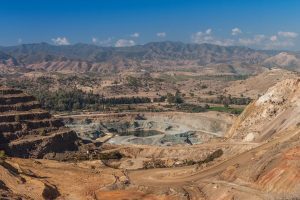
Pick up a stone almost anywhere in Cyprus and there is a fair chance it once lay two or three kilometres beneath an ocean. Stand on a Troodos peak and you are standing deeper than the deepest submarine canyon of the Mediterranean ever reaches today. Arrival Guides Walk along a riverbed in Paphos region after winter rains and you may notice greenish rocks polished smooth by water: the same minerals astronauts search for on Mars because they can form where life begins. Cyprus is not just an island with mountains. It is a place where the Earth accidentally turned itself inside out. Geologists often say walking across Cyprus is like reading a history book backwards. Instead of digging down into the planet’s past, the past has been lifted up for you. You begin your journey on younger coastal plains and finish it on the deep mantle that once had lied beneath the seabed. You are quite literally walking on a vanished ocean floor. And the strangest part? This tiny island is connected, geologically, to the “rooftop of the world” the Himalayas themselves. 1. Where we are? But also, when we are? On a map, Cyprus looks like a small island in the Eastern Mediterranean. In reality, it is a meeting point of continents, oceans, and geological time. The Troodos Mountains…

Read more