Explore Cyprus with Our Interactive Map

Explore our top stories and discover ideas worth your time.

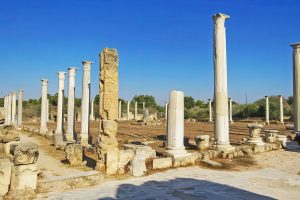
Temple of Zeus Salaminios

Temple of Zeus Salaminios

The Temple of Zeus Salaminios was one of the most important religious monuments of ancient Salamis. Dedicated to Zeus as the supreme god of the Olympian pantheon, it symbolised the city’s Greek identity, political authority, and connection to divine protection. dreamstime-com Through this temple, Salamis expressed its place within the wider Greek world while affirming its own power and prestige. A Temple at the Heart of Salamis The Temple of Zeus Salaminios stood within the great city of Salamis on the eastern coast of Cyprus. As one of the island’s largest and wealthiest cities, Salamis required a religious centre that matched its status. vici-org The choice of Zeus was deliberate. As ruler of gods and men, Zeus represented order, authority, and legitimacy. Worshipping him in monumental form reinforced Salamis’s role as a leading city with strong ties to Greek tradition and values. Zeus as Guardian of the City Zeus Salaminios was not a distant or abstract god. He was believed to actively protect the city, its people, and its rulers. His cult emphasised stability, justice, and continuity, qualities essential for a powerful urban centre. wikipedia-org Rulers and elites used the sanctuary to demonstrate their devotion and to associate their authority with divine approval. Public ceremonies held at the temple reinforced the idea that Salamis thrived under Zeus’s watchful presence. From…

Read more
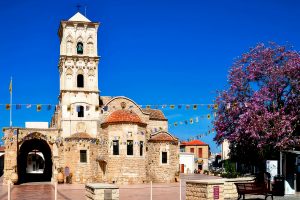
Agios Lazaros Church Larnaca

Agios Lazaros Church Larnaca

Agios Lazaros Church stands in central Larnaca, one of the most significant Christian sites in Cyprus. This Byzantine church was built in the late 9th or early 10th century over the believed tomb of Saint Lazarus. Lazarus of Bethany was the man Jesus raised from the dead after four days in the tomb, as described in the Gospel of John. According to Eastern Orthodox tradition, Lazarus fled Judea after his resurrection due to threats on his life and came to Cyprus, where Paul the Apostle and Barnabas appointed him as the first Bishop of Kition. He lived for thirty more years and was buried there for the second and last time. The church measures approximately 31.5 by 14.5 meters and was constructed primarily from limestone. Built by Byzantine Emperor Leo VI, it remains one of the oldest and most important churches on the island. Historical Background The location of Lazarus's tomb was believed to have been lost under Arab rule of the island from 649 AD. In 890, a tomb bearing the inscription "Lazarus, four days dead, friend of Christ" was discovered in Larnaca. In 898, Byzantine Emperor Leo VI had Lazarus's remains transferred to Constantinople. STELLAgloballookpress.com The transfer was apostrophized by Arethas, Bishop of Caesarea, and is commemorated by the Orthodox Church each year on October 17. In recompense…

Read more
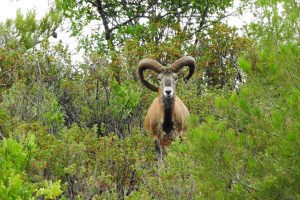
Cyprus Wild Mammal

Cyprus Wild Mammal

Imagine a rugged hillside in Cyprus, where ancient cedars cling to rocky slopes and the air hums with the distant call of a hidden survivor. This is the realm of the Cyprus mouflon, a wild sheep that has roamed the island's mountains for millennia, embodying the untamed spirit of Mediterranean wilderness. Let’s explore this elusive creature, a living link to Cyprus' prehistoric past that still graces its landscapes today. Sadly, this endemic mammal is listed as Endangered in IUCN Red List. www.inaturalist.org A Gentle Giant of the Hills The Cyprus mouflon, known scientifically as Ovis gmelini ophion, is a subspecies of wild sheep belonging to the broader family of Bovidae, which includes goats, antelopes, and cattle. These animals are ungulates – hoofed herbivores adapted to rugged terrains across Europe, Asia, and Africa and all modern sheep breeds are it’s descendants. Zooming into zoological details, the Cyprus mouflon belongs to the Caprinae subfamily, sharing traits with ibex and wild goats but distinguished by its non-shedding wool and seasonal breeding cycles. Genetic studies reveal close ties to Anatolian and Iranian mouflons, with mitochondrial DNA suggesting a basal lineage from early domestication escapes. In Cyprus, the mouflon stands out as an endemic treasure, perfectly tuned to the island's dry, mountainous environments, where it grazes and navigates steep cliffs with effortless grace. Echoes of…

Read more