Explore Cyprus with Our Interactive Map

Explore our top stories and discover ideas worth your time.

Marki Alonia Bronze Settlement

Marki Alonia Bronze Settlement

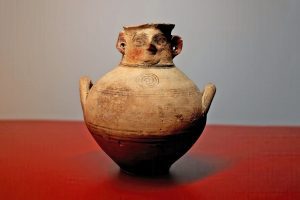
Nestled in central Cyprus, Marki-Alonia stands as one of the most revealing prehistoric settlements from the Early and Middle Bronze Age. Between 1990 and 2000, archaeologists David Frankel and Jennifer Webb from La Trobe University uncovered approximately 1,500 square meters of this ancient village. sciencedirect-com Their excavations revealed a remarkable window into how people lived, built their homes, and organized their communities from about 2400 BCE to around 1900 BCE. Unlike many archaeological sites where researchers can only piece together fragments of the past, Marki-Alonia offers an unusually complete picture of Bronze Age life in Cyprus. Historical Background The story of Marki-Alonia begins with a small group of settlers who arrived around 2400 BCE. The founding population numbered just 40 to 50 people. Over the course of 500 years, the settlement experienced steady growth. By the Middle Cypriot I period, roughly 400 years after its founding, the population had swelled to about 400 inhabitants. This growth reflects the settlement's success in establishing a stable agricultural economy and developing social systems that could support larger groups of people. cambridge-org What makes Marki-Alonia particularly important to archaeologists is its unbroken occupation sequence. Many ancient sites show signs of sudden abandonment or catastrophic destruction, but Marki-Alonia evolved gradually. Buildings were renovated, rooms were reorganized, and structures were rebuilt or demolished as needs changed.…

Read more
Three Dishes Define Cypriot Food Culture

Three Dishes Define Cypriot Food Culture

Cypriot cuisine is often described through individual recipes, yet its deeper identity emerges through patterns of use rather than isolated dishes. Makaronia tou Fournou, kolokasi, and traditional sweets occupy very different places on the table, but together they reveal how Cypriots eat across time, season, and social setting. One dish marks a celebration, one sustains daily life, and one formalises hospitality. Seen together, they form a practical map of how food functions in Cypriot culture. These foods do more than taste distinct. They organise social life. They reflect land, climate, economy, and ritual. To understand them is to understand how Cypriots structure eating itself. Makaronia tou Fournou and the Language of Celebration Makaronia tou Fournou is the dish most closely associated with gathering. Known informally as the Cypriot version of pastitsio, it appears at Easter, Christmas, Sunday lunches, and, most notably, weddings. Its importance lies less in the recipe itself and more in what it represents: abundance prepared to be shared. charloui-com The dish is built in layers. Tubular pasta forms a firm base, a lightly spiced meat sauce sits at its centre, and a thick béchamel enriched with eggs and local cheese seals the top. This structure is deliberate. When sliced, the layers hold their shape, allowing large trays to be portioned cleanly for many people. Long before it…

Read more

Cyprus Material Symbolism Traditions

Cyprus Material Symbolism Traditions

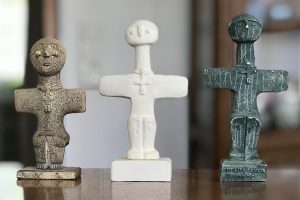
Material Symbolism (Stone, Bronze, Gold, Glass) in ancient Cypriot art reflected deliberate choices where each substance carried layers of spiritual, social, and economic significance. Stone embodied enduring strength drawn from the island's landscape, bronze represented transformation and resilience, gold signified divine favor and elite status, and glass evoked wonder through its luminous qualities. This intentional selection transformed artifacts into carriers of meaning, highlighting how materials conveyed broader cultural values in a society shaped by trade, ritual, and belief. estateofcyprus-com Materials as Carriers of Cultural Meaning Ancient Cypriot art utilized materials not merely for their practical properties but as elements infused with symbolism. Stone, bronze, gold, and glass each evoked specific associations, drawn from the island's natural resources and imported influences. Stone's durability suggested permanence and connection to the earth, bronze's forged nature symbolized human mastery over elements, gold's rarity and luster implied celestial or royal authority, and glass's translucence hinted at ethereal mystery. These choices formed a visual language that intertwined spiritual beliefs with social hierarchies and economic realities, evident across artifacts from domestic items to temple offerings. metmuseum-org Historical Development of Material Use The symbolic role of materials in Cypriot art emerged in prehistoric periods, around 8000 BC during the Neolithic era, when local stones and clays were shaped into basic figurines. By the Bronze Age, beginning approximately 2500…

Read more