Explore Cyprus with Our Interactive Map

Explore our top stories and discover ideas worth your time.

Ancient Amathus

Ancient Amathus

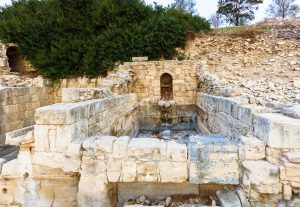
Amathus projected authority through stone: colossal vessels and carved reliefs that required skill, labour coordination, and long-term planning on a civic scale. wikimedia-org These monuments turned ritual spaces into political statements, using weight, repetition, and hybrid symbols to make royal legitimacy feel permanent and divinely protected. This article traces how vessels, reliefs, and funerary sculpture worked together to communicate power at Amathus without relying on lengthy inscriptions. Monumental Scale, Local Identity Located on Cyprus’s southern coast, Amathus developed as one of the island’s most distinctive city-kingdoms during the early first millennium BCE. Unlike other centres that aligned themselves quickly with Greek traditions, Amathus retained a strong indigenous identity, often described as Eteocypriot. This sense of cultural independence was not passive. It was actively constructed and displayed. Rather than emphasising monumental temples or written inscriptions, the rulers of Amathus invested in stone on an extraordinary scale. Large vessels, relief-carved blocks, and sculpted architectural elements were placed in prominent ritual and political spaces. These objects did more than decorate the city. They made authority visible and unavoidable. Why Limestone Becomes a Message In most ancient societies, stone was associated with endurance. At Amathus, this association was amplified by scale. The choice to work with massive limestone blocks required advanced knowledge, labour coordination, and long-term planning. These were not accidental by-products of wealth.…

Read more
Marion Polis Chrysochous

Marion Polis Chrysochous

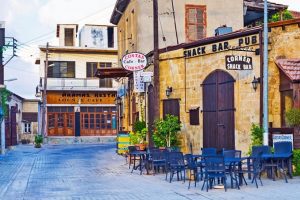
On the northwest coast of Cyprus, the small town of Polis Chrysochous sits on top of two ancient cities. Most people who pass through treat it as a quiet stop on the way to the Akamas Peninsula. chooseyourcyprus-com Few realise that beneath the modern streets, beneath the cafes and the central square, there are over 3,000 years of history. The town is built directly on the ruins of Marion, one of the ten city-kingdoms of ancient Cyprus, and its later successor, Arsinoe. The name "Chrysochous" itself is a clue. It comes from the Greek word "chrysos," meaning gold. This was not a random choice. It was a city that made its name from the ground beneath it. Historical Background The earliest traces of human activity in the area date back to the Neolithic period. The land was occupied long before anyone thought to build a city. According to ancient literary sources recorded by the Byzantine writer Stephanos Vyzantios, Marion was founded by a legendary king called Marieas. Tradition also connects the area to Akamas, the son of the Athenian hero Theseus, who is said to have passed through the region after the Trojan War and gave his name to the nearby cape and peninsula. By the 8th century BC, Marion had grown into a formal city-kingdom. It sat on two…

Read more
Cyprus Folk Dances and Festivals

Cyprus Folk Dances and Festivals

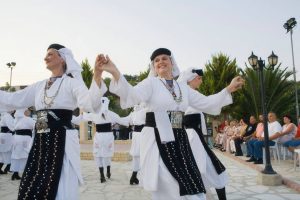
Cyprus folk dances represent living traditions that connect modern Cypriots to Byzantine heritage through choreographed movements, traditional costumes, and communal participation. These dances appear at weddings, religious festivals, harvest celebrations, and family gatherings, serving social functions beyond entertainment by reinforcing community bonds, facilitating courtship under supervision, and displaying cultural identity. incyprus-com The basic repertoire includes syrtos and kartzilaumas, performed as paired confrontational dances or circle formations, alongside specialty performances like tatsia where dancers balance wine-filled glasses on sieves, and drepani, the sickle dance demonstrating agricultural skills. incyprus-com Men and women traditionally danced separately, with social conventions restricting female dancing primarily to weddings while men performed at coffee shops, threshing floors, and festivals. The movements emphasize improvisation within communal constraints, with dancers competing to display skill while adhering to strict local standards that discourage excess or showiness that would violate collective norms. The Kartzilaumas Confrontational Tradition Kartzilaumas, the fundamental Cypriot dance from approximately 1910 through the 1970s, consists of six parts performed by confronted pairs of dancers, either two men or two women. The name derives from the Turkish word karşılama meaning greeting, reflecting the face-to-face positioning where dancers mirror and respond to each other's movements. The suite progresses through first, second, third, fourth, fifth or balos stages, with each part featuring slight variations in steps, tempo, and intensity. Between the…

Read more