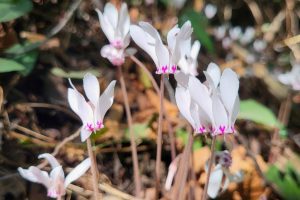
The Cyprus Cyclamen (Cyclamen cyprium) is far more than a delicate wildflower; it is a symbol of the island’s natural beauty and the resilience of its people. Formally designated as the national flower of Cyprus, this endemic treasure thrives in the cool, rocky shadows of the island’s mountain ranges.
The Mediterranean Rhythm: Growth in Winter
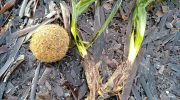
In the unique climate of Cyprus, the seasons of life are reversed compared to northern latitudes. For the Cyprus Cyclamen, the scorching, dry summer is a period of “estivation” (summer dormancy), where it hides underground as a tuber to survive the heat.
As the autumn rains arrive in September and October, the plant awakens. It uses the mild, wet winter to bloom and grow its biomass, taking advantage of the moisture before the landscape dries out again in May.
Botanical Features and Identification
While Cyprus is home to three cyclamen species, C. cyprium is the only one that is truly endemic—found nowhere else in the world.
Key Characteristics
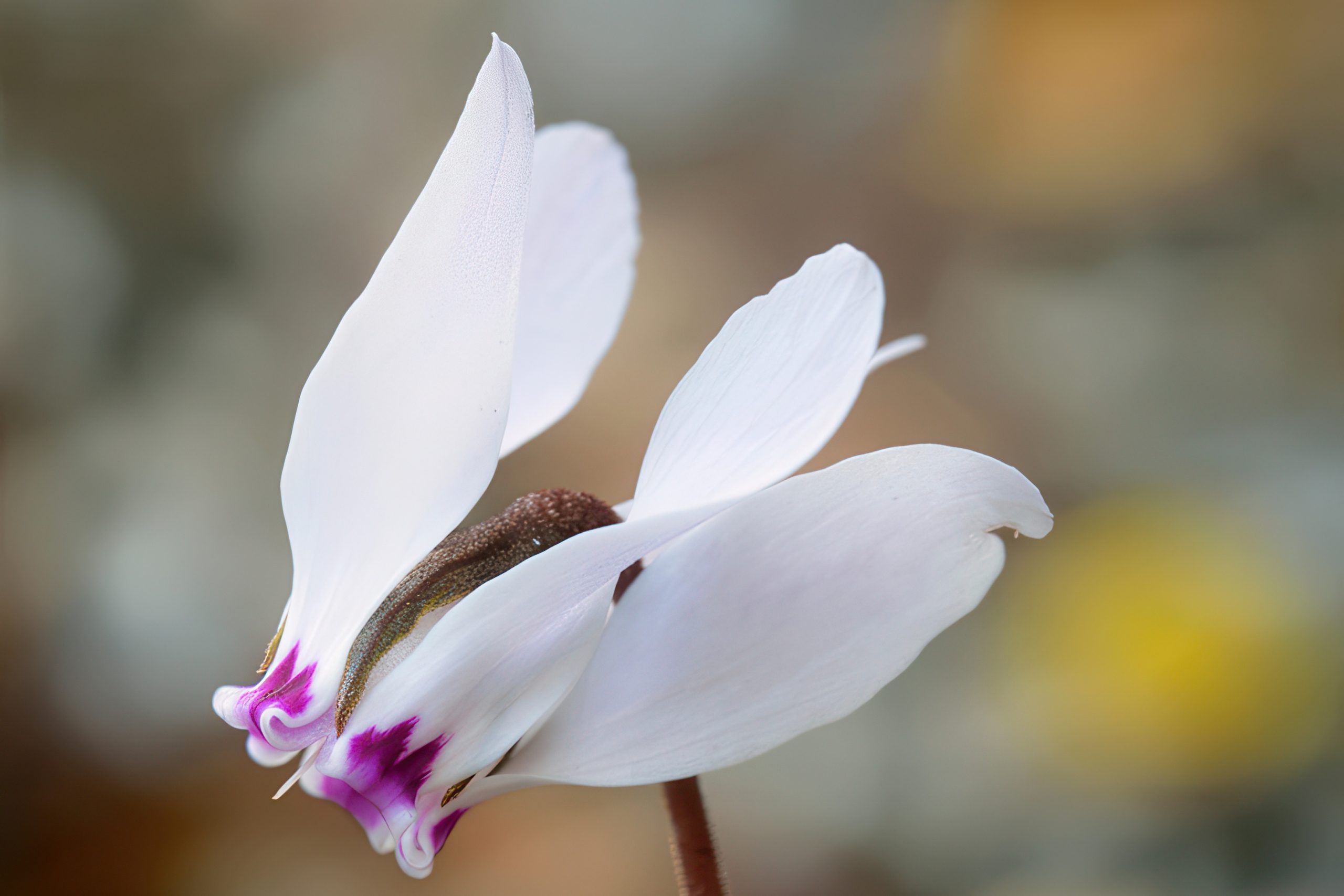
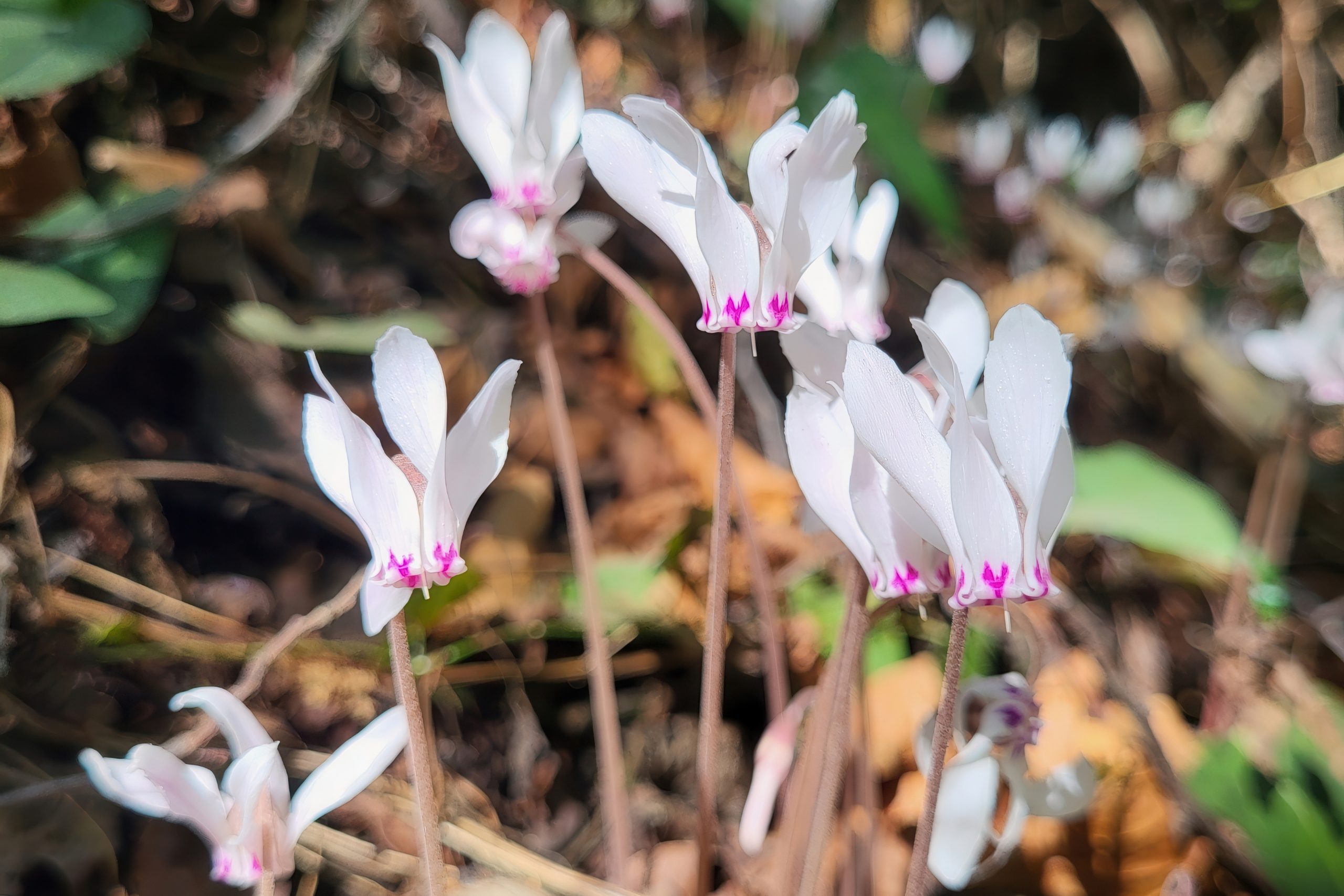
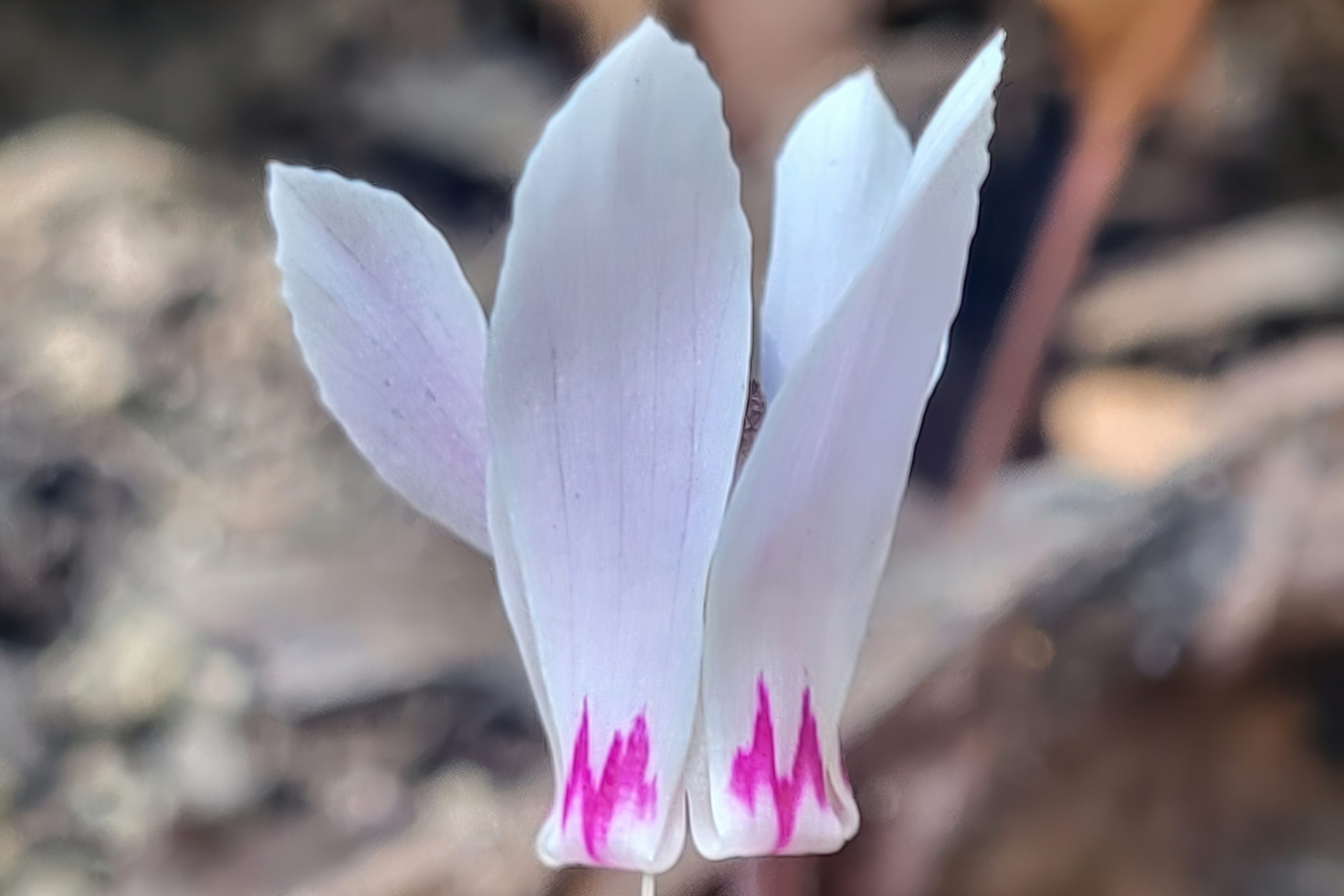
• The Flower: Small, white to pale pink petals that sweep upward and twist at the tips. Each petal features a distinct magenta M-shaped mark at its base.
• The Fragrance: It is famous for its intense, sweet lily-like scent that fills the winter air.
• The Leaves: Heart-shaped with toothed edges. They are dark green with silver-grey marbling on top and a rich purple-red on the underside.
• The “Top-Down” Coil: After the flower is pollinated, the stem coils into a tight spring starting from the top down toward the soil to protect the developing seeds.
Comparing the Three Cyclamens of Cyprus
To distinguish the endemic species from its cousins, observe these specific botanical markers:
1. The Cyprus Cyclamen (Cyclamen cyprium)
This is an endemic star. It is easily identified by the clear magenta M-shaped mark at the base of its white or pale pink petals. Its leaves are distinguished by an always deep purple-red underside. One of its most unique botanical signatures is the “top-down” coil: after pollination, the flower stem twists into a tight spiral starting from the top, pulling the seed pod down toward the earth. It is famously fragrant, filling the winter air with a sweet, lily-like scent from September to January.
2. The Persian Cyclamen (Cyclamen persicum)
A common native species often found in coastal areas, it blooms much later, typically from February to May. Its flowers are larger and generally scentless, featuring a dark purple or magenta blotch rather than an “M” shape. Unlike the other species, its stems do not coil at all after blooming; they simply go limp and fall to the ground. Its leaves are usually green on the underside.
Fun Fact: Despite its name, the Persian cyclamen does not grow in Persia (Iran). It was named “Persian” due to a historical misconception by Europeans, who believed that any exotic flower arriving from the Middle East must have originated in Persia.
3. The Greek Cyclamen (Cyclamen graecum)
In Cyprus, this species is Critically Endangered and extremely rare. It blooms in autumn (September to November) with scentless flowers that have two small dark spots at the base of each petal. You can tell it apart from the Cyprus Cyclamen by its stem, which coils from the bottom up or from the center, rather than the top down. Its leaf underside varies from green to light purple.
Note: The Greek Cyclamen (C. graecum) is listed as Critically Endangered in the Red Data Book of the Flora of Cyprus. It is a rare privilege to see it in the wild.
Culinary Heritage and Toxicity
In the mountain villages of the Troodos and Kyrenia ranges, the cyclamen holds a historic place in the kitchen, though it must be handled with care and respect for the law.
• Cyclamen “Koupepia”: Traditionally, the tender leaves were used as a winter alternative to vine leaves. They were blanched and stuffed with rice, meat, and fresh herbs. They are known for their delicate, earthy flavor.
• The Tuber and Cyclamin: While the leaves were eaten, the underground tubers are toxic. They contain cyclamin, a bitter saponin that acts as a severe internal irritant to humans and pets.
• Conservation Status: Today, the Cyprus Cyclamen is strictly protected by law. It is illegal to pick the flowers, harvest the leaves, or uproot the tubers. Modern Cypriots celebrate this culinary tradition through cultural memory rather than foraging.
Fun fact: from the animals only pigs are totally immune to the toxicity of cyclamin so they can forage the tubers easily.
A Protector of Homes and a Symbol of Hope
Cyclamen, kykláminos, first appear in Theophrastus (370-287 BC) as a powerful medicinal plant: “The root of cyclamen is used for suppurating boils, as a pessary for women, and for wounds when mixed with honey… They say the root is also good as an amulet to speed up childbirth, and it is used in love philtres.” The Roman naturalist Pliny the Elder famously cited the plant in his Natural History, referring to it as tuber terrae (“earth truffle”). He wrote: “It ought to be grown in every home if it is true that wherever it grows no evil spells do any harm.”
This ancient view of the flower as a protector of the home took on a modern, poignant meaning following the events of 1974. When many Cypriots were forced to leave their homes in the northern part of the island, they could not carry much with them. However, some chose to take the tubers of the Cyprus Cyclamen.
By planting these flowers in their new gardens in the south, the refugees kept a living connection to their lost land. For them, the cyclamen is a symbol of roots that cannot be broken and the hope that, like the flower blooming after a harsh dry season, life will flourish again.
Where and When to See It
To experience the Cyprus Cyclamen in the wild, look for shaded, north-facing slopes and the moist soil beneath pine and cedar trees.
• Best Time: November to January (Peak bloom).
• Locations: The Troodos Mountains (especially nature trails near Platres), the Kyrenia (Pentadaktylos) Range, and the Akamas Peninsula.