Explore Cyprus with Our Interactive Map

Explore our top stories and discover ideas worth your time.

Madari Peak

Madari Peak

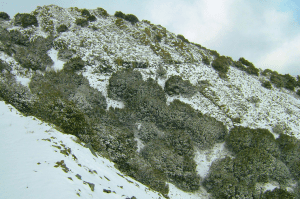
Madari Peak rises to 1,613 metres in the eastern Troodos Mountains, crowned by a fire lookout tower that watches over one of Cyprus's most popular hiking destinations. Madari forms part of Mount Adelfoi in the vast Adelfoi Forest, a protected area of dense pine, cedar, and oak trees covering over 120 square kilometres. thepalmiers-com The peak sits between the Nicosia and Limassol districts, accessible from villages like Kyperounta, Spilia, and Chandria that cluster on the lower slopes. Unlike Mount Olympus, which attracts visitors mainly for its summit status, Madari draws hikers for its dramatic rock formations, exceptional viewpoints, and network of interconnected trails that suit different fitness levels. The fire lookout station at the summit provides 360-degree views across the island. On clear days, the panorama extends from the Mesaoria Plain to the north, where Morphou Bay meets the sea, across to the central Troodos range in the west, and down to southern villages and coastline. The station remains operational, part of Cyprus's forest fire prevention system, but visitors can climb to viewing platforms that offer the same sweeping perspectives. Historical Background The Troodos Mountains emerged approximately 92 million years ago as part of the Troodos Ophiolite Complex, uplifted oceanic crust from the ancient Tethys Ocean. Madari consists of the same serpentinized harzburgite rock found throughout the range, representing mantle…

Read more
​​Historic Cyprus Churches in Rural Landscapes

​​Historic Cyprus Churches in Rural Landscapes

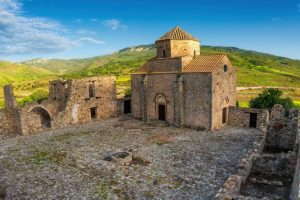
Historic churches scattered across Cyprus's Troodos Mountains preserve Byzantine and post-Byzantine frescoes within humble rural buildings, creating stark contrasts between simple exteriors and elaborate interior decorations. UNESCO recognized ten of these structures in 1985 and 2001 as the Painted Churches in the Troodos Region, acknowledging their outstanding testimony to Byzantine civilization and well-conserved examples of rural religious architecture. In-Cyprus They range from small churches whose rural architectural style is in stark contrast to their highly refined decoration, to monasteries such as that of St John Lampadistis. The churches date from the early 11th to early 16th centuries, spanning 500 years of artistic evolution influenced by Byzantine, Frankish, Venetian, and local Cypriot traditions. Steep wooden roofs with locally manufactured flat tiles protect the churches from the rain and occasional snow, architectural elements unique to Cyprus determined by its geography, history, and climate. Over 60 churches across Cyprus contain Byzantine wall paintings, but the Troodos concentration represents one of the greatest assemblages in the former Byzantine Empire. Agios Nikolaos tis Stegis and the Double Roof The Church of Saint Nicholas of the Roof in Kakopetria represents the oldest surviving katholikon in Cyprus, built in the 11th century. This church owes its name to its flat-tiled roof, which was built onto a pre-existing domed roof typical of Byzantine architecture. The distinctive double roof…

Read more
A Tapestry of Faith

A Tapestry of Faith

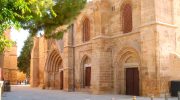
Most visitors to Cyprus know about its Greek Orthodox churches and ancient Christian monasteries, but the island's religious story is far richer and more complex. For millennia, Cyprus has been home to Jewish communities, Muslim mosques, Armenian and Maronite Christians, Sufi mystics, and Latin Catholic cathedrals - each faith leaving monuments that testify to survival, migration, and remarkable coexistence. Walking through Cyprus's cities means encountering this layered religious landscape where synagogues stand near mosques, Gothic cathedrals became prayer halls, and sacred springs were shared by people of different beliefs. orthodoxtimes-com Where Many Faiths Met and Mingled Cyprus has never belonged to a single religious tradition. Its position at the meeting point of Europe, Asia, and Africa made it a crossroads not only for trade and armies but also for belief systems. Long before Orthodox Christianity became dominant in the medieval period, Cyprus hosted Jewish traders and craftsmen, pagan mystery cults, and early Christian congregations mentioned in the New Testament. Later waves brought Islamic institutions during Ottoman rule, Armenian refugees fleeing persecution, Maronite Christians migrating from Lebanon and Syria, and Western European Crusaders establishing Latin Catholic strongholds. Rather than existing as isolated enclaves, these religious minorities participated actively in Cyprus's economy, diplomacy, and urban life. Their monuments - synagogues, mosques, churches of different denominations, and Sufi lodges - aren't marginal curiosities…

Read more