Explore Cyprus with Our Interactive Map

Explore our top stories and discover ideas worth your time.

Easter Traditions in Cyprus

Easter Traditions in Cyprus

Easter represents the most important religious celebration in Cyprus, surpassing Christmas in spiritual significance and cultural observance. Known as Pascha in Greek, the Orthodox Easter follows the Julian calendar, often falling weeks after Western Easter. The celebration spans Holy Week with solemn church services, candlelit processions through village streets, and the midnight Resurrection liturgy when bells ring and fireworks light the sky. facebook.com Families gather for elaborate feasts featuring roasted lamb, traditional flaounes cheese pastries, and red-dyed eggs. The festivities blend Byzantine religious ritual with distinctly Cypriot customs like bonfire lighting and the tsougrisma egg-cracking game. For both devout believers and secular Cypriots, Easter functions as the primary family reunion occasion and cultural identity marker, bringing together generations to maintain traditions passed down through centuries of Orthodox faith. The 40 Days of Lenten Preparation Orthodox Lent begins on Clean Monday, called Kathara Deftera, exactly 48 days before Easter Sunday. This day marks a dramatic shift from the excess of carnival to the austerity of fasting. Cypriots traditionally spend Clean Monday outdoors with countryside picnics, flying kites and consuming only fasting foods like tahini, olives, beans, flatbreads, and shellfish. The outdoor gathering symbolizes spiritual renewal and connection with nature before the solemn weeks ahead. During the 40-day Lenten period, observant Orthodox Christians abstain from meat, dairy products, eggs, fish with backbones,…

Read more

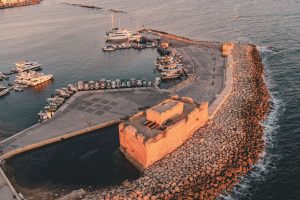
Nea Paphos Harbor

Nea Paphos Harbor

Nea Paphos emerged as one of the most strategically important harbor cities in the ancient Mediterranean. Founded in the late 4th century BC on the southwest coast of Cyprus, this planned city replaced the older settlement of Palaipaphos and quickly became the island's capital. touriste-ru The harbor served dual purposes as both a major naval base and a thriving commercial port, connecting Egypt with the broader Mediterranean world. Today, the archaeological remains spread across 100 hectares near modern Kato Paphos, offering a window into ancient maritime power. Historical Background King Nikokles, the last monarch of Palaipaphos, founded Nea Paphos around 320 BC. After Alexander the Great's death, Cyprus fell under Ptolemaic Egyptian control in 294 BC, where it remained for over 250 years. The site offered exceptional advantages. The city occupied a peninsula between two hills, with a natural bay providing shelter from storms. Strabo reported that the harbor offered protection from winds in all directions. Nearby forests supplied abundant cedar wood for shipbuilding, while the location sat on the critical maritime route between Rhodes and Alexandria. tripadvisor-ru Urban planners designed Nea Paphos according to the Hippodamian grid system, heavily influenced by Alexandria. Regular streets intersected at right angles, creating rectangular blocks called insulae. Defensive walls separated the urban area from the mainland, while public buildings faced the large harbor.…

Read more
Diarizos Valley, Cyprus

Diarizos Valley, Cyprus

The Diarizos Valley stretches through the heart of western Cyprus, where ancient traditions meet rare wildlife in one of the island's most important conservation zones. Located east of Paphos and carved by the fourth-longest river in Cyprus (Diarizos River), this valley combines ecological significance with centuries of winemaking heritage across 14 traditional villages. The area covers 8,804 hectares and serves as both a Natura 2000 protected site and an Important Bird Area recognized for its unique biodiversity. vkcyprus.com The Diarizos River flows for 42 kilometers from two sources on the southeastern slopes of the Paphos Forest near Mount Olympus. Its name derives from the Greek word for two roots, referencing the Platys and Kaminaria tributaries that merge north of the historic Tzelefos Bridge to form the main river channel. Unlike most Cypriot rivers, the Diarizos maintains water flow throughout all seasons, making it one of only five permanently flowing rivers on the island. The river basin extends across 278 square kilometers between the western slopes of Mount Olympus at 1,951 meters elevation and the Paphos Forest peaks. The elevation gradient ranges from 800 meters near the source down to 50 meters where the river approaches the Paphos plain before reaching its Mediterranean outlet near Kouklia village. This dramatic descent creates varied habitats that support different plant and animal communities at…

Read more