Explore Cyprus with Our Interactive Map

Explore our top stories and discover ideas worth your time.

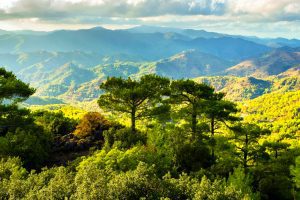
Ancient Terraces and Orchards in Cyprus Mountains

Ancient Terraces and Orchards in Cyprus Mountains

The mountains of Cyprus hold secrets carved into their slopes. For thousands of years, people built stone terraces across steep hillsides, creating agricultural systems that still influence the landscape today. These terraces supported orchards and crops in places where farming seemed impossible, showing the remarkable skill of ancient communities in managing their environment. chooseyourcyprus.com Recent archaeological work reveals that terrace farming on Cyprus dates back at least 3,000 years. The Bronze Age settlement of Politiko-Troullia, occupied between 2050 and 1850 BCE, provides clear evidence of this practice. Located in the foothills of the Troodos Mountains, this village sat at the interface between the fertile Mesaoria Plain and the copper-rich mountains, making it an ideal location for both agriculture and metal production. Historical Background The terraces at Politiko-Troullia were not simple structures. Archaeological surveys identified 168 ancient terrace walls in the study area, constructed with local stone and designed to serve multiple purposes. Longer terrace walls created level plots for agriculture, while shorter walls focused on erosion control and supporting fruit trees. These ancient farmers understood their environment well. They built terraces on slopes with specific geological features, particularly near pillow lavas and limestone deposits where sediment availability and water drainage were optimal. Surface geology played a crucial role in determining where to construct terraces, as the walls needed both stable…

Read more
Mesaoria Alluvial Plains Cyprus

Mesaoria Alluvial Plains Cyprus

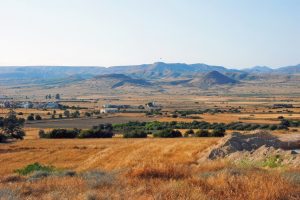
Between the Troodos Mountains in the south and the Kyrenia Range in the north lies a broad plain that has been the agricultural heart of Cyprus for thousands of years. The Mesaoria wasn't always dry land. About one million years ago, this central area was still underwater, an ancient bay that slowly filled with sediments washed down from the surrounding mountains. Today, those sediments form the fertile soils that feed the island, delivered by rivers that flow only in winter and disappear completely by summer. fergusmurraysculpture-com The Mesaoria is a flat plain that extends across central Cyprus from Morphou Bay in the west to Famagusta Bay in the east. The name comes from Greek and means "between the mountains," which perfectly describes its position sandwiched between the Troodos and Kyrenia ranges. The plain measures 96 kilometers long and varies between 16 to 32 kilometers wide, covering roughly 1,000 square kilometers of land. The average elevation across the Mesaoria sits around 100 meters above sea level, though some areas near Nicosia rise to 325 meters. Unlike the mountainous regions that surround it, the Mesaoria is mostly flat with gentle slopes. This flatness makes it ideal for agriculture but also creates drainage problems when the seasonal rivers flood. Historical Background About 25 million years ago during the Lower Miocene era, the Troodos…

Read more
Whispers from the Sunlit Slopes

Whispers from the Sunlit Slopes

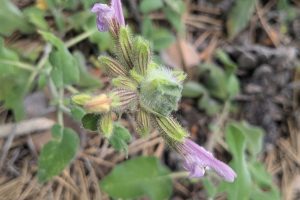
Imagine strolling across a rocky hillside in Cyprus under a clear blue sky, where a shrubby plant releases a warm, woody aroma that hints at ancient potions and savory island dishes. This is sage, a resilient herb that dots the wild landscapes of Cyprus, offering simple wisdom from nature’s own apothecary to those who pause to notice. www.inaturalist.org A Fragrant Shrub in the Mint Family Sage belongs to the genus Salvia in the vast mint family (Lamiaceae), a group of plants known for their square stems and aromatic leaves rich in essential oils. In Cyprus, several wild species grace the landscape, thriving in dry, rocky slopes and maquis vegetation from sea level to the high Troodos peaks. Echoes of Ancient Healers The name Salvia comes from the Latin “salvare” – to save or heal – reflecting its long history as a medicinal plant. In Cyprus, sage has been gathered since prehistoric times. Ancient Greek physicians like Dioscorides praised its wound-healing powers, while it was used in rituals for protection and purification. Over centuries, it became deeply rooted in island folklore as a symbol of longevity and wisdom. www.inaturalist.org Woolly Leaves and Starry Blooms Wild sage in Cyprus typically grows as a low to medium shrub with fuzzy, silvery-green leaves that feel velvety to the touch. When crushed, they release a…

Read more