Explore Cyprus with Our Interactive Map

Explore our top stories and discover ideas worth your time.

Enkomi Bronze Figurines: Gods of Copper

Enkomi Bronze Figurines: Gods of Copper

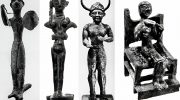
Enkomi’s bronze figurines show how Late Bronze Age Cyprus fused religion with copper production, turning its key resource into divine protection and political legitimacy. The Horned God and the Ingot God were not decorative art but intentional symbols, linking sanctuaries, workshops, and administrative control inside one civic system. This article explains Enkomi’s trade position as Alashiya, what each figure was designed to communicate, and why their burial and survival still shape how we understand “sacred industry” on Cyprus. A City Between Mine and Sea Enkomi rose on a rocky plateau near a sheltered inlet that once opened to the sea. This position allowed it to function as both a port and a processing centre, linking the copper-rich Troodos Mountains to international trade routes that reached Egypt, the Levant, and the Aegean. Ancient texts refer to the kingdom of Alashiya as a copper supplier powerful enough to address pharaohs as equals. That status came directly from Enkomi's control of metal production. commons-wikimedia-org The city expanded dramatically during the Late Bronze Age, especially in the 14th and 13th centuries BCE. Its layout reveals planning rather than improvisation. Straight streets, large ashlar buildings, and massive fortifications point to centralised authority and long-term investment. This was not a marginal settlement. It was an industrial capital whose wealth depended on metal and whose religion reflected…

Read more
Büyük Han Nicosia Ottoman Caravanserai

Büyük Han Nicosia Ottoman Caravanserai

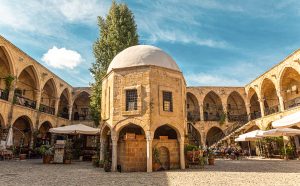
In the center of the Turkish-occupied part of Nicosia’s Old City stands a building that has had many lives. It has been a merchant’s inn, a prison, a home for displaced families, and today it is a lively cultural center. Built in 1572, just two years after the Ottomans took over Cyprus, Büyük Han is the largest and best example of caravanserai architecture on the island. visitncy-com The building is almost square, measuring 50.67 by 45.25 meters, and has 68 rooms on two floors arranged around a central courtyard. It was originally built for traveling merchants and traders who connected Cyprus with Anatolia, the Levant, and beyond. Büyük Han is considered one of the best surviving examples of Ottoman architecture in Cyprus and has been a protected monument since its restoration in the 1990s. The History Behind the Great Inn Büyük Han was built in 1572 under Muzaffer Pasha, the first Ottoman governor of Cyprus. Some sources say it might have been completed by his successor, Sinan Pasha, because Muzaffer Pasha was reassigned shortly after the island was taken. Muzaffer Pasha brought an architect from Constantinople named Bostan, who may have designed Büyük Han. The design was based on the Koza Han in Bursa, Turkey, a famous Ottoman caravanserai. It has a central courtyard and fortified elements, with open arcades…

Read more

Omodos & Lefkara – Iconic Mediterranean Fields

Omodos & Lefkara – Iconic Mediterranean Fields

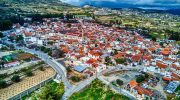
Two villages in the Troodos Mountains represent the essence of Cyprus's cultural heritage. Omodos and Lefkara stand as living museums where centuries-old traditions continue to thrive. Omodos produces some of the island's finest wines, while Lefkara creates intricate lacework recognized by UNESCO. Both villages showcase traditional Cypriot architecture with limestone houses, narrow cobbled streets, and red-tiled roofs. en-wikipedia-org Located within the Limassol and Larnaca districts respectively, these settlements offer visitors a glimpse into Mediterranean village life that has remained largely unchanged for generations. The villages sit at elevations between 650 and 900 meters, providing cooler temperatures and spectacular views of surrounding vineyards and valleys. Historical Background Omodos likely emerged at the end of the Byzantine period, possibly around the 12th century. The village formed after nearby settlements of Pano and Kato Koupetra dissolved. According to historical records, Isaac Comnenos, the Byzantine ruler of Cyprus, sought refuge in the Koupetra area in 1191 during conflicts with Richard the Lionheart. The settlement that became Omodos grew around the Monastery of the Holy Cross, which tradition claims was established before Saint Helena's visit to Cyprus in 327 AD. Medieval documents from 1469 mention a wine press in the village, proving that viticulture has been central to Omodos for at least six centuries. myguidecyprus-com Lefkara's documented history begins in the 12th century when Saint…

Read more