Explore Cyprus with Our Interactive Map

Explore our top stories and discover ideas worth your time.

Cypriot Festivals Traditions

Cypriot Festivals Traditions

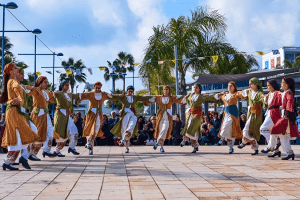
Across Cyprus, tradition does not survive in museums alone. It lives in streets closed for parades, village squares filled with music, and festivals where children dance the same steps their grandparents once learned. From large urban celebrations in Limassol and Nicosia to small rural gatherings in the Troodos Mountains, festivals remain the island’s most effective way of passing folk culture from one generation to the next. horosho-tam.ru These events are not staged nostalgia. They are active systems of cultural transmission, where music, dance, costume, and storytelling are learned by participation rather than explanation. Why Festivals Matter More Than Performances A concert can be watched. A festival must be joined. Cypriot festivals work because they blur the line between performer and audience. Children rehearse for months with local dance groups. Teenagers volunteer as organisers. Elders sing, comment, correct, and remember. Culture is not presented as something finished, but something ongoing. eaff.eu This is why festivals succeed where formal instruction often fails. They create emotional memory alongside skill. Limassol: Where Tradition Meets the Crowd Limassol has long been known as Cyprus's most celebratory city. Its festivals combine rural tradition with urban scale, keeping folk culture visible even as the city modernises. The Limassol Carnival: Satire, Song, and Continuity The Limassol Carnival is one of the island's oldest surviving festive traditions. Rooted in…

Read more

Finikoudes Beach Larnaca

Finikoudes Beach Larnaca

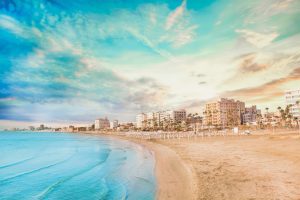
Finikoudes Beach stretches 600 meters along Larnaca's central seafront, backed by a palm-lined promenade that serves as the city's main social gathering space. The beach takes its name from the Greek word for small palm trees, referring to the baby palms planted along the promenade in 1922. expedia.co Those original trees have now reached full height and stand as defining features of Larnaca's coastal identity. This urban beach offers direct access to the Mediterranean from the heart of Cyprus's third-largest city, with shallow waters that extend 25 to 30 meters from shore before reaching deeper zones. From Fishing Village to Tourist Destination Larnaca sits on the site of ancient Kition, established in the 13th century BC as a Mycenaean settlement. The city served as a copper trading hub and maintained continuous habitation for over 3,000 years. The modern Finikoudes area developed much later as Larnaca transformed from a modest coastal town into an international gateway. Historical records from the 16th and 17th centuries describe Larnaca as containing only around 300 houses, most built from stone and mud brick. expedia.co The promenade's development fundamentally changed the relationship between Larnaca's old town and its waterfront. The reconstruction and improvement of Piale Pasha Avenue, which connects Finikoudes with the Mackenzie tourist area, was completed on July 29, 2014. This project unified Larnaca's entire…

Read more
Myrtle in Cypriot Hills

Myrtle in Cypriot Hills

Picture yourself on a sun-drenched slope in Cyprus, where the air carries a sweet, spicy fragrance whenever a breeze stirs the shrubs. Amid the rocky terrain and scattered pines, you encounter clusters of glossy green leaves dotted with delicate white flowers. This is the common myrtle, a quiet but ever-present companion in the island’s wild landscapes. www.inaturalist.org A Shrub Steeped in Mediterranean Grace Myrtus communis, known simply as the common myrtle, belongs to the Myrtaceae family a group that includes fragrant giants like eucalyptus and clove trees. In Cyprus it grows as an evergreen shrub or small tree, reaching up to five metres tall. It is one of only two species in its genus worldwide, the other being a rare Saharan relative. Here on our island it forms part of the classic maquis vegetation, that resilient scrubland of aromatic bushes that cloaks hillsides from sea level right up to 1,500 metres. Tales from Antiquity: Aphrodite’s Favourite Veil Long before botanists catalogued it, the myrtle was woven into the very birth story of Cyprus. Legend tells that when Aphrodite, the goddess of love and beauty, rose from the foaming waves near Paphos, she modestly hid her nakedness behind a myrtle bush. Ever since, the plant has been sacred to her. Ancient brides wore myrtle wreaths and bathed in myrtle-scented water on…

Read more