Explore Cyprus with Our Interactive Map

Explore our top stories and discover ideas worth your time.

Whispers of White Petals in the Cypriot Breeze

Whispers of White Petals in the Cypriot Breeze

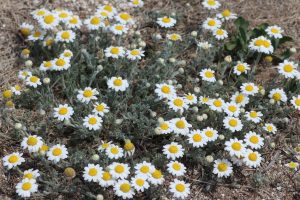
Picture a sun-drenched Cypriot meadow in spring, dotted with cheerful daisy-like flowers that bob like tiny suns on slender stems, their delicate scent mingling with the salty sea air. These are the Anthemis or Mayweed species, often mistaken for their chamomile cousins, a group of wildflowers that paint the island's landscapes with subtle beauty. But what tales do these unassuming blooms tell of Cyprus' wild heart? www.inaturalist.org Getting Acquainted with the Island's Daisies Anthemis is a genus of flowering plants in the vast Asteraceae family, which includes everything from sunflowers to dandelions, showing how these humble herbs fit into a broader world of composite blooms that rely on wind and insects for their spread. In Cyprus, they're known as wild chamomiles or μαργαρίτες (margaritas) in Greek, evoking simple, everyday beauty. Think of them as the island's resilient ground-huggers, annual or perennial herbs that thrive in open spaces, offering a gentle introduction to the Mediterranean's floral diversity without any fuss. A Legacy Etched in Ancient Soils The story of Anthemis in Cyprus reaches back to the island's Bronze Age settlers, who likely encountered these flowers amid terraced fields and rocky hills, perhaps using them in early herbal remedies as hinted in ancient texts like Dioscorides' "De Materia Medica," where similar chamomiles were praised for soothing woes. www.inaturalist.org Over centuries, as Phoenicians,…

Read more
Work Culture and Employment Opportunities in Cyprus

Work Culture and Employment Opportunities in Cyprus

The country sits at the crossroads of three continents. This strategic position has shaped its economy into a diverse hub for international business. Cyprus joined the European Union in 2004 and adopted the euro in 2008, which strengthened its position as a business center. vkcyprusgroup-com The economy grew by 3.6% in 2025, outpacing most eurozone countries. This growth stems from strong performance in tourism, information technology, financial services, and shipping. The island hosts over 1,500 active job listings at any given time, with companies actively seeking both local and international talent. Cyprus offers several practical advantages for workers. The corporate tax rate stands at 12.5%, one of Europe's lowest. English is widely spoken in business settings, particularly in cities like Nicosia and Limassol. The climate provides sunshine year-round, and the cost of living remains moderate compared to other EU nations. Understanding the Cypriot Work Environment Workplace culture in Cyprus blends European professionalism with Mediterranean warmth. Companies value relationship-building and personal connections as much as technical competence. Trust develops through consistent interaction, and many business relationships extend beyond office hours into social settings. The standard working week spans 38 to 40 hours across five days. Most offices operate from 8:00 AM to 5:00 PM, though some businesses follow split schedules with afternoon breaks. Employees can expect 20 days of paid annual…

Read more
Salamis Bathhouse Mosaics

Salamis Bathhouse Mosaics

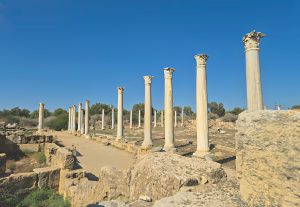
The Salamis bathhouse mosaics show how Roman Cyprus combined leisure, engineering, and civic identity inside one of the island’s most ambitious public complexes. These floors were designed to shape movement and atmosphere, pairing mythic scenes with technical skill, imported materials, and heated rooms that made bathing a daily performance of status. This article explains how the mosaics worked within the bathhouse system, what their imagery signalled, and why their survival still matters for understanding Roman urban life on Cyprus. googleusercontent-com A Capital Built to Be Seen Salamis was not an ordinary provincial town. For long periods, it functioned as the administrative and commercial heart of Cyprus, benefiting from trade routes that linked the Aegean, the Levant, and Egypt. When the city was rebuilt after a devastating earthquake in the first century AD 76/77 and a later insurrection in AD 116, Roman emperors invested heavily in its public architecture. googleusercontent-com The gymnasium and bathhouse complex became one of the most imposing structures in the eastern Mediterranean. Its scale alone communicated status. Wide colonnades, marble-clad halls, and carefully planned water systems transformed bathing into a public performance of Roman order and prosperity. Bathing as a Social Ritual In Roman cities, baths were not private spaces for cleanliness. They were communal environments where physical care, leisure, and social interaction blended into a daily…

Read more