Explore Cyprus with Our Interactive Map

Explore our top stories and discover ideas worth your time.

Saint Neophytos Cave Monastery

Saint Neophytos Cave Monastery

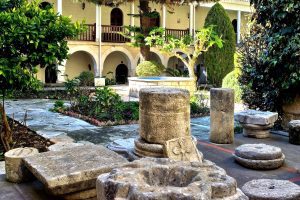
Saint Neophytos spent most of his life alone in a cave. That was his choice, and he fought for it at every turn. Born in 1134 in the small mountain village of Kato Drys near Lefkara, he was the son of farmers, one of eight children. julipapasgardens.com He became a monk at 18, a hermit by 25, and spent over 60 years sealed inside a rock-cut cave above Paphos. Yet for all his devotion to solitude, Neophytos was one of the most outspoken and prolific writers Cyprus has ever produced. He wrote about politics, religion, natural disasters, the suffering of ordinary people, and the foreign rulers who oppressed them. His cave was small, but his voice reached far beyond it. Historical Background Neophytos grew up poor and illiterate. When his parents arranged a marriage for him, he refused and fled to the Monastery of Saint John Chrysostomos in the Turkish-occupied part of Cyprus. There, he learned to read and write for the first time. He was given the role of assistant sacristan, but what he really wanted was to be left alone. His superiors told him he was too young for that kind of life. In 1158, they let him travel to the Holy Land instead. He spent six months visiting monasteries and sacred sites in Jerusalem, but came back…

Read more

Madari Viewpoint Cyprus Panoramic Views

Madari Viewpoint Cyprus Panoramic Views

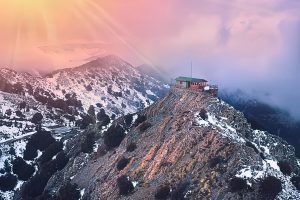
Madari Summit stands at 1,613 metres, securing the spot as the second-highest peak among the mountains in Cyprus. The Madari viewpoint sits atop Mount Adelfoi in the eastern Troodos range, offering unrestricted access to its summit, unlike Mount Olympus, where military installations block the highest point. livejournal-com The fire lookout station at the peak provides 360-degree views that stretch from the Turkish-occupied Pentadaktylos mountains in the north across the Mesaoria plain to the southern coast. Visitors can climb the open tower structure to gain even higher vantage points. The location draws photographers, nature enthusiasts, and hikers who want to experience Cyprus from its most panoramic natural viewpoint without the restrictions that limit access elsewhere in the mountains. Historical Development The Troodos Mountains formed approximately 90 million years ago as part of the Neotethys seafloor. The range rose slowly from the sea as a result of the collision between the African and European tectonic plates, a process that eventually formed the island of Cyprus. visitsolea-com The Madari area showcases the famous Troodos Ophiolite, one of the world's most complete and accessible examples of oceanic crust that has been lifted above sea level. Ophiolite formations include layers of oceanic crust and upper mantle rocks normally found deep beneath the ocean floor. As this process slowed and nearly ceased, the rock formations remained…

Read more
Former Government House, Nicosia

Former Government House, Nicosia

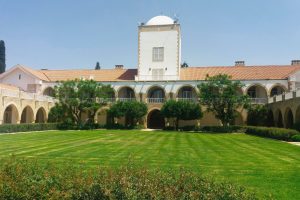
The Former Government House in Nicosia stands as a tangible reminder of British rule in Cyprus. Constructed during the colonial period, it served as the administrative center of British governance on the island. The building symbolized centralized control, colonial administration, and imperial authority during that era. While its function has changed over time, it continues to carry significant political and historical importance. Today, the building remains closely linked to state authority and modern governance. wikipedia-com Historical Background British administration in Cyprus began in 1878, when the island came under British control while remaining formally part of the Ottoman Empire. Cyprus was later annexed by Britain in 1914 and officially became a Crown Colony in 1925. During this period, British authorities worked to establish permanent administrative structures that reflected imperial governance and order. The Government House was constructed between 1933 and 1937 on the site of earlier Lusignan and Venetian fortifications, near the Cephane, or Quirini Bastion, of the Venetian walls. The location was chosen deliberately, placing colonial authority at the historic heart of Nicosia and asserting dominance over previous layers of rule. The building served as the residence of the British Governor and the administrative headquarters of the colonial government. Major political decisions, official ceremonies, and colonial policies were conducted here. It remained in use until British rule ended in…

Read more