Explore Cyprus with Our Interactive Map

Explore our top stories and discover ideas worth your time.

Vouni Palace Reliefs

Vouni Palace Reliefs

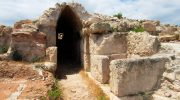
Vouni Palace was a Cypro-Classical hilltop complex built around 500 BC to control coastline movement and project authority over a contested landscape near Soli. Its architectural reliefs and capitals show Persian imperial symbols, including Hathor imagery, rosettes, and royal protection motifs, translated through local limestone carving and later blended with Greek spatial elements as political alignment shifted. This article explains why the site’s position mattered, how decoration was used to regulate experience inside the palace, and what the surviving fragments reveal about Cyprus negotiating empire without simply copying it. google-com A Hilltop Built to Watch Soli Vouni was never meant to be subtle. Rising roughly 250 meters above sea level, the hill offers uninterrupted views across the coast and inland plains. From here, movement along the shoreline could be monitored with ease, especially the nearby territory of Soli, a city-kingdom that repeatedly resisted Persian authority. google-com The location makes the palace’s purpose immediately clear. Vouni was built to watch, to assert presence, and to project authority outward. Comfort and urban life were secondary. This was a place where geography itself became part of governance. 500 BC: A Palace of Tension The palace was constructed around 500 BC, during a period when Cyprus stood at the intersection of competing powers. The island was under the control of the Achaemenid Persian Empire,…

Read more

Panagia Chrysopolitissa Basilica

Panagia Chrysopolitissa Basilica

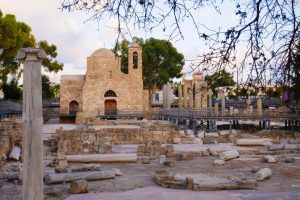
Panagia Chrysopolitissa stands as one of the most significant early Christian sites in Cyprus. This archaeological complex in Kato Paphos preserves the remains of the largest Byzantine basilica ever built on the island, along with one of Christianity's most powerful symbols, St. Paul's Pillar. nashaplaneta-net The Chrysopolitissa site brings together multiple layers of Christian history in one location. The complex includes the ruins of a massive 4th-century Byzantine basilica covering approximately 1,600 square meters, the remains of a 13th-century Franciscan Gothic church, the active stone church of Agia Kyriaki built around 1500 AD, and the famous marble pillar where St. Paul was reportedly flogged. The site combines active worship spaces with archaeological preservation, creating a unique blend of past and present. Historical Background According to Christian tradition and the Acts of the Apostles, St. Paul visited Cyprus around 45 AD during his first missionary journey with Barnabas and John Mark. The trio arrived to preach Christianity in an empire where the new faith faced persecution. In Paphos, Paul encountered resistance from a false prophet and faced the Roman governor Sergius Paulus. Tradition states that Paul was tied to a marble column and received 39 lashes for spreading Christianity. The punishment used a special whip with 13 heads attached to a single handle, so each strike delivered 13 lashes. Paul endured…

Read more
Saint Barnabas Monastery

Saint Barnabas Monastery

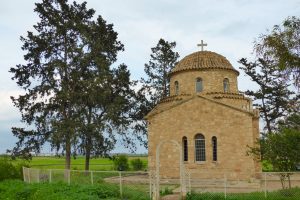
Near the ruins of ancient Salamis, a monastery complex marks the spot where one of Christianity's first apostles was buried in secret after being martyred for his faith. Saint Barnabas was a native of Cyprus who joined Paul on missionary journeys that brought Christianity to the island and converted its Roman governor. His discovery in a tomb 400 years after his death would change the course of Cypriot church history and establish the Orthodox Church of Cyprus as an independent institution. shutterstock-com Barnabas holds a unique position in Christian history as the apostle who validated Paul's conversion and introduced him to the Christian community in Jerusalem. According to the Acts of the Apostles, Barnabas sold his property near Jerusalem and donated the proceeds to the early church, demonstrating his complete dedication to the new faith. He is considered the patron saint of Cyprus and is commemorated on June 11th in the Orthodox calendar. Historical Background Barnabas traveled to Jerusalem to study law under Rabbi Gamaliel, the same teacher who instructed Paul. While studying in Jerusalem, Barnabas witnessed miracles performed by Jesus and became one of His followers. megtaza-com When Paul (then called Saul) returned to Jerusalem after his dramatic conversion on the road to Damascus, the Christian community was understandably suspicious of the former persecutor of Christians. Barnabas played a…

Read more