Explore Cyprus with Our Interactive Map

Explore our top stories and discover ideas worth your time.

Troodos Mountains: Geology Shaped Cyprus

Troodos Mountains: Geology Shaped Cyprus

The Troodos Mountains are one of the world’s clearest places to walk through ancient oceanic crust, preserved as an ophiolite and lifted above sea level in the centre of Cyprus. This exposed seafloor sequence helped scientists understand plate tectonics and later shaped Cypriot history by concentrating copper deposits, influencing climate, and supporting mountain settlement and tradition. This article explains how Troodos formed, how to “read” its layers across the landscape, and why the range connects deep geology with everyday life on the island. A Mountain Made from Seafloor At first glance, Troodos looks like a typical Mediterranean highland: pine forests, winding roads, cool air in summer. What lies beneath, however, is extraordinary. The mountains are formed from an ophiolite, a complete slice of ancient oceanic crust and upper mantle that was pushed upward instead of sinking back into the Earth. dreamstime-com This makes the Troodos range one of the best-preserved and most accessible examples of oceanic lithosphere anywhere in the world. For geologists, it functions like a natural textbook laid open across the landscape. For visitors, it offers something rarer: the chance to stand on rocks that once formed the floor of a vanished ocean. Ninety Million Years, Now Visible The rocks of Troodos formed around 90 million years ago beneath the Neotethys Ocean. At that time, molten material rose…

Read more
The Chalcolithic Priestesses of Enkomi

The Chalcolithic Priestesses of Enkomi

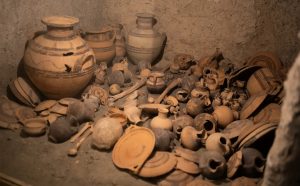
In the Chalcolithic period of Cyprus, around 3900 to 2500 BC, women likely held key roles as priestesses or ritual leaders in communities like those near what would later become Enkomi. These figures guided ceremonies focused on fertility, birth, and the emerging magic of metallurgy, acting as bridges between daily life and unseen forces. Their story uncovers a time when religion was woven into survival, leaving us with intriguing artifacts that hint at powerful female authority in ancient Cypriot society. estateofcyprus-com Unveiling an Ancient Spiritual World Step back to a Cyprus without cities, kings, or written words - a landscape of scattered villages where life hung on the whims of nature. This was the Chalcolithic era, a bridge between the Stone Age and Bronze Age, when people first experimented with copper tools and settled into larger groups. Communities clustered around fertile valleys and rivers, like those in the Paphos region or near the eastern coast where Enkomi would later rise. Religion wasn't separate from daily grind; it was a toolkit for dealing with births, harvests, and deaths. Women, tied closely to life's cycles through childbearing and caregiving, emerged as natural leaders in these rituals. Though we don't have names or titles, artifacts suggest priestesses - knowledgeable women who orchestrated ceremonies to keep balance in an unpredictable world. ancientcyprus-com Roots in…

Read more
Cyprus Folk Dance Workshops

Cyprus Folk Dance Workshops

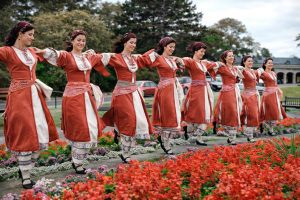
Cypriot folk dance is not something observed from a distance. It is something entered, shared, and carried by the group. Across Cyprus, workshops and demonstrations keep traditional dance alive by teaching it as a social practice rather than a staged performance. Whether held in village squares, community halls, or coastal courtyards, these gatherings connect rhythm, memory, and collective life in ways that still feel natural on the island today. politistiko-ergastiri.org Rather than preserving dance as choreography alone, Cypriot workshops focus on movement as a form of communication. Steps are learned not just as patterns, but as expressions shaped by history, environment, and social structure. Participation matters more than polish, and understanding matters more than display. Dance as a Social Language Traditional dance in Cyprus developed as a shared language rather than a spectacle. Long before formal instruction existed, dances were learned through observation and repetition during weddings, harvest celebrations, and religious festivals. Movement reflected everyday rhythms and reinforced bonds within the community. Modern workshops continue this approach. Instead of separating dancers into performers and audiences, they recreate the original logic of participation. Circles and open lines organise people spatially and socially, assigning roles, setting pace, and encouraging mutual awareness. A dance begins only when the group moves together, and its success depends on collective rhythm rather than individual expression. Foundational…

Read more