Explore Cyprus with Our Interactive Map

Explore our top stories and discover ideas worth your time.

Pentozali Cyprus Dance

Pentozali Cyprus Dance

The Pentozali is one of the most powerful dances ever to cross the sea between Crete and Cyprus. Born in the mountains of western Crete as a dance of resistance and endurance, it later became part of Cyprus’s festival life, folk education, and stage tradition. When performed on Cypriot soil today, the Pentozali is not treated as a foreign import, but as a shared expression of strength, memory, and collective identity within the wider Hellenic world. This is not a dance meant to decorate an evening. It is meant to command attention. A Dance Built on Movement, Not Decoration Pentozali belongs to the family of pidichtos dances, a term that refers to leaping, high-impact movement rather than flowing steps. The body does not glide. It strikes, lifts, stamps, and suspends itself in the air. The posture is upright and direct, with little ornamentation, because the focus is on force and timing rather than elegance. The dance is usually performed in an open circle or semi-circle, with dancers linked at the shoulders. That formation creates both physical stability and a sense of collective strength. Everyone moves as one unit, but the attention belongs to the leader at the front of the line, whose improvisations set the intensity of the performance. Why Leadership Matters in Pentozali Unlike many communal dances, Pentozali places…

Read more

Artisanal and Industrial Fishing

Artisanal and Industrial Fishing

Fishing in Cyprus exists in two distinct worlds. Small boats with weathered wood head out at dawn from coastal shelters, while larger vessels equipped with modern technology venture into deeper waters. The Cypriot fishing fleet comprised 858 vessels in 2019, representing a sector that contributes around 0.8% to GDP but holds significant importance in coastal communities.  In-Cyprus This industry balances traditional methods passed down through generations with contemporary commercial operations. Over 300 types of fish have been found in the sea around Cyprus, yet the eastern Mediterranean's warm, nutrient-poor waters present unique challenges for fishers. The Three Faces of Cyprus Fishing Today There are three fishing segments in Cyprus: the trawler sector, both inland fishing (2 trawlers) and high sea trawlers (5 trawlers), purse seine fishing (3 purse seiners), and coastal fishing with 4 to 12 metres boats. Small-scale coastal fishing dominates the fleet. These artisanal fishers work close to shore, often using multiple gear types during a single trip to adapt to conditions and catch opportunities. Cyprus Mail The trawl fishery operates under strict regulations. Mesh size is 40 mm, the minimum depth of fishing is 50 m, and the fishing season lasts from November 7 to May 31. These restrictions aim to protect fish stocks and sensitive bottom habitats. Trawlers cannot operate in depths beyond 1,000 meters. There…

Read more
Flowers Bloom Without Leaves in Cyprus Autumn Woods

Flowers Bloom Without Leaves in Cyprus Autumn Woods

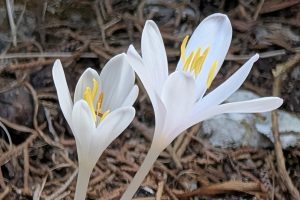
Picture this: as the summer heat fades in Cyprus, delicate white flowers suddenly pop up from the bare ground in the mountains, like little surprises from nature. Colchicum troodi is one of the island's special plants, blooming in fall and hiding a few secrets that make it both beautiful and a bit mysterious. But why does it flower "naked," and what ancient stories does it carry? www.inaturalist.org What Exactly Is This Quirky Cypriot Bloom? Colchicum troodi or “Troodos’s Naked lady” is a small, wild flowering plant that's unique to Cyprus — meaning it grows nowhere else in the world. It's a type of perennial that sprouts from an underground bulb-like structure called a corm, and it belongs to the Colchicaceae family, which includes other autumn-blooming flowers. Think of it as Cyprus's own version of an autumn crocus, adding a touch of color to the landscape when most plants are winding down. How Did This Flower Emerge from Cyprus's Ancient Past? The story of Colchicum troodi goes back to 1865, when Austrian botanist Theodor Kotschy discovered it during his travels across Cyprus and named it after the Troodos Mountains where he found it. The genus name "Colchicum" comes from Colchis, an ancient region on the Black Sea coast in what's now Georgia, tied to Greek myths about the sorceress Medea who…

Read more