Explore Cyprus with Our Interactive Map

Explore our top stories and discover ideas worth your time.

Cyprus Mouflon Wildlife and Habitat

Cyprus Mouflon Wildlife and Habitat

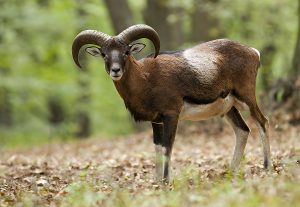
The Cyprus mouflon represents the only wild sheep endemic to Cyprus and the largest wild land mammal on the island. This subspecies stands about one meter tall at the shoulder and exhibits the classic features of mouflon: reddish to dark brown coats with distinctive black dorsal stripes and lighter saddle patches. The name "mouflon" comes from the Corsican words "mufro" for males and "mufra" for females. In Cyprus, locals call this animal "agrino," derived from the Greek word "Αγρινό." Adult males weigh up to 50 kilograms, while females typically reach around 35 kilograms. Males develop spectacular curved horns that grow in nearly complete circles, reaching lengths up to 85 centimeters. Most females do not develop horns, though some carry small versions. The Cyprus mouflon demonstrates island dwarfism, with shoulder heights averaging 15 centimeters less than their closest relatives, the Armenian mouflon. Ancient Arrivals and Near Extinction Archaeological evidence places sheep bones at the Neolithic village of Khirokitia, dating the mouflon's presence on Cyprus to approximately 10,000 years ago. Scientists believe early settlers brought wild sheep from Anatolia or the Levant during the early stages of sheep domestication. These animals later became feral, adapting to the island's mountain environments. Genetic studies show strong phylogenetic relationships between Cyprus and Anatolian mouflons, with origins likely traced to northwest Iran. visitcyprus-com The mouflon thrived…

Read more
Agricultural Landscapes of Cyprus

Agricultural Landscapes of Cyprus

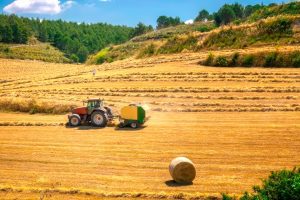
Olive Groves, Vineyards, and Citrus Orchards Acting as Semi-Natural Habitats for Birds, Insects, and Pollinators Agricultural Landscapes as Modified Ecosystems in Cyprus represent human-altered terrains where traditional farming practices blend with natural processes, creating semi-natural habitats that support diverse wildlife. These landscapes, dominated by olive groves, vineyards, and citrus orchards, cover significant portions of the island's rural areas, providing food, shelter, and breeding grounds for birds like the Sardinian warbler, insects such as wild bees, and pollinators including carpenter bees. They illustrate Cyprus's agricultural heritage, where centuries of cultivation have shaped ecosystems that balance productivity with biodiversity, offering resilience in a Mediterranean climate prone to drought and erosion. https://www.youtube.com/watch?v=EliOkuH_qcQ A Modified Agricultural Mosaic Agricultural landscapes in Cyprus form a patchwork of cultivated fields and groves that integrate human management with ecological functions, spanning lowlands and hillsides across the island. Olive groves, covering around 15,000 hectares, thrive on calcareous soils with trees spaced to allow undergrowth, while vineyards, approximately 7,300 hectares mainly in the Troodos Mountains, feature terraced slopes that prevent soil loss. Citrus orchards, concentrated in the Morphou and Famagusta areas, occupy about 3,000 hectares with dense plantings that create microclimates. These systems receive 300-500mm of annual rainfall, relying on irrigation from dams and boreholes, and support over 100 bird species, 200 insect taxa, and vital pollinators that enhance crop…

Read more

Panigyria Village Festivals

Panigyria Village Festivals

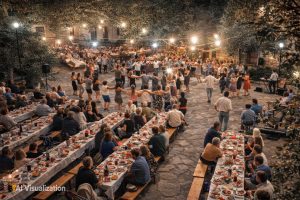
In Cyprus, a panigyri is not simply a festival marked on a calendar. It is a moment when a village gathers itself fully, reconnecting faith, memory, and everyday life into a shared experience. Held in honor of a patron saint, panigyria transforms religious observance into a living social ritual, where prayer flows naturally into food, music, dance, and reunion. These evenings are not for spectacle or tourism. They exist because the community expects them to exist, and because participation itself keeps them alive. heartlandoflegends.com To arrive at a panigyri is to step into a rhythm that has been repeated for generations. The setting may vary from village to village, shaped by geography and custom, but the feeling remains familiar. It is welcoming without formality, celebratory without excess, and deeply rooted in a sense of belonging that does not need explanation. What a Panigyri Really Is At its most basic level, a panigyri is a communal celebration held on the feast day of a village’s patron saint. It begins with a religious service, often followed by a procession of the saint’s icon, and gradually expands outward into the shared spaces of the village. Church courtyards, village squares, and nearby streets become places where people gather to eat, talk, dance, and remain together long into the night. What distinguishes this transition is…

Read more