Explore Cyprus with Our Interactive Map

Explore our top stories and discover ideas worth your time.

Backbone Grain and Cereal Crops

Backbone Grain and Cereal Crops

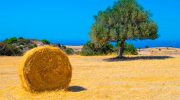
Wheat and barley have shaped Cyprus more deeply than many of its monuments or political eras. Grown across central plains and foothills, these cereals supported village life, defined everyday food traditions, and helped communities endure drought, famine, and political change. This article explores how cereal farming developed on the island, why it mattered socially and culturally, and how grain continues to influence Cypriot life today. An Island Fed by Grain, Not Spectacle Cyprus is often described through coastlines, ruins, and mythology, yet for most of its history, the island was sustained by something far more modest. Wheat and barley were not symbols of wealth or power. They were tools of survival. For thousands of years, grain farming shaped daily routines rather than grand narratives. Sowing followed the first autumn rains, harvest arrived before the summer heat became destructive, and storage was as important as production itself. In this sense, cereals formed the island’s quiet infrastructure, supporting life without drawing attention to themselves. Where Grain Grows and Why It Grows There Cereal cultivation in Cyprus has always been closely tied to geography. The broad central lowland known as the Mesaoria Plain lies between the Troodos Mountains and the Kyrenia range. Its relatively flat terrain and workable soils made it the island’s most reliable grain-producing region. Smaller cereal fields also developed in…

Read more

Cliffs and Headlands of Akamas Peninsula

Cliffs and Headlands of Akamas Peninsula

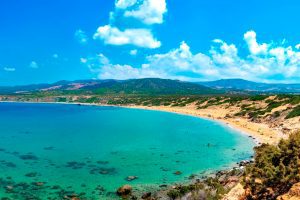
The Akamas Peninsula juts into the Mediterranean Sea at Cyprus's northwestern tip, covering 230 square kilometres of protected wilderness. Akamas represents the last significant untouched coastal area on Cyprus, a roadless peninsula where development remains minimal and natural processes continue largely undisturbed. The area extends from the town of Peyia in the south to Polis Chrysochous in the northeast, with the actual headland pointing west into open Mediterranean waters. Unlike most of Cyprus, which shows clear evidence of thousands of years of human modification, Akamas retains a wild character through a combination of difficult terrain, limited water resources, and protective designations. Until 2000, the British Army used Akamas as a training ground and firing range under the 1960 Treaty of Establishment, which allowed up to 70 days of annual military exercises. This restricted access inadvertently preserved natural habitats by preventing agricultural expansion and tourist development. When military use ended, conservation groups successfully argued for maintaining protection through different legal mechanisms. Historical Background Geological processes spanning millions of years created Akamas's distinctive terrain. Limestone formations dominate, deposited when seas covered the region during various periods. Tectonic uplift raised these sediments above sea level, creating the elevated plateau that characterizes the interior. Erosion carved gorges and sea caves where water cut through softer rock layers, exposing cross-sections of geological history. The Avakas…

Read more
Mediterranean Monk Seal Cyprus

Mediterranean Monk Seal Cyprus

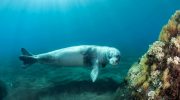
The Mediterranean monk seal stands as one of the world's most endangered marine mammals. Scientists estimate that only 815 to 997 individuals remain across the entire species range. The name comes from the characteristic neck folds that resemble a monk's hooded robe, combined with their solitary and reclusive lifestyle. Cyprus represents a critical area for this species, with approximately 20 to 22 individuals currently present in waters around the island. Adult Mediterranean monk seals reach lengths of 2.4 meters and weigh between 240 and 400 kilograms, with males slightly larger than females. They belong to the family Phocidae, making them true seals without external ear flaps. Their dark brown or grey coat features a lighter patch on the belly, particularly visible in males. Newborn pups measure about 80 to 100 centimeters at birth and weigh 15 to 18 kilograms, covered in woolly black or dark brown fur with a distinctive white or yellow belly patch. From Beaches to Caves Historical records and ancient texts document Mediterranean monk seals throughout the Mediterranean Sea, Black Sea, and along the northwestern coast of Africa. The species appeared frequently in ancient Greek civilization, depicted on coins dating to 500 BC and mentioned in writings by Aristotle, Homer, and Plutarch. For millennia, these seals hauled out on open beaches to rest and give birth. The…

Read more