Explore Cyprus with Our Interactive Map

Explore our top stories and discover ideas worth your time.

Painted Churches In the Troodos Region

Painted Churches In the Troodos Region

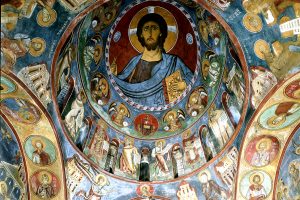
Ten small Byzantine churches scattered across the Troodos Mountains hold some of the finest medieval religious paintings in the Eastern Mediterranean. These UNESCO World Heritage sites preserve 500 years of artistic tradition in their vibrant frescoes. Nine of the ten churches stand in the Nicosia District, while one church, Timios Stavros in Pelendri, is located in the Limassol District. These structures date from the 11th to the 16th centuries and display Byzantine metropolitan art of the highest quality alongside unique local characteristics. The churches range from small rural chapels to larger monastery complexes like Agios Ioannis Lampadistis. Their simple exterior architecture contrasts sharply with the sophisticated paintings inside. This striking difference makes them easy to overlook from the outside, but stepping through their doors reveals walls completely covered in colorful religious scenes. Historical Background Cyprus became part of the Byzantine Empire in 965 AD when Emperor Nicephoros Phokas sent a fleet to repel Arab raids. For the next two centuries, Byzantine officials administered the island as a military province. Following this transition, the island entered a period of relative stability. During this time, trade in silk and food prospered, leading to the expansion of major cities like Kyrenia and Nicosia. During this stable period, wealthy donors began endowing churches in the Troodos mountains. The region's isolation and difficult terrain helped…

Read more
Cyprus Mythological Locations

Cyprus Mythological Locations

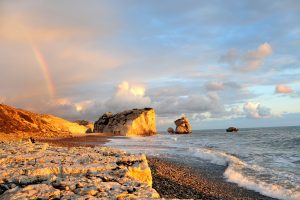
Cyprus isn't just an island of beaches and ancient ruins - it's the legendary birthplace of Aphrodite, the goddess of love and beauty. For thousands of years, pilgrims, poets, and lovers have traveled here seeking the divine magic said to linger in its shores, and the myths born on this island have shaped Western culture in ways that still resonate today. An Island Steeped in Divine Legend Cyprus holds a unique place in Greek mythology as the earthly home of Aphrodite. According to legend, the goddess emerged from the sea foam near Cyprus's shores, making the island sacred ground. The connection runs so deep that Aphrodite herself was often called "Kypria" - the Cyprian goddess - a title that linked her identity inseparably to this Mediterranean island. Beyond Aphrodite, Cyprus is woven into myths involving tragic love, divine kings, and miraculous transformations. These stories explained the island's remarkable fertility, legendary copper wealth, and status as a crossroads of cultures. Today, these myths remain alive in the landscape itself. From Ancient Cults to Eternal Legends Long before classical Greek myths were written down, Cyprus was home to fertility cults dating back to Neolithic times. When Mycenaean Greeks arrived around the 12th century BC, they built temples and gradually merged local worship traditions with their own pantheon, creating a unique Cypriot version…

Read more

Blue Flag Beaches of Cyprus

Blue Flag Beaches of Cyprus

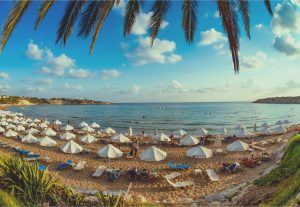
Cyprus earned 66 Blue Flags in 2025, with 64 beaches and 2 marinas recognized for exceptional quality and environmental standards. The Blue Flag certification represents one of the most prestigious international awards for beaches and marinas, granted by the Foundation for Environmental Education. Cyprus consistently ranks as having the cleanest bathing waters in Europe, achieving the highest scores in the Mediterranean year after year. The European Commission's 2024 report confirmed that Cyprus ranked first in the European Union for bathing water quality in both 2022 and 2023. This recognition stems from strict compliance with 33 coastal criteria and 38 marina specific standards covering water quality, environmental management, safety, and educational activities. The number of Blue Flags decreased slightly from 78 in 2024, with 16 flags revoked due to non compliance, demonstrating that certification requires continuous effort rather than one time achievement. What the Blue Flag actually means A Blue Flag beach must meet at least 30 stringent criteria across four categories: environmental education and information, water quality, environmental management, and safety and services. Water samples must be taken every two weeks rather than the monthly minimum required by European Union directives, with results posted on information boards at each beach to ensure transparency. The beach must contain no industrial or sewage waste influence and maintain low levels of escherichia coli…

Read more