Explore Cyprus with Our Interactive Map

Explore our top stories and discover ideas worth your time.

Regional Identity in Cypriot Folk Dress

Regional Identity in Cypriot Folk Dress

Both men's and women's traditional outfits consisted of an inner layer called poukamisso. For men it resembled a white cotton long sleeved chemise, whilst women usually wore a longer underdress. These multilayered garments developed from practical necessity in Cyprus's Mediterranean climate while also serving to distinguish between daily work attire and festive occasions. The Cypriot costume in the past was an entire ensemble with each layer serving its own purpose. The inner layers were plain and made out of cotton or linen, whilst outer layers were lavishly decorated with ornaments and embroidery, with decoration, fabric quality, and color signaling social status, wealth, and regional origin. The Distinctive Vraka Pants Known for their distinctive silhouette, vraka trousers are more than just a piece of clothing, they are an integral part of the national identity and culture. In fact, vraka is the key element that separates Cypriot men's attire from the Greek national costume. These loose baggy trousers, made out of hand-made cotton, are the highlight of the men's traditional garment. Typically, vraka trousers are made from a large single piece of cotton fabric dyed in black. The fabric is folded into pleats and gathered at the top and at the bottom and secured with a cord called vrakozoni around the waist. Despite what we think today, Cypriot men were not wearing…

Read more
How Climate Shapes Outdoor Lifestyles in Cyprus

How Climate Shapes Outdoor Lifestyles in Cyprus

Cyprus enjoys approximately 340 sunny days annually, making it one of the sunniest locations in the Mediterranean. This exceptional weather creates a culture where outdoor activities dominate daily life year-round. The island experiences long, dry summers from mid-May to mid-October and mild winters from December to February. Average annual temperature on the coast reaches around 26 degrees Celsius during the day and 17 degrees at night. The warm season lasts about eight months, beginning in April and ending in November. This climate allows residents and visitors to maintain active outdoor lifestyles regardless of season. Why Cyprus Developed an Outdoor Culture The island sits at the crossroads of Europe, Asia, and Africa. Its position attracted ancient civilizations including Phoenicians, Greeks, Romans, Byzantines, Venetians, Ottomans, and British. Each culture adapted to the Mediterranean climate by organizing life around weather patterns. People worked early mornings before heat intensified, took midday breaks during peak temperatures, then resumed activities in cooler late afternoons. Ancient Greeks established the concept of symposia, outdoor gatherings for discussion and meals. Romans built open-air theaters and baths to take advantage of pleasant weather. Byzantine churches incorporated courtyards for outdoor worship. These historical patterns created traditions that continue today. The climate essentially forced outdoor living, and over centuries this necessity became cultural preference. The British colonial period from 1878 to 1960…

Read more

Agoi Saranda Cave Church

Agoi Saranda Cave Church

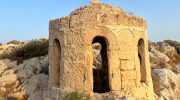
The Agioi Saranta Cave Church stands as a sacred monument within the rugged landscape of Protaras. This sanctuary occupies a natural limestone cavern on Fanou Hill and overlooks the Mediterranean Sea. It represents a rare fusion of geological formation and ecclesiastical architecture. The name translates to the Holy Forty and honors the Forty Martyrs of Sebaste. These Roman soldiers died in the year 320 AD because they refused to renounce their Christian faith. Local tradition links the forty stalactites on the cave ceiling to these forty individuals. Visitors find the entrance marked by a simple white wall and a distinct blue door. A stone dome sits atop the hill to provide a skylight for the interior space. This site offers a peaceful atmosphere for meditation away from the busy tourist centers of Cyprus. Historical Origins and Dedication The roots of the Agioi Saranta Cave Church date back to the early Christian period though some sources suggest more formal establishment in the sixteenth century. Christian monks likely utilized this space as a secluded retreat to avoid persecution or distraction. It serves as a testament to the endurance of the Orthodox faith throughout different eras of Cypriot history. The dedication to the Forty Martyrs of Sebaste provides a deep theological connection to the site. These martyrs belonged to the Legio XII Fulminata…

Read more