Explore Cyprus with Our Interactive Map

Explore our top stories and discover ideas worth your time.

Saints Feast Days in Cyprus

Saints Feast Days in Cyprus

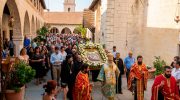
Saints feast days in Cyprus create the rhythm of village life throughout the year, with each community celebrating its patron saint through religious services and traditional festivals called panigyria. These celebrations blend Orthodox Christian devotion with social gathering, featuring church services, icon processions, shared meals, folk music, and traditional dances that last until dawn. Unlike Western traditions where birthdays hold primary importance, Cypriots celebrate their name days with equal or greater enthusiasm. The island's calendar contains hundreds of feast days honoring saints from biblical times, early Christianity, and more recent Orthodox history. Major celebrations like the Dormition of the Virgin Mary on August 15 attract thousands to monasteries and village churches, while smaller community festivals maintain local identity and family connections. The panigyri tradition has endured for centuries as a cornerstone of Cypriot Orthodox culture, receiving UNESCO recognition for its role in preserving religious customs and community bonds. The Structure of a Traditional Panigyri A panigyri typically begins on the evening before the saint's actual feast day with Esperinos, the Vespers service that marks the liturgical day's beginning according to Orthodox tradition. Churches fill with villagers, returning emigrants, and visitors who gather for prayers and hymns honoring the saint. The service concludes with Litania, a solemn procession where the saint's icon is carried outdoors through village streets. Worshippers follow the…

Read more

Nea Paphos Ancient Capital of Roman Cyprus

Nea Paphos Ancient Capital of Roman Cyprus

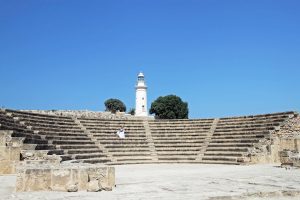
Nea Paphos occupies a coastal plain on the southwestern shore of Cyprus, adjacent to the modern city of Paphos. Founded in the 4th century BC by Nikokles, the last king of nearby Palaipaphos, Nea Pafos then went from strength to strength, particularly under the Ptolemaic kingdom from the 3rd century BC. The city was located on a peninsula surrounded by a natural bay and between the two small hills called Fanari and Fabrika. Nea Paphos was founded at the turn of the 4th and 3rd century BC as an important harbour located on the sea trade route from Rhodes to Alexandria. Thanks to its strategic location, from the 2nd century BC Nea Paphos became the capital of Cyprus and the seat of the strategos, general managing the island. The site preserves remains of villas, palaces, theaters, and tombs that span from the Hellenistic period through the Byzantine era, making it one of the Mediterranean's most significant archaeological areas. Historical Background Thanks to the extensive and modern port and access to cider wood from the nearby forests, Nea Paphos became a base of Ptolemaic navy and a military garrison made up of mercenaries was stationed here. The multicultural character of the city was probably complemented by many sailors and merchants, but also by pilgrims who, through the eastern city gate, set…

Read more
Limassol Lefkosia Fault Zones

Limassol Lefkosia Fault Zones

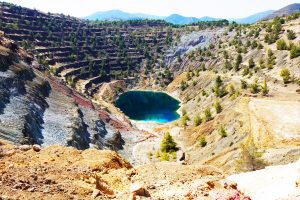
The Limassol-Lefkosia region contains several major fault systems, with the Southern Troodos Transform Fault Zone being the most significant. This fault zone runs along the southern margin of the Troodos ophiolite, the massive block of ocean floor rock that forms the central mountains of Cyprus. The fault is at least 5 kilometers wide in some places and trends east to west across the island. Transform faults are places where two tectonic plates slide horizontally past each other rather than colliding or pulling apart. The Southern Troodos Transform Fault formed around 90 million years ago on the ocean floor when Cyprus was still underwater. The fault separated two spreading ridges where new ocean crust was being created, much like the San Andreas Fault in California separates two plates today. Historical Background About 90 million years ago, during the Late Cretaceous period, Cyprus didn't exist as an island. Instead, the rocks that now form the Troodos Mountains were part of the Neotethys Ocean seafloor. At underwater spreading ridges, hot magma rose from deep in the Earth and created new ocean crust. This process happened in a region above a subduction zone where one tectonic plate was diving beneath another. The transform fault developed perpendicular to these spreading ridges and allowed different sections of ocean floor to move past each other. As the…

Read more