Explore Cyprus with Our Interactive Map

Explore our top stories and discover ideas worth your time.

Lemba Lakkous Archaeological Site

Lemba Lakkous Archaeological Site

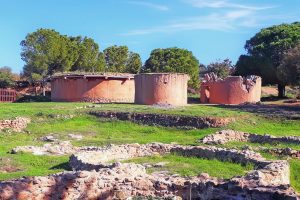
In the hills north of Paphos, a prehistoric village called Lemba-Lakkous offers a rare window into life 5,000 years ago. This Chalcolithic settlement produced some of Cyprus's most remarkable figurines and became the foundation for one of archaeology's most ambitious experiments: rebuilding an ancient village. Lemba-Lakkous sits just six miles north of Paphos in southwestern Cyprus, in a region known as the Ktima Lowlands. The settlement dates to the Late Chalcolithic period, from roughly 3500 to 2400 BC. This was a time when Cyprus saw remarkable cultural development, with around 100 villages spread across the island and communities mastering both stone tools and early copper metalwork. The site is part of a cluster of related settlements in the area, including Kissonerga-Mosphilia and Kissonerga-Mylouthkia. These villages likely held around 100 circular houses each, connected by shared traditions, pottery styles, and symbolic practices. How Archaeologists Uncovered the Site Modern excavations at Lemba-Lakkous began in 1976 under Professor Edgar Peltenburg of the University of Edinburgh. This marked the start of the Lemba Archaeological Project, which would transform our understanding of prehistoric Cyprus. The team worked at Lemba-Lakkous from 1976 to 1983, methodically uncovering layers of occupation that spanned centuries. The excavations revealed seven structures, three of which preserved their stone foundations in excellent condition. The team established the Lemba Archaeological Research Centre in…

Read more

Avakas Gorge Cave

Avakas Gorge Cave

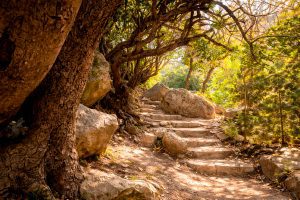
Avakas Gorge is a 3-kilometer-long limestone canyon located in the Akamas Peninsula, 16 kilometers west of Paphos. The gorge was created by the Avgas River, a seasonal stream that flows only in winter and spring. Over countless thousands of years, this modest river carved through layered limestone and created walls that reach 30 meters high in some sections. The gorge is part of the Natura 2000 protected area network and attracts roughly 100,000 visitors per year according to forestry authorities. What makes it special isn't just the height of the walls but how narrow the passage becomes. In places, the gorge squeezes down to only 4 meters wide with cliffs towering on both sides and a strip of sky visible overhead. This creates dramatic light effects as sun filters down through the gap. Historical Background The rock that forms Avakas Gorge is limestone from the Mamonia Complex and was deposited in warm seas during the Mesozoic era millions of years ago. This limestone contains layers of reef formations, shell fragments, and marine sediments that hardened into stone. When Cyprus rose from the ocean and these rocks emerged on land, they became vulnerable to erosion. Limestone is soft enough that water can dissolve it chemically and carve it physically. During the Pleistocene era, roughly 2 million to 12,000 years ago, the…

Read more
Cyprus Sustainable Wine Production

Cyprus Sustainable Wine Production

Cyprus hosts more than ten indigenous grape varieties that evolved over millennia to thrive in hot, dry Mediterranean conditions. These local grapes require significantly less water, fewer synthetic fertilizers, and minimal pesticide applications compared to international varieties. Research conducted by Cyprus University of Technology found that indigenous varieties like Xynisteri adapt better to drought and heat waves than introduced varieties such as Chardonnay. The indigenous white grape Xynisteri has earned recognition as one of the world's most environmentally friendly varieties. Studies measuring carbon footprints from vineyard to market found that Xynisteri produces lower greenhouse gas emissions than introduced varieties like Cabernet Sauvignon. This native grape thrives without irrigation in Cyprus's dry climate, conserving precious water resources while maintaining quality. The Carbon Footprint of Cyprus Wine Production Researchers at Cyprus University of Technology conducted the first comprehensive carbon footprint study of Cypriot wine in 2020. They analyzed data from 20 vineyards cultivating Xynisteri and tracked emissions through the entire production process. The study found that producing 76,000 bottles generated 99,586 kilograms of carbon dioxide equivalent, or 1.31 kilograms per 750 milliliter bottle. The research identified three main sources of emissions. Electrical energy consumption accounted for 46 percent of the total carbon footprint, making it the largest single contributor. Glass bottle production and packaging represented 18 percent of emissions, while vineyard operations…

Read more