Explore Cyprus with Our Interactive Map

Explore our top stories and discover ideas worth your time.

Agaves

Agaves

Stand on a rocky hillside in southern Cyprus at the end of a long, dry summer and you may suddenly notice a giant green starburst on the slope. Then, one day, a towering stalk shoots skyward like a living flagpole, topped with a candelabra of creamy-yellow flowers. This is the agave of Cyprus a dramatic New-World succulent that has quietly become one of the island’s most eye-catching landscape characters. Meet the Agaves Agaves belong to the asparagus family (Asparagaceae), in the subfamily Agavoideae. These are tough, rosette-forming succulents perfectly built for arid life. The genus Agave contains around 200 species, nearly all native to the deserts and dry hills of Mexico, the southern United States and Central America. In Cyprus the two most common are Agave americana (the century plant or American aloe) and Agave sisalana (sisal agave). Gardeners also grow several other attractive species, including the graceful, almost spineless Agave attenuata (foxtail agave) with its soft, arching leaves and the compact, fiercely spiny Agave stricta. Locally they are known as Αγαύη (Agávi), a direct borrowing of the scientific name, which comes from the ancient Greek agauós “admirable” or “noble” a perfect description for their striking, architectural form. Some older Cypriots in Greek-speaking areas still call the spikiest ones Αλάς (Alás), perhaps a folk name evoking the sharp, sword-like leaves.…

Read more

Haunted Mills and Ruins Across Cyprus

Haunted Mills and Ruins Across Cyprus

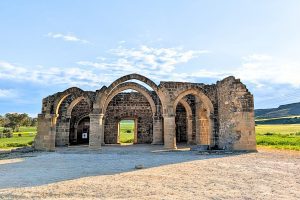
Cyprus holds a collection of abandoned places that attract visitors interested in supernatural tales and historical mysteries. These locations range from ghost towns frozen in time to mountain hotels shrouded in dark legends and villages deserted by their residents. The island's troubled 20th century history, particularly the 1974 division, created numerous abandoned settlements that locals and visitors now associate with paranormal activity. These sites blend documented historical events with folklore, creating spaces where reality and supernatural stories overlap. Historical Context The modern haunted landscape of Cyprus emerged primarily from two sources. The 1974 Turkish invasion created instant ghost towns when residents fled their homes. Varosha in Famagusta represents the most dramatic example, a once glamorous resort sealed off by military forces and left untouched for decades. The invasion displaced hundreds of thousands of people, leaving behind dozens of villages that remain empty today. Earlier events also contributed to abandoned sites. The intercommunal violence of the 1960s forced Turkish and Greek Cypriots to abandon mixed villages. Mining closures in the 1930s and natural disasters like earthquakes created additional deserted settlements. Each abandonment brought its own set of stories about what happened and what might remain. Features of Cyprus most notorious haunted locations Varosha stands as Cyprus most famous ghost town. Before 1974, this Famagusta district attracted celebrities like Elizabeth Taylor and…

Read more
Moutti tis Choras Nature Trail

Moutti tis Choras Nature Trail

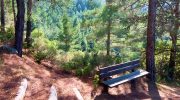
Moutti tis Choras Nature Trail offers a unique journey through the heart of the Pitsilia region in Cyprus. This path winds through the Adelfoi Forest and provides a deep look at the island's botanical wealth. Hikers often seek this route for its quiet atmosphere and the panoramic views of the surrounding peaks. The trail serves as a vital link between the natural landscape and the cultural history of nearby villages. It presents a clear view of the Madari ridge and the Spilia valley below. This introduction sets the stage for a walk that balances physical effort with the calm beauty of the Mediterranean high country. Trail Overview Location: Adelfoi Forest, Nicosia District (Near Spilia/Kourdali) Distance: 2.5 miles (4 km) Route Type: Circular Difficulty: Moderate Elevation Gain: 150 meters Duration: 1.5 – 2 hours Best Time to Visit: March – May or September – November Terrain: Rocky, Forest Floor, Dirt Path The Geological Identity of Adelfoi Forest The Moutti tis Choras Nature Trail sits on a bedrock of diabase and gabbro. These igneous rocks date back millions of years to the formation of the Troodos ophiolite. Scientists study this area because it reveals how the oceanic crust rose from the sea. As you walk, the stones underfoot tell a story of ancient volcanic activity. The soil remains thin but supports a…

Read more