Explore Cyprus with Our Interactive Map

Explore our top stories and discover ideas worth your time.

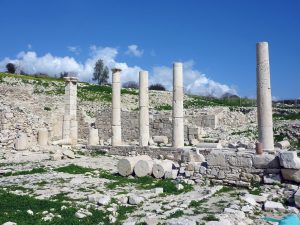
Amathus Sacred Grove of Aphrodite Cyprus

Amathus Sacred Grove of Aphrodite Cyprus

Geographic and Historical Setting Amathus, located on the southern coast of Cyprus near modern Limassol, was one of the most important ancient city-kingdoms of the island. Among its most significant religious features was the Sacred Grove of Aphrodite, a sanctuary associated with fertility, royal authority, and long-standing local traditions that predated classical Greek influence. Unlike urban temple complexes built in later periods, the sacred grove represented an earlier form of worship in which natural landscape and ritual space were closely connected. The site functioned as a center of spiritual life where religious practice was embedded within the rhythms of nature, agriculture, and seasonal renewal. pinterest-com Archaeological and literary evidence suggests that Amathus maintained a distinct cultural identity within Cyprus, blending indigenous traditions with influences from the eastern Mediterranean. The worship of Aphrodite at Amathus was deeply rooted in pre-Hellenic fertility cults that later merged with the Greek conception of the goddess. This layered religious history gave the sanctuary a unique character. Rather than serving solely as a mythological birthplace, as in Palaepaphos, Amathus became known as a living center of ritual activity that linked divine fertility with political and social order. Sacred Landscape and Ritual Environment The Sacred Grove at Amathus was not confined to a single temple building but extended across a natural setting that included trees, open spaces,…

Read more
Cyprus Public Transportation System

Cyprus Public Transportation System

Cyprus operates a bus-based public transportation network that serves all major cities and most tourist areas across the island. The system consists of urban buses within cities, intercity buses connecting major towns, airport shuttle services, and rural routes linking villages to nearby urban centers. Since the last passenger railway closed in 1951, buses represent the only form of public mass transit available to Cypriots and visitors. However, despite having 3.2 buses per 1,000 inhabitants, double the EU average of 1.6, Cyprus records some of Europe's lowest public transport usage. Only 3 percent of journeys in Greater Nicosia use public transportation, while the island maintains one of the world's highest car ownership rates at 658 automobiles per 1,000 people. This paradox reveals a fundamental challenge: Cyprus has invested in buses but has not created conditions that make public transport a practical alternative to private cars for most residents. How the Bus System Works Across Cyprus Public transportation in Cyprus operates under a concession model, with different private companies managing services in each district under contracts awarded by the Ministry of Transport, Communications and Works. Cyprus Public Transport handles Nicosia and Larnaca, operating as NPT and LPT respectively. The Transport Company for Limassol District runs services in Limassol. Pafos Transport Organisation manages the Paphos district. The Famagusta District Transportation Organization, known as…

Read more

Cliffs and Headlands of Akamas Peninsula

Cliffs and Headlands of Akamas Peninsula

The Akamas Peninsula juts into the Mediterranean Sea at Cyprus's northwestern tip, covering 230 square kilometres of protected wilderness. Akamas represents the last significant untouched coastal area on Cyprus, a roadless peninsula where development remains minimal and natural processes continue largely undisturbed. The area extends from the town of Peyia in the south to Polis Chrysochous in the northeast, with the actual headland pointing west into open Mediterranean waters. Unlike most of Cyprus, which shows clear evidence of thousands of years of human modification, Akamas retains a wild character through a combination of difficult terrain, limited water resources, and protective designations. Until 2000, the British Army used Akamas as a training ground and firing range under the 1960 Treaty of Establishment, which allowed up to 70 days of annual military exercises. This restricted access inadvertently preserved natural habitats by preventing agricultural expansion and tourist development. When military use ended, conservation groups successfully argued for maintaining protection through different legal mechanisms. Historical Background Geological processes spanning millions of years created Akamas's distinctive terrain. Limestone formations dominate, deposited when seas covered the region during various periods. Tectonic uplift raised these sediments above sea level, creating the elevated plateau that characterizes the interior. Erosion carved gorges and sea caves where water cut through softer rock layers, exposing cross-sections of geological history. The Avakas…

Read more