Explore Cyprus with Our Interactive Map

Explore our top stories and discover ideas worth your time.

Cyprus International Music Festivals

Cyprus International Music Festivals

Cyprus hosts a small but distinctive network of international music festivals that unfold across ancient theatres, medieval abbeys, and open Mediterranean landscapes. Rather than existing as isolated events, these festivals reflect how the island uses music to connect heritage, geography, and contemporary cultural life. This article explains how Cyprus’s major international music festivals developed, why their venues matter as much as the performances, and how they continue to shape the island’s cultural identity today. Music Festivals as Cultural Bridges Cyprus sits at the crossroads of Europe, the Middle East, and the Eastern Mediterranean, and its music festivals mirror that position. From classical chamber concerts to jazz, opera, and cross-genre experimentation, festival programming is deliberately international in scope. Rather than focusing on a single musical tradition, Cyprus’s festivals operate as cultural bridges. They bring together artists from Europe, the Middle East, and beyond, often in places shaped by centuries of layered history. Music becomes a neutral language in spaces once defined by empire, religion, or conflict. The Core Festivals That Define the Scene Several institutions form the backbone of Cyprus’s international music calendar. In the Turkish-occupied area, the so-called “International Music Festival”, held illegally by the Turkish authorities, has grown into a long-running annual event, typically held in early autumn. Organised by the so-called “Northern Cyprus Musical Association”, it features a…

Read more
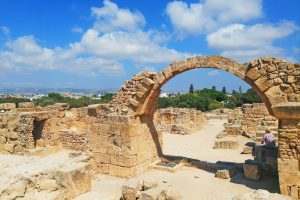
Saranda Kolones Fortress

Saranda Kolones Fortress

Inside the Paphos Archaeological Park, just north of the old harbor, a pile of broken stones and toppled columns marks where one of Cyprus's most important medieval fortresses once stood. Saranta Kolones, which translates to Forty Columns, served as the main defensive stronghold protecting Paphos during a turbulent period when Arab raids threatened the island. Today, visitors walk among its ruins and discover a fortress that endured multiple rebuilds, witnessed crucial historical events, and met a violent end in one of the worst earthquakes ever to strike Cyprus. Historical Background The fortress was built at the end of the 7th century AD under Byzantine rule. Historical records indicate that Theodore, the brother of Emperor Heraclius I, supervised its construction. At that time, the Arab Caliphate had emerged as a powerful force in the Middle East, and Cyprus found itself in the path of expansion. Arab forces launched raids on the island, making coastal cities particularly vulnerable. Paphos, with its strategic harbor and position on shipping routes, needed strong defenses. The Byzantine builders created a formidable structure. The fortress featured walls three meters thick, substantial enough to resist siege weapons of that era. Four massive corner towers anchored the defenses, with four additional intermediate towers positioned along the connecting walls. A moat surrounded the entire complex, and access was only possible…

Read more
Cyprus Film Culture

Cyprus Film Culture

Contemporary Cypriot music is increasingly shaping how the island appears in film, television, and online media. Instead of generic Mediterranean soundtracks, local artists and recognisable sonic textures are being used to support storytelling, atmosphere, and identity. This shift matters because sound influences memory as much as image. When Cyprus is accompanied by its own modern musical voice, representation becomes more specific, more confident, and harder to reduce to cliché. This article explores how that change is happening, where it comes from, and why it matters now. From Background Noise to Cultural Signal For a long time, music in visual media connected to Cyprus served a functional role. It filled silence, supported mood, or softened transitions, but rarely carried cultural weight. That approach is changing. Today, contemporary Cypriot music is being used deliberately. Tracks are chosen not only because they sound pleasant, but because they signal place. Dialect, rhythm, and local sonic markers now appear within films, television segments, tourism campaigns, and short-form digital content. The result is subtle but powerful. Cyprus is no longer just seen. It is heard. This shift does not announce itself. It works quietly, embedding identity into scenes rather than explaining it. What This Trend Actually Means When contemporary Cypriot music is described as “integrated into media,” the idea is simple. Modern Cypriot artists, sounds, and…

Read more