Explore Cyprus with Our Interactive Map

Explore our top stories and discover ideas worth your time.

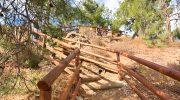
Agios Onoufrios Nature Trail

Agios Onoufrios Nature Trail

The Agios Onoufrios nature trail offers a profound look into the rugged beauty of the Machairas forest. This path winds through a landscape rich with history and diverse plant life. It provides a quiet space for those who want to see the wild side of the island. The route starts near the historic monastery and climbs toward the high ridges. Each step reveal a new part of the valley below. The air stay cool even in the heat of the summer months. This trek is a favorite for people who appreciate silence and natural views. The path is well mark and easy to follow for most hikers. It showcases the unique geology of the Troodos foothills. Visitors can see the impact of ancient volcanic activity in the rocks. This journey connects the soul to the ancient earth of Cyprus. Trail Overview Location: Machairas Forest, Nicosia District, Cyprus Distance: 5.2 miles (8.4 km) Route Type: Circular Difficulty: Moderate Elevation Gain: 1148 feet (350 meters) Duration: 3 – 3.5 hours Best Time to Visit: October–May Terrain: Rocky and Dirt Path Geological Foundation and Soil Composition The foundation of the Agios Onoufrios trail consists of diabase and gabbro rocks. These stones belong to the Troodos ophiolite complex which is a world famous geological site. This area once sat at the bottom of a…

Read more
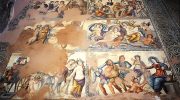
The House of Aion Mosaics

The House of Aion Mosaics

The House of Aion in Kato Paphos preserves a late Roman mosaic program designed to communicate ideas, not just decorate a room, using myth to argue for cosmic order, education, and limits on human ambition. Made in the 4th century AD during the empire’s rapid Christianisation, the floor reads as a coherent statement from a pagan elite defending continuity through refined symbolism rather than confrontation. This article explains where the building sits in ancient Paphos, how the five scenes build one argument, and what the mosaics reveal about power, belief, and artistic change in late antiquity. Paphos, Power, and Maloutena The House of Aion lies in the Maloutena district of ancient Nea Paphos, once the island's administrative and cultural centre under Roman rule. This was a prestigious neighbourhood, close to the seat of the Roman governor and surrounded by villas that reflected wealth, education, and political influence. Its location matters. The house was not hidden or marginal. It stood among the most powerful spaces in the city, signalling that the ideas expressed inside were meant to be seen, discussed, and shared by those at the top of provincial society. A Reception Room for Debate Although commonly called a “house,” the structure breaks with standard Roman domestic design. The main reception room, a large triclinium, sits directly near the entrance rather…

Read more
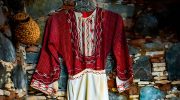
Traditional Cypriot Attire

Traditional Cypriot Attire

Traditional Cypriot clothing is not just about what people wore. It is about how they lived, what they valued, and how they understood their place in the world. Across villages, towns, and generations, dress functioned as a visible language, communicating age, status, profession, and regional identity without a single word being spoken. This article explores how Cypriot attire developed over time, what made it distinct, and why these garments still matter today, not as costumes, but as cultural memory woven into fabric. An island shaped by layers, stitched into cloth Cyprus has always stood at the crossroads of civilisations, and its clothing reflects this layered history. Byzantine restraint, Venetian refinement, Ottoman opulence, and later European influence all left their marks on the way Cypriots dressed. Rather than replacing one another, these influences accumulated. Early garments emphasised structure and modesty, shaped by Orthodox tradition and practical rural life. Later, luxury fabrics, embroidery, and layered silhouettes entered daily wear, especially in towns. Clothing became a way to absorb change while maintaining continuity, adapting foreign elements into something recognisably Cypriot. Materials that came from the land itself Traditional attire grew directly out of the island’s environment. Cotton, silk, linen, and wool were not imported ideas but local resources, cultivated, spun, dyed, and woven in villages across the island. Almost every household participated in…

Read more