Explore Cyprus with Our Interactive Map

Explore our top stories and discover ideas worth your time.

Sacred Landscape Representation

Sacred Landscape Representation

Sacred Landscape Representation in Cypriot art involved the use of motifs such as mountains, seas, fertility symbols, and celestial elements to express the island's profound spiritual connection to nature. These designs went beyond mere decoration, reflecting a worldview where the environment was infused with divine energy, from turbulent waves to bountiful fields. This artistic approach evokes the island's mystical essence, highlighting ancient perceptions of the natural world as a realm of sacred significance. A World Expressed Through Art Cypriot art portrayed the landscape as a narrative medium, where natural features conveyed deeper spiritual layers. Mountains symbolized strength and divine oversight, seas evoked origins and transformation, fertility motifs celebrated renewal, and celestial patterns linked earthly existence to cosmic forces. This method remained uncomplicated, emphasizing reverence for nature's power and the island's hallowed character. Origins and Evolution These motifs trace back to the Neolithic and Chalcolithic periods, from approximately 8000 to 2500 BC. Early inhabitants, reliant on farming and herding, incorporated elements reflecting survival and natural cycles into their works. Clay figurines emphasized fertility through wide hips, associating human life with the earth's productivity. The Bronze Age, beginning around 2500 BC, introduced trade influences from Egypt and Greece. Pottery designs featured wavy lines for seas, symbolizing Aphrodite's emergence, while seals depicted mountains as guardians. Subsequent Greek and Roman periods adapted these symbols,…

Read more

Cyprus Forest Spirits and Fairy Tales

Cyprus Forest Spirits and Fairy Tales

Cyprus holds a rich tradition of folklore about supernatural beings that inhabit forests, springs, and mountains. These stories blend Greek mythology with local beliefs passed down through generations. The island's forest spirits and fairies appear in tales told by grandmothers to children, in seasonal customs still practiced today, and in warnings about places where the natural and supernatural worlds meet. From Christmas goblins to ancient nymphs, these beings reflect how Cypriots understood their environment and explained mysterious occurrences. The folklore reveals deep connections between people and nature, showing respect for forces beyond human control. Many traditions related to these spirits remain part of modern Cypriot culture, practiced during religious holidays and family gatherings. Historical Background Cypriot folklore developed from multiple sources over thousands of years. Ancient Greek colonists brought beliefs about nymphs, nature spirits tied to specific locations such as springs, rivers, and groves. The Greeks recognized nymphs as minor goddesses with extremely long lifespans who protected natural features. Cyprian Naiads appear in ancient texts, specifically mentioned as the nymphs who cared for the infant Adonis after his birth from the myrrh tree. These water spirits were daughters of local river gods and inhabited springs throughout the island. Byzantine Christianity added new layers to existing beliefs rather than erasing them. Pagan spirits transformed into different entities within Christian frameworks. The…

Read more
The Cyprus Cyclamen

The Cyprus Cyclamen

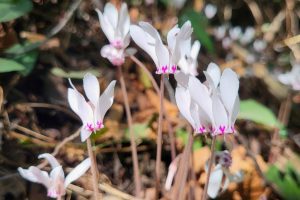
The Cyprus Cyclamen (Cyclamen cyprium) is far more than a delicate wildflower; it is a symbol of the island’s natural beauty and the resilience of its people. Formally designated as the national flower of Cyprus, this endemic treasure thrives in the cool, rocky shadows of the island's mountain ranges. The Mediterranean Rhythm: Growth in Winter In the unique climate of Cyprus, the seasons of life are reversed compared to northern latitudes. For the Cyprus Cyclamen, the scorching, dry summer is a period of "estivation" (summer dormancy), where it hides underground as a tuber to survive the heat. As the autumn rains arrive in September and October, the plant awakens. It uses the mild, wet winter to bloom and grow its biomass, taking advantage of the moisture before the landscape dries out again in May. Botanical Features and Identification While Cyprus is home to three cyclamen species, C. cyprium is the only one that is truly endemic—found nowhere else in the world. Key Characteristics • The Flower: Small, white to pale pink petals that sweep upward and twist at the tips. Each petal features a distinct magenta M-shaped mark at its base.• The Fragrance: It is famous for its intense, sweet lily-like scent that fills the winter air.• The Leaves: Heart-shaped with toothed edges. They are dark green with silver-grey marbling…

Read more